Visiting Southern Vietnam in the Dry Season
What is the dry season like in southern Vietnam?
Roughly December to April brings long stretches without rain across Ho Chi Minh City, the Mekong Delta and the coast, with March and April the hottest stretch of the year. It is not a cool season: the far south stays hot and humid year-round, unlike northern Vietnam.
What the dry season actually means down south
Southern Vietnam runs on two seasons, not four, and the dry season is simply the half of the year when the rain more or less stops. Roughly from December through April, Ho Chi Minh City, the Mekong Delta and the coast settle into long dry stretches, and the short, violent late-afternoon downpours that define the wet season become rare or disappear altogether. That is the whole shift. It is a change in rainfall, not in temperature, and it does not turn the far south into anything resembling a northern Vietnamese winter.
This guide sits alongside the companion piece on the rainy season and deliberately does not repeat it. Where that guide explains how to work around brief afternoon storms, this one is about what changes when those storms stop coming: drier roads and canals, dustier countryside, steadier river crossings, and a landscape that looks different in the delta and on the coast even though the sights themselves stay the same.
It also does not cover Tet, the lunar new year holiday, which happens to usually fall inside this dry-season window but is really a separate subject tied to the lunar calendar rather than to the weather; that closure and transport story has its own guide.
The one myth worth correcting first
Because “dry season” sounds like it should mean “cooler,” a lot of visitors arrive expecting relief from the heat. It doesn’t come. The far south — Ho Chi Minh City, the delta, the coast around Vung Tau and Mui Ne — is a tropical zone that stays hot and humid all year, and March and April, deep in the dry season, are generally the hottest stretch of the entire calendar rather than the mildest.
The seasonal split here is genuinely just wet versus dry. Typhoons, which do periodically disrupt the centre and north of the country, are rare this far south in either season, and the four-season rhythm that shapes travel planning around Hanoi simply does not apply once you’re this far down the coastline. If a itinerary or packing list assumes a “cool dry season” for this region, it has confused southern Vietnam with somewhere else.
Worth repeating for anyone comparing notes with a trip further north: this confusion usually comes from conflating the two ends of a very long, narrow country. Ho Chi Minh City sits roughly 1,100 km south of Hanoi, far enough that the two cities run on genuinely different climate patterns, not just different temperatures on a given day. A “cool season” packing list written for the north — layers, a jacket for the evening — simply does not apply here; the dry season in the south calls for the same lightweight, breathable clothing as the rest of the year, just without the poncho.
Packing and daily practicalities in the dry months
Because the dry season removes rain rather than heat, the practical adjustments it calls for are about sun and dust rather than staying dry. Sun protection matters more here than in the wet months, simply because there are fewer clouds to interrupt direct exposure over a full day of sightseeing or a boat trip. Hydration matters just as much: humidity stays high even without rain, and a day spent walking between Ben Thanh Market, the Reunification Palace and Notre-Dame Cathedral Basilica of Saigon in full sun adds up quickly. Dust is the other adjustment, particularly in the delta and on unpaved stretches around Cu Chi and Tay Ninh, where drier ground means more of it kicked up by traffic and foot travel.
None of this changes what belongs in a bag for southern Vietnam at any time of year — light, breathable fabric, comfortable closed shoes for temple visits, a hat and sunscreen — it just shifts the emphasis. A rain shell that would be essential in the wet season becomes optional in the dry months, while sun protection moves from optional to close to essential.
Ho Chi Minh City in the dry months
Inside the city, the dry season mostly removes one specific inconvenience: the chance that an afternoon plan gets rained out. Walking District 1 between Ben Thanh Market, the War Remnants Museum and the riverside becomes a matter of pure logistics rather than watching the sky, and boat trips on the Saigon River run with fewer weather-driven changes of plan. Rooftop bars, night markets and the Bui Vien strip all benefit from evenings that are far less likely to be interrupted by a sudden downpour partway through.
None of this changes what there is to do in the city — Cholon, the museums, the markets and the river are the same sights in either season — it just changes how predictable an outdoor day feels. Multi-day city-and-beyond itineraries, like the ones built around Cu Chi Tunnels day trips, tend to run more smoothly in the dry months simply because there’s one fewer variable to plan around.
a five-day loop through the city and the wider south built for this kind of steady, dry-weather pacingThe Mekong Delta looks and feels different, not just drier
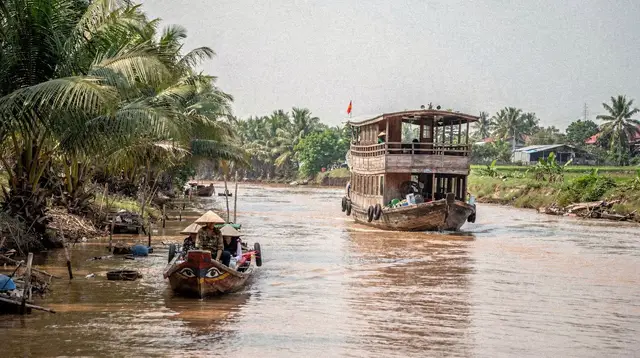
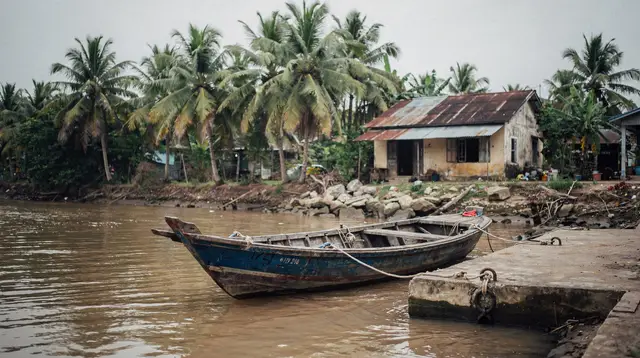
This is where the dry season changes the picture the most, precisely because the delta’s whole identity is water. Canal levels in and around My Tho, Ben Tre, Cai Be and Vinh Long run lower through these months, and the countryside around them can look noticeably drier and dustier than the lush, saturated green of the wet season. Orchard visits, brick-kiln stops and canal boat rides all continue as normal, but the visual character of the trip shifts: less mud, more dust, and riverbanks that sit a little further from the waterline.
Further south, Can Tho and the Cai Rang floating market keep running on their usual early rhythm regardless of season — the market’s schedule is tied to trade, not to weather — but a dry-season sampan ride there tends to be a calmer, more comfortable experience than one squeezed between storm cells. Towards Chau Doc and the approach to the Cambodian border, drier conditions generally make the roads and paths around Sam Mountain and the Tra Su forest easier going, even if the forest itself is naturally a wet, waterlogged landscape by design.
For visitors deciding how deep into the delta to go, the dry season removes one more reason to hesitate about longer combined routes, since a day trip out of Saigon or a sunrise run to the Cai Rang market is less likely to be reshaped by weather than the same route would be in the wet months.
a Can Tho cooking class that pairs naturally with a dry-season delta runThe coast and the islands in dry conditions
Coastal travel is the other place where the dry season earns its reputation, mainly because boat and ferry crossings tend to be steadier when storms aren’t building offshore. The run out to Con Dao, whether by air or by fast ferry, generally benefits from the calmer sea conditions that long dry stretches bring, though conditions still vary by day and should always be checked close to departure rather than assumed from the calendar alone.
Along the mainland coast, Vung Tau, Ho Tram and Long Hai all read as more straightforward beach destinations in the dry months, simply because there’s less chance of a day at the sea being cut short by rain. The port at Phu My, where cruise ships calling at Ho Chi Minh City actually dock, also tends to see steadier conditions for the road transfer inland during this window.
Further along the coast, the Mui Ne and Phan Thiet area is worth calling out specifically, because its landscape is a dry-season landscape by nature. The white and red sand dunes stay open and walkable throughout this period without the surface changes that heavier wet-season rain can bring, and the Fairy Stream keeps its usual shallow, walkable character. This stretch of coast sits on Vietnam’s south-central coastline in Binh Thuan province, not inside the Mekong Delta, a distinction worth keeping straight since the two are often confused despite being reached by very different routes from Ho Chi Minh City.
a three-day route from the city out to the Mui Ne dunes that leans on this drier stretch of coastCu Chi, Tay Ninh and the inland day trips
The north-west day-trip territory around the Cu Chi Tunnels, Tay Ninh and Black Virgin Mountain is largely unaffected in substance by the season, since the tunnels themselves are underground and the Cao Dai ceremony at the Holy See runs on its own fixed daily rhythm. What does change is the walking experience above ground: drier paths through the tunnel complex grounds, and generally more comfortable conditions for the climb or cable-car ride up Black Virgin Mountain, without the sudden downpours that can interrupt an outdoor day elsewhere in the year.
Inland further north, Cat Tien National Park also shifts character with the season. Its lowland forest and the Bau Sau wetlands depend on water, so a dry-season visit tends to mean lower water levels in the wetland areas, even as the forest itself, and the birds and primates it’s visited for, remain present year-round.
For anyone weighing the two inland day trips together, the dry months make the combination noticeably easier to plan. Because Cu Chi is a district of Ho Chi Minh City while the Cao Dai Holy See sits separately in Tay Ninh, roughly 100 km from the city, a full day that links the tunnels to the midday ceremony at the Holy See already asks a lot of the road; steady, rain-free conditions remove one more variable from an itinerary that already has little slack in it.
Why the dry season is the busier season for tours and boats
The flip side of steadier weather is steadier demand. Because fewer trips get rained out or rescheduled, the dry months — and especially the cooler edge of the window around December and January — tend to be when tour operators and boat schedules run closest to capacity, both in the city and in the delta. This does not change what is on offer, only how far ahead it is worth locking in a seat, particularly for smaller-group departures.
a small-group Mekong Delta day trip capped at 11 travellers, worth booking ahead in the busier dry monthsMulti-day delta routes see the same effect. A route that spends two or three days moving between Cai Be, Can Tho and Chau Doc depends on a string of boat transfers, and steady dry-season conditions make that kind of itinerary noticeably easier to run to schedule than the same route attempted around sudden wet-season storms.
a three-day Mekong Delta route to the Tra Su forest that benefits from dry-season boat conditionsPlanning a multi-stop trip in these months
Because the dry season removes weather as a source of last-minute change, it tends to suit longer combined routes that string together the city, the delta and the coast in one trip. A grand loop that touches Ho Chi Minh City, works south-west into the delta and finishes on the coast benefits from fewer weather-driven detours than the same route attempted in the wet months, and it’s part of why routes like a seven-day loop across the south or a three-day city-to-desert run are easy to plan with some confidence in this window.
That said, the dry season is not the only workable time to visit. The wet season’s rain, covered in its own guide, is typically a short, sharp late-afternoon event rather than an all-day washout, which is why most of southern Vietnam’s sights, food scene and tours function reasonably well across both halves of the year. The real planning questions — how many days to give the region and how to sequence the city, delta and coast — don’t change much with the season; the dry months just make the answer a little less dependent on the sky.
a seven-day route covering the city, delta and coast built for a full dry-season loopFAQ: Visiting Southern Vietnam in the Dry Season
Is the dry season in southern Vietnam actually cool?
No. The far south has two seasons, not four, and stays hot and humid throughout the year. The dry season simply removes the rain; it does not bring cooler weather the way a northern Vietnamese winter would.
When does the dry season run in southern Vietnam?
Roughly from December through April, with March and April generally the hottest stretch. Exact onset and end shift a little from year to year, so treat the months as a guide rather than a fixed switch.
Does the dry season affect Tet closures?
Tet, the lunar new year, usually falls within the dry season window, but its business closures and transport crush are a separate subject tied to the lunar calendar, not to the dry weather itself.
Is the Mekong Delta different to visit in the dry season?
The canals and rivers run lower and the countryside looks drier and dustier than in the wet months, but river life, floating markets and orchard visits continue as usual regardless of season.
Are the Mui Ne sand dunes better in the dry season?
The dunes are a dry-season landscape by nature and stay walkable and open throughout this period, without the surface changes that heavier wet-season rain can bring to the sand.
Is the dry season better for the coast and islands?
Long dry stretches generally suit boat crossings to Con Dao and beach time around Vung Tau and Ho Tram better than the sudden downpours of the wet season, though sea conditions still vary and should always be checked closer to the date.
Should I still expect any rain in the dry season?
Some years bring occasional short showers even within the dry months, since the seasonal pattern is a general tendency rather than a guarantee, but sustained dry weather is the norm across this window.
Is the dry season the only good time to visit southern Vietnam?
No. The wet season, covered separately, brings its own short late-afternoon downpours rather than all-day rain, and most of the region’s sights, tours and food scene work well in either season.
Seasonal Guide
Verified deep-linked GetYourGuide tours. Book through these links and we earn a small commission at no cost to you.
GetYourGuide does not provide a product photo for this activity — the image shows the meeting point, photographed by us.