Say “Mui Ne” to most travelers heading up the coast from Ho Chi Minh City and they picture red and white sand dunes, a strip of beachfront resorts, and a stretch of kitesurfing coastline. Say “Phan Thiet” and many of the same travelers picture exactly the same thing. They are wrong to, and it is worth untangling why before setting foot in either place.
A port town, not a resort strip
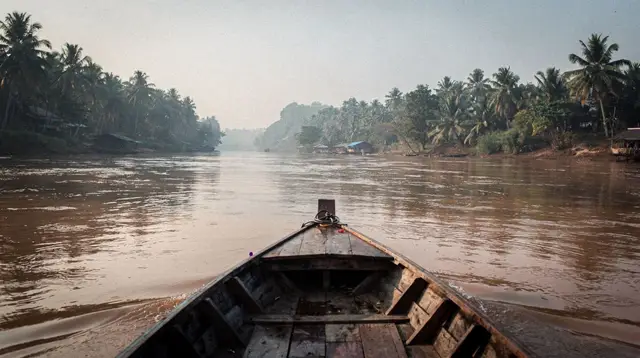
Phan Thiet is the capital of Binh Thuan province and a working fishing port on the banks of the Ca Ty River, where it meets the sea. It has its own harbor, its own fish market, its own fleet of blue-hulled boats, and its own history as a coastal trading town that goes back long before anyone built a beach resort anywhere nearby. Mui Ne, by contrast, is a separate coastal strip a short drive to the north-east, shaped almost entirely by tourism: a line of hotels and restaurants facing the sea, with the sand dunes as its signature attraction.
The two are close enough, and their names get used loosely enough by guidebooks and booking platforms alike, that most visitors arrive assuming Phan Thiet is simply Mui Ne’s official name, or its downtown. It is not. It is its own town, with its own economy and its own daily life, and it happens to sit next to a resort strip that borrowed its province’s fame.
This page is deliberately narrow. It is not a repeat of what belongs on the Mui Ne page — the dunes, the resorts, the kitesurfing schools, the Fairy Stream — all of that lives there, and this page will point toward it rather than duplicate it. What belongs here is Phan Thiet on its own terms: a provincial capital and a fishing port, and the handful of things in and around it that reward a visit precisely because they are not the beach.
What Phan Thiet actually is
Binh Thuan province runs its administration, its courts, its markets, and its schools out of Phan Thiet, not out of Mui Ne. That distinction matters more than it sounds, because it explains the texture of the place: Phan Thiet has a town center built for the people who live and work there year-round, not for travelers passing through for a few nights. Shops sell hardware and school supplies alongside fish. Traffic follows the ordinary rhythm of a Vietnamese provincial town rather than the tourist-season rhythm of a resort strip. Cafes serve regulars rather than menus translated into four languages.
The harbor is the town’s clearest identity. Boats go out and come back on their own schedule, dictated by the sea rather than by a tour itinerary, and the market beside the water runs on that same rhythm: crates of the night’s or the morning’s catch, ice, buyers moving fast, boats being repaired and repainted along the bank. It is a working industrial waterfront, not a photogenic backdrop staged for visitors, and it rewards a slow look rather than a quick photo stop. A local guide who knows when the fleet actually comes in — rather than a fixed slot on a printed schedule — makes far more sense of it than a self-guided pass.
Phan Thiet also carries a long association with nuoc mam, Vietnam’s fermented fish sauce. Family-run workshops along the river and the harbor still ferment fish in wooden barrels using methods that go back generations, and the smell of it drifting over parts of the old town is as much a marker of the place as the boats themselves. This is not a museum piece kept alive for tourists; it is an ordinary regional industry that happens to be centuries old.
Above the town, on a low hill, sit the Poshanu Cham Towers — brick towers built by the Cham kingdom of Champa, which controlled this stretch of coast long before it became part of Vietnam. They are modest next to the grander Cham sites further north and outside the geography this site covers, but they are a genuine and often overlooked reminder that Binh Thuan’s history did not begin with either fishing or tourism. The old quarter along the Ca Ty River adds another layer again, with buildings from Phan Thiet’s time as a French-era port town, now sitting quietly among newer construction.
Why the confusion with Mui Ne happens
The mix-up between Phan Thiet and Mui Ne is understandable, and worth explaining rather than just correcting. Mui Ne is technically a ward that now falls under Phan Thiet’s administrative boundaries, which means that on a map, and in some official documents, “Mui Ne” appears as a part of “Phan Thiet” rather than as a separate town. Add to that decades of tourism marketing that used “Mui Ne” as the recognizable brand name for the whole area’s beaches and dunes, and it becomes easy to see how the resort strip’s name absorbed the province’s identity in most travelers’ minds, while the actual town of Phan Thiet — the fishing port, the market, the administrative center — dropped out of the picture almost entirely.
The practical result is that plenty of people who have stayed in a resort “in Mui Ne” have never actually set foot in Phan Thiet’s town center, a short drive away, and have no idea it functions as a real working town with its own identity. The reverse is also true: travelers reading about Phan Thiet’s fishing heritage sometimes expect to find it along the same beachfront as the resorts, and are surprised to find a river harbor and a market instead of a strip of sand.
The clearest way to hold the two apart is by function rather than by geography. Mui Ne is built for visitors: it exists in its current form because of the dunes and the coastline, and its economy runs on hotel bookings, restaurant tables, and tour departures. Phan Thiet exists because of the harbor, the province’s administration, and the trade that has run through this stretch of coast for a very long time; visitors are a relatively recent and still secondary part of its economy, layered on top of a town that would carry on much the same without them.
Fitting Phan Thiet into a coastal trip
Most visitors reach this stretch of coast from Ho Chi Minh City on the coastal expressway, and Phan Thiet sits directly on that route before the road reaches the resort area further along. That makes a stop in Phan Thiet a natural addition rather than a detour: a driver or a guided day trip heading toward the dunes can build in time at the harbor and the old quarter on the way through, without adding a separate leg to the journey.
Independent travelers basing themselves in a Mui Ne resort can treat Phan Thiet the same way, as a short trip out rather than a full day on its own. A morning at the harbor when the fleet is active, a look at the Poshanu towers, and a walk through the old quarter along the river cover the town’s essentials without requiring an overnight stay separate from the resort strip.
a guided evening food walk that pairs Phan Thiet’s harbor with a stop at the Cham towers is one way to see the town’s working side with someone who can read the harbor’s rhythm and point out what a first-time visitor would otherwise walk past.
For travelers who want to push further along the coast rather than turning back toward the dunes, a day trip out to the Ke Ga lighthouse and the Ta Cu hillside extends the same coastal stretch south-east of town into a fuller day. Inland from the harbor, the province’s newer wine-growing area has also become a stop on its own terms; an entry ticket and tasting at the Rd Wine Castle gives a very different picture of Binh Thuan from either the harbor or the dunes.
None of this replaces a proper look at Mui Ne’s dunes or the Fairy Stream walk, both of which belong to the resort strip’s own itinerary and are covered in full elsewhere on this site. It simply adds a genuinely different half-day to a trip that would otherwise see only the beach side of Binh Thuan.
What the town does not need repeated here
Because Phan Thiet and Mui Ne sit so close together, it is tempting to fold their attractions into one list. This page resists that on purpose. The dunes, the ATV and buggy rides across them, the sunrise departures, and the resort beachfront all belong to Mui Ne’s own identity and its own pages, including the guide to the red and white dunes, the ATV and jeep tours across them, and the dedicated sunrise dune guide.
Travelers deciding between the two coastal identities — a beach base against a broader look at the province — are better served by a direct comparison such as Mui Ne against Vung Tau for a beach trip or the more general question of choosing a beach near Saigon, both of which weigh the resort side of this equation properly.
What this page adds instead is the part those comparisons skip: the working town that shares the province’s name recognition without sharing its tourism economy. For food-focused travelers, that distinction plays out most clearly around the harbor and its market, and the site’s street food touring coverage and the broader seasonal planning pages are the right place to look for how weather and timing shape a visit to either Phan Thiet or Mui Ne, rather than repeating that detail on every destination page.
The dry season overview and its rainy season counterpart cover how the region’s two-season climate affects a coastal trip generally, and the roundup of iconic southern dishes covers the food culture that Phan Thiet’s fish sauce tradition and harbor market both feed into.
Planning around Phan Thiet and the wider coast
Travelers building a longer loop out of Ho Chi Minh City often use Phan Thiet as one stop among several along the Binh Thuan coast, rather than a destination in its own right. The three-day desert escape itinerary and the four-day comfort itinerary by private car both pass through this stretch of coast and can be adapted to include time in the town itself rather than only the resort strip.
For anyone weighing whether this general area belongs in a southern Vietnam trip at all, the broader Ho Chi Minh City overview and the things to do around Phan Thiet and things to do around Mui Ne category pages are the better starting points, with this page kept for the narrower question of what Phan Thiet itself actually is.
The short version worth carrying forward: Phan Thiet is Binh Thuan’s provincial capital and a fishing port with its own harbor, market, fish sauce tradition, and Cham heritage sites; Mui Ne is the resort strip a short drive away, built around the dunes and the coastline. Both are worth a visit. They are not the same visit.
Phan Thiet questions, answered
Is Phan Thiet the same place as Mui Ne?
No. Phan Thiet is the provincial capital of Binh Thuan and a working fishing port on the Ca Ty River. Mui Ne is a separate coastal strip nearby, built around resorts and the sand dunes. The two names get used loosely by travelers, but the places themselves are distinct.
What is Phan Thiet known for, if not the beach resorts?
Phan Thiet is known first as a fishing port, with a harbor that still runs on the rhythms of the boats going out and coming back. It is also the administrative and commercial capital of Binh Thuan province, and a town with a long fish sauce tradition and Cham heritage sites in its surroundings.
Do I need to visit Phan Thiet separately from Mui Ne?
Not necessarily. The two sit close enough together that a driver or a guided day trip can combine them, with time in Phan Thiet’s harbor and market alongside the dunes and coastline further along in Mui Ne. Independent travelers with their own transport can also treat Phan Thiet as a short detour from Mui Ne.
Is Phan Thiet part of the Mekong Delta?
No. Phan Thiet sits on the south-central coast in Binh Thuan province, well to the north-east of Ho Chi Minh City and nowhere near the Mekong Delta, which lies to the south-west. The confusion comes up often enough that it is worth stating plainly.
What does the fish sauce tradition in Phan Thiet involve?
Phan Thiet has long been associated with nuoc mam, Vietnam’s fermented fish sauce, produced in wooden barrels by family workshops along the harbor and the riverside. It is one of the clearest signs that this is a production town built around the sea, not a resort built for it.
Are there historic sites in Phan Thiet itself?
Yes. The Poshanu Cham Towers sit on a hill above the town and predate the Vietnamese city by centuries, a reminder that this stretch of coast belonged to the Cham kingdom of Champa long before it became part of Vietnam. The old quarter along the Ca Ty River also holds French colonial-era buildings from the town’s history as a port.
What is the best way to see Phan Thiet’s harbor?
The harbor is at its most active around the boats’ comings and goings, when the fleet and the market alongside it are working at full pace. A local guide who knows the harbor’s rhythm can time a visit better than a self-guided stop, and can also make sense of what is otherwise a working industrial waterfront to an outside eye.