The downtown core, not the whole city
District 1 is the administrative and commercial heart of Ho Chi Minh City, but it is only one slice of it. Locals and visitors alike use “Saigon” loosely to mean the whole metropolis, and sometimes specifically this downtown core — the two usages coexist without much confusion once you know the pattern. What matters for planning is the geography: District 1 is a compact, walkable grid bounded roughly by the Saigon River to the east and south, with the rest of the city’s districts fanning out around it. It is where most hotels, most restaurants aimed at travelers, and most of the landmark buildings people picture when they think of the city are concentrated.
This page focuses on that downtown grid itself — its streets, squares and buildings — rather than repeating the city-wide orientation already covered on the Ho Chi Minh City overview page. For the market at its western edge and the river along its eastern flank, see the dedicated pages on Ben Thanh Market and the Saigon River; both deserve their own treatment and aren’t repeated here.
District 1 versus Cholon: two different places
One of the most common mix-ups for first-time visitors is treating District 1 and Cholon as the same neighborhood, or as somehow interchangeable “downtown” and “Chinatown” versions of the same few blocks. They are not. Cholon is the city’s historic Chinese quarter, spread across Districts 5 and 6, a distinct urban fabric of its own with different architecture, different markets and a different rhythm — see the Cholon neighborhood guide for that side of the city.
District 1 sits to the east of Cholon, closer to the river, and its buildings and street pattern reflect a different layer of the city’s history: French colonial administration and, later, the mid-twentieth-century capital of South Vietnam, rather than the merchant quarter that Chinese communities built up over generations.
Knowing this boundary matters practically. A traveler who plans “one afternoon in District 1 and Cholon” is usually underestimating the distance and the different character of each place; they are better treated as two separate outings, ideally on different days. If your main interest is Chinese temples, wholesale markets and a denser, older street grid, head to Cholon and read the Cholon neighborhood guide before you go. If your interest is colonial landmarks, rooftop bars and the walking streets described below, you are already in the right place.
Nguyen Hue and the pedestrian spine
Nguyen Hue is the wide, tree-lined pedestrian boulevard that runs from the riverfront up toward the People’s Committee Building, and it functions as the city’s civic stage: flower festivals, New Year countdowns, protests, and ordinary evening strolls all happen along this axis. Cafés with second-floor balconies line both sides, giving a vantage point over the boulevard below, and the surrounding blocks hold some of the city’s densest concentration of coffee shops stacked inside converted apartment buildings — a distinctly local phenomenon worth exploring on foot rather than by any single itinerary.
Dong Khoi, the parallel street running toward the river, has a different character: colonial-era shopfronts alongside international boutiques, a legacy of its role as the main commercial street under French administration. Together, Nguyen Hue and Dong Khoi form the spine that most walking routes through District 1 follow, and the District 1 neighborhood guide lays out a fuller block-by-block route if you want more structure than a single overview page can offer.
Notre-Dame Cathedral Basilica and the Central Post Office
Facing each other across a small square are two of the city’s best-known colonial-era buildings: the Notre-Dame Cathedral Basilica of Saigon and the Central Post Office. The cathedral is currently under a long-running restoration, so its exterior is partly obscured by scaffolding and hoarding rather than fully visible the way older photographs show it — worth knowing before you plan a visit built around exterior photography. The Central Post Office next door, designed in the same colonial period, still functions as a working post office and is worth stepping inside for its ironwork and vaulted ceiling regardless of whether you need to send anything.
The guide to Notre-Dame Cathedral and the Central Post Office goes into the history and layout of both buildings in more depth. Nearby, the Reunification Palace and its dedicated tickets guide cover the former Independence Palace, another landmark building within easy walking distance of this square, while the War Remnants Museum and its companion visitor guide sit a short walk further out and warrant their own dedicated visit rather than being folded into a single cathedral-square stop.
Bitexco Financial Tower and the skyline
Rising above the eastern edge of District 1, the Bitexco Financial Tower is one of the more recognizable additions to the skyline, its distinctive lotus-inspired form visible from across the river. Its observation deck and rooftop bar give a different perspective on the city than the street-level landmarks described above, looking out over the river bend, the older colonial rooftops of District 1 and the newer high-rises of Binh Thanh and Thu Duc City on the far bank.
The Bitexco Tower skydeck guide covers what to expect from a visit, and the Saigon rooftop bars guide rounds out the options if a drink with a view interests you more than a dedicated observation deck.
Bui Vien and the backpacker strip
At the western edge of the district, closer to Ben Thanh Market than to the river, Bui Vien street and its surrounding lanes form the city’s best-known backpacker and nightlife strip: a dense run of bars, street stalls and budget guesthouses that comes alive after dark. It has a rougher, louder character than the boulevards further east, and it draws a different crowd — long-haul backpackers and younger travelers rather than the hotel guests clustered around Dong Khoi. The Bui Vien nightlife guide covers this strip in detail, including how it differs in tone from the rooftop-bar scene described above.
Jade Emperor Pagoda
A short trip north of the main tourist core, the Jade Emperor Pagoda offers a change of pace from the colonial landmarks and modern towers that dominate the rest of District 1: a smoky, atmospheric Taoist temple filled with carved wooden figures, incense coils and a courtyard pond. It’s a useful counterpoint if you want a religious or spiritual site without leaving the district for the temples of Cholon, and it pairs naturally with the broader temple circuit covered in the Cholon pagodas tour guide for travelers who want to see both traditions in context. For a dedicated walkthrough of the pagoda itself, see the Jade Emperor Pagoda guide.
How District 1 connects to the rest of the city
District 1 works well as a base precisely because everything else radiates out from it. District 3, just northwest, has a quieter, more residential feel with its own concentration of villas-turned-cafés; District 4, across a narrow channel to the south, is known for a denser, more local street-food scene than the tourist-oriented restaurants of the center; and Binh Thanh, across the main river to the northeast, is home to Landmark 81, the country’s tallest tower, forming a second skyline visible from District 1’s own riverside vantage points. None of these neighborhoods are part of District 1 itself, but all are close enough to combine with a downtown stay.
The where to stay in Saigon by neighborhood guide compares District 1 against these surrounding areas for travelers deciding where to base themselves, and the getting around Saigon guide explains how to move between them once you’ve chosen. If your onward plans include an evening out on the water rather than another round of street-level sightseeing, the district’s riverfront also serves as the departure point for cruises along the Saigon River:
You can drift past the District 1 skyline after dark on the Romantic Saigon River Dinner Cruise Experience, or opt for a larger-scale evening out with the Saigon River Premium Buffet Dinner Cruise, both of which board from wharves within easy reach of the downtown core.
Walking the district on foot
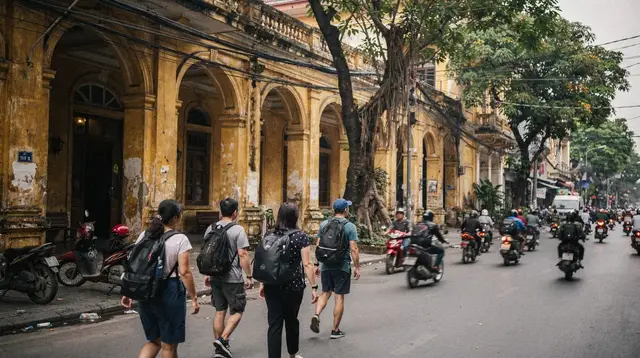
Because District 1 is compact and largely flat, most of what’s described above can be covered on foot, provided you break it into more than one outing rather than trying to fit the cathedral square, the riverfront tower and the backpacker strip into a single walk. A structured route helps here more than an improvised wander: the Ho Chi Minh City walking tour guide lays out a sequence that links the main landmarks without unnecessary backtracking, while the Saigon vintage jeep tour and Saigon cyclo tour guides cover slower, guided alternatives for travelers who’d rather not walk the whole circuit themselves.
For food, the district’s restaurants skew toward a broader, more international range than the specialized street-food lanes of District 4 or Cholon, though plenty of excellent local kitchens sit tucked between the hotels and boutiques. If a deeper dive into the city’s street-food culture is more what you’re after, the District 4 Street Food Walking Tour covers ground that District 1 itself doesn’t, in the denser lanes just across the channel to the south.
Using District 1 as a launchpad
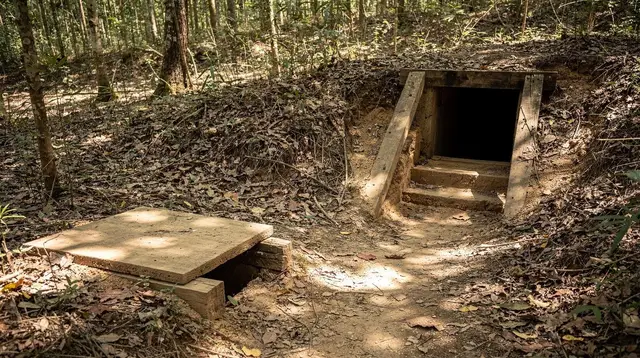
Most visitors treat District 1 not just as a destination but as the staging point for everything else this site covers: the tunnels and holy sites northwest of the city, the delta towns and floating markets southwest of it, the coastal towns and islands to the southeast, and the dune country to the northeast.
Hotels here put you within a short transfer of nearly all of these departure points, which is part of why the district holds such a concentration of accommodation despite its modest size. If a wider loop through the delta is on your list, the Mekong Delta: Tour is one of several departures that pick up from central hotels, and the Mekong Delta destination page covers that region on its own terms.
District 1, Ho Chi Minh City: frequently asked questions
Is District 1 the same as Cholon?
No. District 1 is the downtown core with the colonial landmarks, Nguyen Hue and the Bitexco tower; Cholon is the historic Chinese quarter across Districts 5 and 6, further west, with its own markets, temples and street pattern. They are usually visited on separate outings.
Is Ben Thanh Market inside District 1?
Ben Thanh Market sits at the western edge of District 1, but it has its own character, its own trading history and its own visiting tips, which is why it’s covered on a dedicated page rather than folded into this overview.
Can I see the Saigon River from District 1?
Yes, District 1’s eastern edge runs along the river, and several landmarks, including the Bitexco tower and the departure wharves for evening cruises, sit close to the waterfront. The river itself, its boat traffic and its onward routes are covered on their own page.
Why is the cathedral covered in scaffolding?
Notre-Dame Cathedral Basilica of Saigon has been undergoing a long-running restoration, so its exterior is partly obscured rather than freshly visible in current photographs. The Central Post Office next door is unaffected and remains fully open to visit.
Is District 1 walkable?
Yes, it’s compact and largely flat, and most of its landmarks can be reached on foot, though it’s more comfortable to split the district into more than one walking outing rather than covering everything in a single pass.
Where does Bui Vien fit into District 1?
Bui Vien and its surrounding lanes sit at the western side of the district, closer to Ben Thanh Market than to the riverfront, and form the city’s best-known backpacker and nightlife strip, distinct in tone from the rooftop bars nearer the tower.
Should I stay in District 1 or somewhere else?
Most first-time visitors base themselves in District 1 for its central location and walkability, though quieter alternatives exist nearby in District 3 and across the river in Thao Dien; a full comparison sits in the neighborhood guide linked above.