Reading the collection, not just visiting the building
The War Remnants Museum sits in the heart of District 1, a short walk from the streets that most visitors already cross between Ben Thanh Market and the riverside. That location matters, because it shapes what kind of place this is. This is not a wartime site preserved where events happened — it is a purpose-built museum, assembling objects, photographs and testimony from across the American War and presenting them in one building and courtyard. Understanding that distinction is the key to visiting it well, and to not confusing it with the very different experience waiting an hour or two outside the city.
Most first-time visitors arrive with a vague sense that “the war museum” and “the tunnels” are somehow the same trip, or interchangeable options for the same afternoon. They are not. This page focuses tightly on what the museum itself contains and what it means, and leaves the practicalities of ticketing, queueing and timing to a dedicated guide, linked below. What follows is a look at the collection, its structure, and the historical ground it covers — the part of the visit that a courtyard full of hardware and a corridor of photographs does not explain on its own.
What sits in the courtyard
Before a single indoor gallery, the museum’s outdoor space does a particular kind of work. The courtyard and grounds hold a collection of American-made military equipment used during the war: aircraft, an armoured vehicle, and heavy ordnance, arranged as static exhibits rather than staged for effect. Walking among them gives a physical sense of scale that photographs alone do not — the size of a tank next to a person, the wingspan of an aircraft parked a few metres from a sidewalk. It is also, deliberately, the most photographed part of the museum, and the part many casual visitors remember best, even though it is really the entry point to a much denser indoor collection.
It is worth resisting the instinct to treat the courtyard as the whole visit. The hardware establishes context — American matériel, present in Vietnam in enormous quantities — but the museum’s actual argument, its point of view on the war, is made almost entirely indoors, through photography and documentation rather than equipment.
The indoor galleries: photography as the core of the museum
Once inside, the museum is organised as a series of thematic rooms rather than a single chronological narrative, and photography carries most of the weight. Several galleries draw specifically from war photojournalists — many of them killed while covering the conflict — whose images circulated internationally and shaped how the war was seen abroad. This is one of the museum’s most distinctive features: it functions in part as a memorial to photojournalism itself, with images credited to photographers from multiple countries, several of whom died in the field.
Other rooms focus on the human and environmental consequences of the war that extended well beyond combat: the long-term effects of chemical defoliants used during the conflict, documented through photography, medical material and personal accounts; the experience of civilians in contested areas; and displays connected to detention and interrogation practices during the war, including material relating to facilities used for political prisoners. These sections are direct, and the museum does not soften them for a general audience — a point worth knowing before a visit, particularly when travelling with children, since some galleries contain graphic imagery.
A further gallery traces international reaction to the war: the global anti-war movement, solidarity campaigns, and press coverage from outside Vietnam and the United States, giving the museum a wider frame than a purely national telling of the conflict. Read together, the galleries build an argument about the scale and reach of the war — military, civilian, environmental and international — rather than simply cataloguing weapons and dates.
A city museum, not a wartime landscape
This is the point where confusion most often creeps into trip planning, and it is worth stating plainly: the War Remnants Museum and the Cu Chi Tunnels are not two versions of the same thing. They sit in different parts of the region covered by this site, they were built for different purposes, and they ask something different of a visitor.
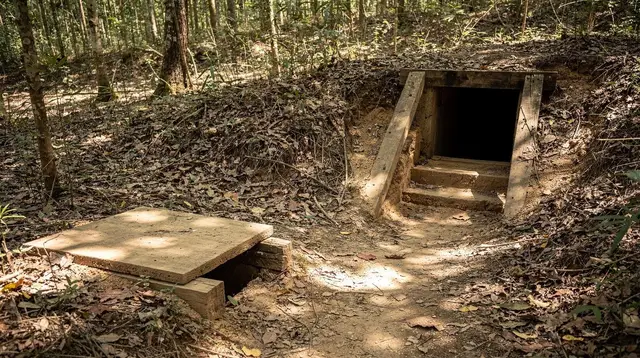
The museum is an indoor, curated institution in the city, telling its story through objects, images and text, in a controlled setting a few minutes from a hotel or a café in District 1. Cu Chi is the opposite kind of place: an actual underground tunnel network in a district well outside the city centre, visited by walking and crawling through a landscape, with the tunnels themselves — rather than a curated collection — as the subject.
One is a museum visit; the other is closer to a site visit, and travellers who expect the Cu Chi Tunnels to feel like “the tunnels section of the war museum” are usually surprised by how physical and outdoor the experience actually is. For the difference in what each site involves, Ben Duoc versus Ben Dinh at Cu Chi and how the tunnel network worked are useful companion reads, and half-day versus full-day at Cu Chi covers how much of a separate outing it needs.
The two sites are genuinely complementary rather than redundant: the museum gives context, imagery and testimony that make the tunnels more legible once you’re standing at their entrance, and the tunnels give physical, spatial understanding that no photograph in the museum can substitute for. Travellers who want both in a single, well-sequenced day rather than as two separate errands can look at a combined Cu Chi Tunnels and Cao Dai Temple day trip or a broader Cu Chi Tunnels and Mekong Delta day trip, both of which treat the museum and the tunnels as separate stops rather than one site.
For travellers assembling a full day around the museum instead, this tour bundles the entry with a Cu Chi visit on the same itinerary:
a full-day tour from Ho Chi Minh City combining the Cu Chi Tunnels with other stopsAnd for a version that pairs the museum’s entry ticket with a quieter tunnel site rather than the busiest one, there is:
a combined visit to the War Remnants Museum and the less-crowded Ben Duoc tunnel siteHow this museum fits alongside the city’s other war-history sites
The War Remnants Museum is the most visited war-history site in Ho Chi Minh City itself, but it is not the only one, and it is not meant to stand in for the others. The Reunification Palace, the former Independence Palace, tells a different and more specific story — the political end of the war in the south, captured in the building’s own preserved rooms rather than through a curated exhibition — and deserves its own visit and its own reading; see the Reunification Palace guide for what the building itself contains.
Because these sites sit close together in the same part of District 1, many visitors combine them into a single half-day of walking, moving between the museum, the palace, and nearby landmarks such as Notre-Dame Cathedral Basilica and the surrounding streets. A Saigon war sites walking tour lays out a sensible order for doing exactly that without backtracking across the city.
For a fuller picture of everything in the region connected to the conflict — sites in the city, at Cu Chi, and further afield — the war history category on this site groups them together, rather than leaving visitors to piece the connections together from separate destination pages. It’s the right next stop after this one for anyone building a history-focused day or two rather than a single museum visit.
Setting the museum in the wider war
The museum’s subject is the American War — the term used locally for the conflict fought across Vietnam through the 1960s and into the mid-1970s — and its focus is naturally weighted toward the south, since Ho Chi Minh City (then Saigon) was the capital of the Republic of Vietnam and the centre of much of the war’s political and military activity in this region. The museum does not attempt to cover the war’s full geography; the Ho Chi Minh Trail and the south is a useful companion for understanding how the network of supply routes connected the fighting here to the wider conflict further north and along the border with Cambodia and Laos.
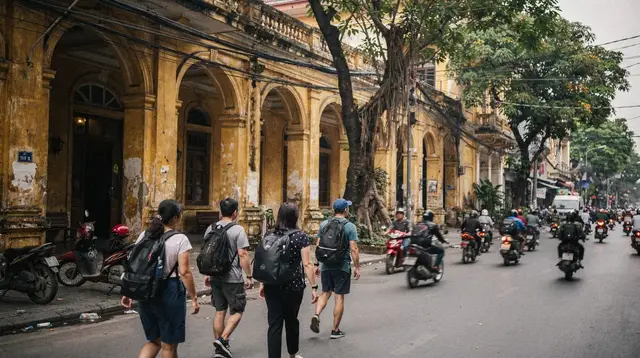
It is also worth remembering, walking out of the museum and back into the pace of the modern city, how much has changed around it. The streets nearby — Dong Khoi, the riverside promenade along the Saigon River, and the commercial energy of central District 1 — belong to a city that has moved a long way from the period the museum documents. That contrast, between a preserved historical argument and a fast-moving contemporary city built up around it, is part of what makes a visit here feel different from a visit to a rural wartime landscape like Cu Chi, where the historical setting is still largely undisturbed.
Planning the rest of the day around it
Because the museum sits centrally, it slots easily into a broader day of sightseeing rather than needing to anchor a special trip on its own. Many visitors pair it with the Reunification Palace and a walk through Cholon or along the river later in the day; others treat it as the historical anchor of a one-day Ho Chi Minh City highlights itinerary that also covers markets, temples and the skyline.
Travellers who want to separate history from leisure entirely sometimes visit the museum in the morning and spend the evening on the water instead — the contrast works well precisely because the two experiences are so different in tone:
an evening dinner cruise on the Saigon RiverFor those planning to see the Cu Chi Tunnels on a separate day rather than folding them into a museum day, the one-day Cu Chi Tunnels itinerary is built around exactly that separation, and keeps the museum visit unhurried rather than squeezed between two very different experiences on the same morning.
Booking entry
Entry to the museum can be arranged in advance rather than queued for on arrival, which is worth doing if the museum is only one stop in a fuller day:
a War Remnants Museum entry ticketFor the practical detail of what a ticket covers and how the visit is organised once inside, the War Remnants Museum tickets guide picks up where this page leaves off, and the general War Remnants Museum guide works well as a next read for anyone who wants a broader orientation before visiting.
War Remnants Museum: frequently asked questions
Is the War Remnants Museum the same as the Cu Chi Tunnels?
No. The museum is an indoor collection of photography, documents and military hardware in central Ho Chi Minh City, telling the story of the American War through curated exhibits. The Cu Chi Tunnels are an actual underground wartime network in a district well outside the city, visited as a physical site rather than a museum. They cover related history but are entirely separate places and separate kinds of visit.
What does the museum’s collection actually consist of?
An outdoor courtyard of captured military equipment — aircraft, an armoured vehicle and ordnance — and a set of indoor galleries built mostly around photography, including work by war photojournalists, alongside documentation of the war’s civilian, environmental and international dimensions. Text panels and personal artefacts support the photography throughout.
Should I visit the museum before or after the Cu Chi Tunnels?
Either order works, but treat them as two separate outings rather than one long day if possible. Many travellers find the museum adds useful context before visiting Cu Chi, since it explains the wider conflict that the tunnels were part of, but it isn’t essential to see one before the other.
Is the museum only about the American War, or does it cover more of Vietnamese history?
Its focus is specifically the American War and its consequences. For broader Vietnamese and Ho Chi Minh City history — including the earlier colonial period — sites like the Reunification Palace and the city’s colonial-era architecture tell a wider story than the museum alone.
Are there other war-related sites in Ho Chi Minh City besides this museum?
Yes. The Reunification Palace covers the political end of the war from inside the building where it happened, and several walking routes in District 1 connect it with the museum and other nearby landmarks in a single outing.
Is the museum suitable for children?
Some galleries contain graphic photography and difficult subject matter, including material on chemical defoliants and detention practices. Many families visit successfully, but it’s worth knowing the content in advance rather than assuming it is a light historical stop.
Does the museum explain the Ho Chi Minh Trail or the wider war outside this region?
Only in passing. Its focus stays close to the south and to Ho Chi Minh City’s role in the conflict. Readers interested in the broader network of wartime supply routes and the war’s geography beyond this region should look at dedicated reading on the Ho Chi Minh Trail rather than expecting full coverage inside the museum itself.
Can I combine a museum visit with a river cruise or other city activities on the same day?
Yes, easily, since the museum sits centrally and doesn’t require a long excursion out of the city. A common pattern is a morning at the museum and nearby historical sites, followed by an afternoon or evening on the river or exploring markets and neighbourhoods elsewhere in the city.