A Coastal City With Its Own Province
Vung Tau is easy to place on a map and easy to mislabel once it’s there. It sits on a small peninsula on the south-east coast, and it belongs to its own province, Ba Ria-Vung Tau, rather than to Ho Chi Minh City itself.
That distinction matters more than it might seem: because Vung Tau is close enough to Saigon to be a routine weekend trip, travelers sometimes assume it must be part of the same administrative or geographic package as the city, or worse, part of the Mekong Delta. It’s neither. Vung Tau is a coastal city with its own identity, its own port history, and its own relationship to the sea, and the clearest way to understand it is to stop measuring it against the delta altogether.
The peninsula itself gives Vung Tau a shape unlike almost anywhere else within reach of Saigon: a narrow spit of land with hills at its tip, water on multiple sides, and a long promenade that wraps around the coastline. That geography is why the city became a seaside retreat in the first place, first for colonial-era visitors and later for generations of Saigon residents looking for the closest genuine beach town. None of that history involves rivers, canals, or rice paddies, which is precisely why lumping Vung Tau in with the delta misreads the place from the start.
Not the Mekong Delta — a Different Coast Entirely
It’s worth stating plainly, because the mix-up is common: Vung Tau has no meaningful geographic connection to the Mekong Delta. The delta is a vast, flat network of distributaries and canals to the south-west of Saigon, built around rice cultivation, orchards, and floating trade. Vung Tau lies to the south-east, on solid coastal terrain shaped by hills and open sea rather than river silt.
A trip to one tells you almost nothing about the other, and the region page for the coast and islands within reach of Saigon treats Vung Tau, Can Gio, Ho Tram, and Con Dao as one coastal family, distinct from the delta’s separate cluster of destinations.
The confusion likely comes from the fact that both regions get bundled into general “day trips from Saigon” conversations, and both are reachable by road from the city in a single outing. But the roads run in opposite directions, the landscapes look nothing alike, and the food, boats, and rhythms of daily life differ sharply. If a delta cruise and a Vung Tau beach afternoon get pitched together as a single easy pairing, that’s a sign the itinerary hasn’t accounted for the geography. They sit at two different edges of the region this site covers, and combining them in one day is not realistic.
What Vung Tau Feels Like
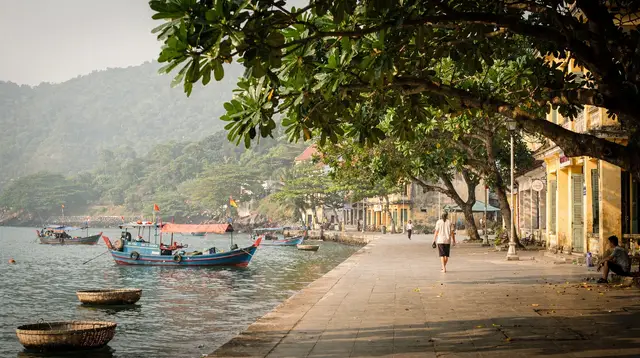
Vung Tau reads as a small city built around its coastline rather than a resort strip layered onto empty sand. The town itself has a working feel — fishing boats, seafood restaurants, local markets — alongside the parts built for weekend visitors: hotel rows facing the water, cafes on the hillside roads, and a night market that fills with locals as much as travelers. It’s a place Saigon residents actually live in and retreat to, not a destination invented purely for tourism, and that gives it a texture different from purpose-built beach resorts elsewhere on the coast.
The hills at the peninsula’s tip are the city’s defining feature. Small Mountain and Big Mountain rise directly from the coastline, and the hilltop Christ statue — arms outstretched over the sea, reachable on foot up a stepped path — is the single most recognizable image of Vung Tau. The old French-era lighthouse sits nearby, and the winding roads around both hills give sweeping views back over the peninsula and the shipping lanes beyond it. Closer to sea level, the promenade along the main beachfront is where the city’s daily life plays out: exercise in the early hours, seafood stalls through the afternoon, and a steady stream of motorbikes and walkers once the heat eases.
For a closer look at the beaches themselves — which stretch differ, which face open sea versus a sheltered bay, and which suit a quiet afternoon versus a livelier weekend crowd — the dedicated guide to Vung Tau’s beaches and the wider beaches and islands category cover that ground in the detail it deserves; this page keeps its focus on the city as a whole rather than repeating that comparison here.
A Working Port City, Not Just a Beach Town
Part of what separates Vung Tau from a purely recreational beach destination is its role as a port and, historically, an oil and gas hub for the region. That maritime identity still shapes the city’s edges: cargo terminals, support vessels, and a genuine fishing fleet share the coastline with the beach resorts. Cruise ships calling at Ho Chi Minh City actually dock at Phu My, the deep-water port along this same stretch of coast, and passengers arriving that way often use Vung Tau as their first taste of Vietnam’s southern coastline before or after a transfer into the city itself. The shore excursions category groups the options built specifically around that arrival pattern.
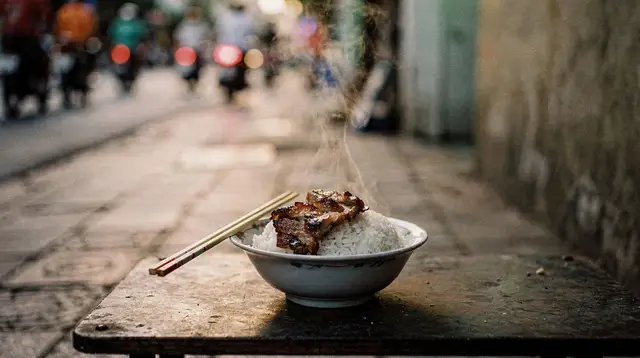
That working-port character also explains why Vung Tau’s seafood culture runs so deep. The daily catch moves quickly from boat to market to table, and the city’s restaurants lean on that supply chain rather than on imported or farmed stock. It’s one of the more grounded, least performative food scenes on this stretch of coast, closely tied to the fact that Vung Tau earns its living from the sea as much as from tourism.
Getting to Vung Tau From Saigon
Nearly every trip to Vung Tau from Ho Chi Minh City happens by road, whether in a private car, a shared van, or a coach service aimed at day-trippers. The route runs east out of the city and down the coast, and it’s popular enough that it functions as a well-worn weekend circuit for Saigon residents rather than a specialist itinerary. Because the drive is manageable in a single day, Vung Tau works equally well as a straightforward out-and-back trip or as the first stop on a longer coastal loop that continues toward Ho Tram or connects onward toward Con Dao by air or ferry from further along the coast.
Several tours combine Vung Tau with other well-known stops rather than treating it as a stand-alone destination. A route pairing the beach and the hilltop Christ statue with a relaxed lunch is one of the more straightforward ways to see the city’s highlights in a single visit — the Ho Chi Minh City to Vung Tau beach and Jesus statue lunch tour follows exactly that pattern.
Travelers who want to fold in some of the region’s wartime history before heading to the coast can look at the Cu Chi Tunnels and Vung Tau beach combination tour, which links the tunnel network to the north-west with a coastal afternoon — a reminder that Vung Tau’s usual travel pairings run toward Cu Chi and the city, not toward the delta.
For travelers based in or passing through Vung Tau itself who want to look beyond the beachfront, a route out to the old military sites around Nui Dat and Long Tan offers a quieter, more historically focused half-day, covered by the Nui Dat, Long Tan and Long Phuoc tunnel tour from Vung Tau.
And for anyone building a longer south Vietnam circuit that touches both the coast and the delta without collapsing the two into a single confused day, the private multi-day tour combining Ho Chi Minh City, Cu Chi, the Mekong Delta, and Vung Tau keeps each region on its own separate day, which is the right way to structure a trip that wants to see all of them.
For general guidance on getting between the coast and the city rather than on any one specific route, transfers to Vung Tau by river covers the boat-based alternative to the road trip, and the broader day trip guide to Vung Tau walks through how a single day there typically unfolds.
Vung Tau Within the Wider Coastal Region
Vung Tau is one node in a loose chain of coastal destinations east and south-east of Saigon, and it helps to see where it sits relative to its neighbors. Closer to the city, the mangrove reserve at Can Gio offers a nature-focused alternative with none of Vung Tau’s urban edge. Further along the coast, Ho Tram and the beaches around Long Hai trade Vung Tau’s city bustle for a quieter, more resort-oriented stretch of sand.
The deep-water terminal at Phu My sits along the same corridor and functions as the arrival point for cruise itineraries rather than a destination travelers seek out on its own. Further offshore again, the island group at Con Dao belongs to the same broad coastal region but requires its own dedicated trip by air or sea rather than a day-trip mentality.
Because these places share a coastline rather than a single town, it’s easy to imagine them as interchangeable stops on one loop. In practice, each has its own character and its own logistics, and travelers deciding between a Vung Tau day trip and a longer stay somewhere quieter along the same coast may find it useful to weigh the options directly through a guide like choosing a beach near Saigon, which lines up the coastal choices side by side rather than assuming one substitutes for another.
It’s also worth separating Vung Tau from the other coastal town regularly mentioned in the same breath: Mui Ne, further up the coast to the north-east, known for its dunes rather than its port city character. The two get compared often enough that a dedicated look at Vung Tau versus Mui Ne for a beach trip is worth reading before choosing between them — they suit different kinds of travelers and different lengths of trip.
Boats, the River, and the Wider Waterway Network
Vung Tau’s relationship with the water isn’t limited to its beaches. The city sits at the mouth of the waterway system that eventually connects back toward Saigon along the Saigon River, and boat traffic between the port, the city, and the open sea is a constant presence along the waterfront. That maritime activity is part of what gives Vung Tau its distinct feel compared with a purely land-locked resort town — the harbor, the fishing fleet, and the shipping lanes are all visible from the shore, and they’re as much a part of the view as the beach itself.
Planning Around Weekends and Season
Because Vung Tau is the closest proper beach city to Ho Chi Minh City, it draws the heaviest weekend crowds of any destination along this coast, largely from Saigon residents making the same short getaway that visitors are considering. A weekday visit, where the schedule allows it, gives a noticeably calmer version of the same city — quieter beaches, easier restaurant tables, and a slower pace on the hillside roads around the Christ statue. The dry season brings the most reliable run of clear days for the hilltop walks and the waterfront in general, while the wet season’s rain tends to arrive as a short, heavy burst in the afternoon rather than a washed-out day, so it rarely rules out a visit outright.
Frequently Asked Questions About Visiting Vung Tau
Is Vung Tau part of the Mekong Delta?
No. Vung Tau lies on the south-east coast in its own province, Ba Ria-Vung Tau, while the Mekong Delta sits to the south-west of Saigon along an entirely different river system. The two are unrelated geographically, and a trip to one says nothing about the other.
Is Vung Tau part of Ho Chi Minh City?
No. Vung Tau is administratively separate from Ho Chi Minh City, sitting in its own coastal province rather than within the city’s districts. It’s close enough for an easy day trip, but it isn’t a suburb or an extension of the city.
What is Vung Tau best known for?
Vung Tau is best known as the closest genuine seaside city to Saigon, built around a peninsula with hills at its tip, a long beachfront promenade, and the hilltop Christ statue that overlooks the coastline. It also functions as a working fishing and shipping port, which gives it a more grounded character than a purely resort-driven beach town.
Can Vung Tau be combined with the Mekong Delta in one day?
Not realistically. The two regions lie in opposite directions from Saigon, and treating them as a single day trip stretches the geography further than it can comfortably go. Multi-day itineraries that want to include both generally give each its own separate day rather than combining them.
Do cruise ships stop directly at Vung Tau?
Cruise ships calling at Ho Chi Minh City dock at the nearby deep-water port of Phu My rather than at Vung Tau itself, though the two sit along the same stretch of coast and are often covered together in shore excursion planning.
Is Vung Tau worth visiting if I’ve already seen the Mekong Delta?
Yes — the two offer completely different experiences. The delta centers on rivers, canals, and orchard country, while Vung Tau offers a coastal city, beaches, hills, and a working port atmosphere. Seeing one doesn’t make the other redundant.
How does Vung Tau compare to Mui Ne for a beach trip?
Vung Tau is a compact, walkable coastal city with hills, a port, and an urban character, while Mui Ne further up the coast is built around open dunes and a longer, more resort-style beach stretch. A dedicated comparison is worth reading before choosing between them, since they suit different trip lengths and different kinds of travelers.
What’s the best way to see Vung Tau’s highlights in a single visit?
A combined route covering the beachfront and the hilltop Christ statue, often paired with a seafood lunch, is the most common way to take in Vung Tau’s core sights without needing multiple separate outings.