Inside the Halls of a Saigon Landmark
Long before it became a fixture on every visitor’s list, Ben Thanh Market was built as a working trade hall, and the building still carries that history in its bones. The market’s silhouette — a squat, colonnaded block topped by a tall clock tower — has stood over this corner of the city centre since the early twentieth century, when the French colonial administration relocated the city’s main marketplace here from its original riverside site.
What visitors walk into today is that same structure: a permanent, covered market hall, not a modern shopping centre and not a temporary stall setup. This page is about that building itself — its layout, its atmosphere, what fills its aisles — rather than the neighbourhood around it, which is covered on its own in the guide to District 1.
A building, not just a name
It is easy to use “Ben Thanh” loosely, as shorthand for the whole cluster of commerce around the market, but the market itself is a specific, physical structure with four gates, one facing roughly each cardinal direction, and a cross-shaped internal layout radiating out from a central point beneath the clock tower. Each gate opens onto its own row of trades, so a visitor entering from a different side meets a different first impression of the market — one side leaning toward dry goods and household items, another toward fabric and tailoring, another toward souvenirs and handicrafts, another toward food. There is no single “correct” gate to use; the four approaches simply offer four different first encounters with the same building.
Walking the aisles, the impression is less of a single market than of many small, family-run stalls packed edge to edge under one roof, each specialising narrowly — one selling only silk scarves, the next only dried fruit, the next only sunglasses or lacquerware. That density is part of the character of the place: it rewards slow browsing rather than a quick pass, and the same item is often available from several neighbouring stalls, which is part of what makes it a place where a little gentle bargaining is expected rather than awkward.
What actually fills the stalls
Ben Thanh’s stalls fall into a handful of recurring categories, and knowing them in advance makes the layout easier to read. Textiles and tailoring occupy a large share of the market — bolts of silk and cotton, ready-made clothing, and tailors who will make a garment to measure, an activity covered in more detail in the guide to custom tailoring in Saigon.
Handicrafts and souvenirs make up another large section: lacquerware, ceramics, embroidery, conical hats, and the kind of small gifts that travellers pick up on the way home. A separate row deals in dry goods and household items aimed as much at local shoppers as at visitors — coffee, dried fruit, spices, kitchenware — which is a useful reminder that Ben Thanh is still, underneath the tourist traffic, a functioning neighbourhood market.
Food occupies its own corner of the building, a cluster of cooked-food stalls where vendors prepare southern Vietnamese dishes to order, ladling out broths and stir-fries from pots kept going all through opening hours. It is a reasonable place for a first, low-commitment taste of the local repertoire, though it is only one small part of the city’s street-food landscape; for a fuller tour of that scene, the District 1 walking food tour and the evening-focused motorbike street-food tour both range well beyond the market itself.
Photography inside the halls tends to gravitate toward a few recurring subjects: the clock tower from outside, the cross-shaped view down the central aisles, the stacked produce and textiles, and the everyday choreography of stallholders at work. Visitors interested in a more staged shoot, in traditional dress against the market’s architecture or the wider streets of the district, are better served by the dedicated ao dai photoshoot guide, which treats the market as one of several possible backdrops rather than the whole subject.
The confusion worth clearing up
The single most common mix-up around Ben Thanh is between the market building and the night market that assembles nearby after the covered halls close for the day. They are not the same thing, and they are not run the same way. The historic market is the permanent structure described above: a fixed building with four gates, individually leased stalls, and a roof that has stood in place for generations. The night market, by contrast, is a temporary arrangement of stalls and awnings that appears on the surrounding streets after dark and is packed up again — a different, looser kind of commerce, closer in spirit to a street fair than to the market hall itself.
Photographs and write-ups sometimes blur the two together because they sit so close to one another geographically, but treating them as one continuous market misses what makes each of them distinct: the covered halls trade through the day in a fixed structure, while the night stalls are an after-dark, open-air layer on top of the same patch of the city. Visitors who arrive expecting the covered building to still be operating after dark, or who expect the covered market’s fixed stalls inside the night market’s footprint, are usually the ones who leave confused about what they actually saw.
This also matters for anyone planning around weather. Because the historic building is fully enclosed, it holds up far better than the outdoor night stalls when a wet-season downpour arrives, since the open-air setup nearby has little to shelter under beyond scattered awnings.
Reading the atmosphere
Inside, Ben Thanh runs at a different pace from the boulevards outside. The aisles are narrow, the stallholders vocal, and the pace of transaction quick — a rhythm shaped by decades of retail habit rather than anything staged for visitors. Vendors greet passers-by, invite a look at their stock, and expect a counter-offer on unmarked goods; this is ordinary market etiquette here, not a sign of being singled out, and it is worth approaching with the same relaxed patience a local shopper would bring. Stallholders selling the same category of goods often sit within sight of one another, which naturally invites comparison shopping as part of the browsing experience.
The market’s central position also makes it a natural pause point in a longer day around the city centre rather than a destination that needs a special trip of its own. Visitors staying nearby, or choosing where to base themselves, can find the market’s role in the wider neighbourhood picture in the guide to where to stay in Saigon by neighbourhood, and general orientation — how the streets around the market connect to the rest of District 1 — sits in the District 1 neighbourhood guide.
Beyond the market building
Ben Thanh is far from the only place to shop in the city, and travellers who find its aisles appealing but want a broader spread of addresses — from boutiques to workshops to other markets — are better served by the dedicated shopping and photoshoots category, which gathers the full range of commercial addresses across the city rather than treating any single market as the whole story.
Cholon, the city’s historic Chinatown spanning District 5 and District 6, has its own major covered market in Binh Tay, a useful point of comparison for anyone curious how a second historic market hall compares; the Cholon destination page and the Cholon neighbourhood guide cover that side of the city in full.
Practical matters like arriving by ride-hailing app or taxi, or getting a sense of how the wider public transport network reaches the centre, are covered in the guides to Grab and taxis in Ho Chi Minh City and getting around Saigon, and a short list of common overcharging tactics worth knowing about in busy tourist areas — Ben Thanh included — is covered in the guide to common scams in Ho Chi Minh City.
A handful of basic Vietnamese phrases, covered in the basic Vietnamese phrases guide, go a long way with stallholders and are usually met with a warm response.
Building it into a wider day
Because the market sits centrally, most visitors fold it into a broader loop of District 1 rather than treating it as a dedicated outing — a pattern reflected in the one-day Ho Chi Minh City highlights itinerary, where the market appears as one stop among the district’s landmarks rather than as the focus of the day. Evenings nearby also open onto a different register of the city entirely: the bar-and-nightlife strip of Bui Vien is a short walk away, covered in the Bui Vien nightlife guide, and the district’s rooftop scene is gathered separately in the Saigon rooftop bars guide.
For an evening that moves the day’s momentum onto the water, a river cruise departs not far from the market’s side of the city centre. The Romantic Saigon River Dinner Cruise Experience pairs a slow pass along the Saigon River with a plated dinner, a natural way to close out a day that started among the market’s stalls, and travellers who prefer a livelier buffet setting can look at the Ho Chi Minh City: Saigon River Premium Buffet Dinner Cruise instead.
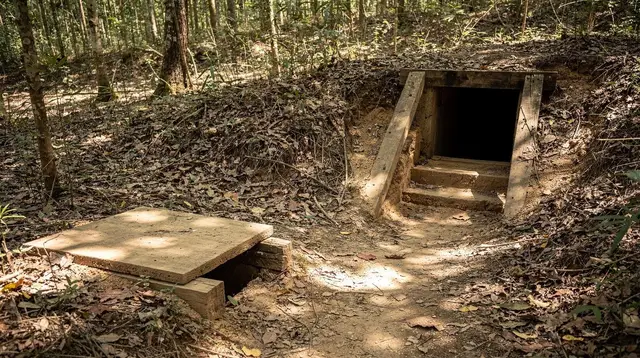
Visitors treating the market as part of a broader look at the city’s history, rather than only its shopping, often combine a morning around Ben Thanh with an afternoon further out at the war-era tunnel network north-west of the centre. The From HCM City Tour Cu Chi Tunnel Full Day Tour covers that ground in one outing, and travellers wanting a quieter version of the same tunnels, away from the busiest access point, can look instead at the HCM City Hidden Cu Chi Ben Duoc Tunnels Adventure.
The building on its own terms
Strip away the shopping and the crowds, and Ben Thanh Market is still, at its core, a piece of the city’s architectural history — a colonial-era trade hall that has kept functioning, largely unchanged in structure, through more than a century of the city’s transformation around it. Its clock tower remains one of the most photographed silhouettes in the country, and the cross-shaped hall beneath it still channels the same flow of buyers and sellers it was built for. Visiting it for that alone, setting the bargaining and the souvenirs aside for a moment, is a reasonable way to spend part of a morning or afternoon in the centre of a much larger, much faster city built up around one old, covered market hall.
Ben Thanh Market: Common Questions
Is Ben Thanh Market the same as the Ben Thanh night market?
No. Ben Thanh Market is the permanent covered building with its clock tower, open through the day. The night market is a separate, temporary arrangement of stalls that appears on the streets around the building after dark and packs away again, and it is not administered as part of the historic market.
What can I actually buy inside Ben Thanh Market?
The covered halls are organised loosely by trade: dry goods, fabric and tailoring, household items, souvenirs, handicrafts, coffee and dried food, and a food court of cooked-food stalls near the edges of the building. Exact stock varies stall by stall and season by season.
Is bargaining expected inside the market?
Yes, for non-food goods with no visible price tag, gentle bargaining is the norm and is treated as a normal, good-humoured part of the transaction rather than a confrontation.
Which gate should I use to enter Ben Thanh Market?
The building has four main gates, one on each side, each opening onto a different row of trades. There is no single correct entrance; the choice mostly determines which section of the market you meet first.
Is Ben Thanh Market a good place for street food?
The market has its own food stalls clustered inside and around the building, useful for a first taste of southern Vietnamese dishes, though the wider street-food scene of District 1 extends well beyond the market itself.
Can I visit Ben Thanh Market in the rain?
Yes. Because the historic halls are fully covered, the market is one of the more comfortable places to be during a sudden wet-season downpour, unlike the open-air night market stalls outside.
Is Ben Thanh Market touristy, and is that a problem?
It is one of the most visited landmarks in the city and is aimed partly at visitors, which shows in some of the souvenir stalls, but it remains a working market with genuine trade, and the clock tower and halls are worth seeing on their own terms.