Travel tips for Ho Chi Minh City
Everything worth knowing before visiting Ho Chi Minh City and the Mekong Delta — money, transport, getting in and when to go.
Planning essentials
Visas, budgets, packing, eSIMs and the cultural etiquette worth knowing before you land.


Getting around
Using taxis and ride-hailing apps for door-to-door trips around the city, and organised transport — cars, boats or motorbikes — for day trips to Cu Chi, cruises through the Mekong Delta, and journeys down the coast to Mui Ne.

Getting Around Ho Chi Minh City

Getting to the Mekong Delta and the Coast: Bus, Van or Boat

Grab and Taxis in Ho Chi Minh City: Apps, Mai Linh and Vinasun Explained

How to Cross the Street in Ho Chi Minh City

Metro and City Buses in Ho Chi Minh City

Renting a Scooter in Ho Chi Minh City: License Rules and What to Check
When to go
A tropical monsoon climate split into two seasons — a dry stretch from December to April with warm, mostly clear days, and a rainy season from May to November marked by short, heavy downpours that usually clear by evening. No cool winter and no typhoon season here, unlike further north. Month-by-month guides to what to expect.


Good to know about travel tips for Ho Chi Minh
Ho Chi Minh City's climate shapes how a trip south should be timed: the dry season runs roughly from December to April and is generally considered the more comfortable window for city sightseeing and day trips alike. The wet season, from May to November, brings short, often heavy downpours that tend to arrive in the late afternoon or evening rather than settling in for the whole day, and travel around this can usually be planned around rather than avoided entirely. Unlike the north and centre of Vietnam, the south doesn't have a cool winter or a typhoon season, so temperatures stay warm and fairly consistent year-round, with humidity as the more noticeable seasonal variable.
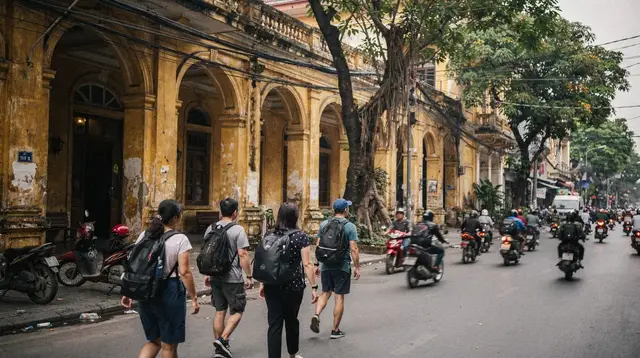
The local currency is the Vietnamese dong (VND), and Tan Son Nhat International Airport (SGN) serves as Ho Chi Minh City's main gateway. District 1 and the surrounding downtown area are walkable in parts, though the city carries heavy motorbike traffic, and crossing the road takes a steady, predictable pace rather than stopping and starting. Taxis and ride-hailing apps are the more straightforward way to cover longer distances within the city, while trips to the Mekong Delta, Tay Ninh or the coast are usually arranged by private car, shared minibus or organised tour given the distances involved.
Con Dao is reached by air rather than by road or ferry from the mainland in most cases, and Mui Ne is typically reached by road along the coast, a separate direction from the delta rather than an extension of it. Tap water isn't safe to drink without filtering or boiling, so bottled or treated water is the standard choice throughout the south. Vietnamese is the local language, and street signage in local markets isn't always in English, which is worth factoring into independent day trips.
Frequently asked questions about travel tips for Ho Chi Minh
When is the best time of year to visit Ho Chi Minh City and the south?
Roughly December to April, the dry season, is the more comfortable window, while the wet season from May to November brings short, heavy afternoon or evening downpours rather than all-day rain.
Does the south of Vietnam have a cold winter or a typhoon season like the north?
No, the south stays warm year-round without a cool winter, and it isn't part of the typhoon-prone stretch of coast further north and in the centre of the country.
What currency is used in Vietnam?
The Vietnamese dong (VND) is the local currency used throughout Ho Chi Minh City and the south.
Is tap water safe to drink in Ho Chi Minh City?
No, tap water isn't considered safe to drink without filtering or boiling, so bottled or treated water is the standard choice for visitors.
Is it safe to cross the street in Ho Chi Minh City given the motorbike traffic?
Yes, though it takes a different technique than in many cities: walking at a steady, predictable pace lets motorbikes adjust around you, rather than stopping and starting.
Trip Planning
Verified deep-linked GetYourGuide tours. Book through these links and we earn a small commission at no cost to you.
GetYourGuide does not provide a product photo for this activity — the image shows the meeting point, photographed by us.