Vegetarian Food in Ho Chi Minh City: A Buddhist Tradition, Not a Trend
Com chay: a tradition older than the word “vegan”
The first time I noticed a small, plain storefront with a hand-painted sign reading “com chay” near a pagoda in District 3, I assumed it was a niche health-food spot. It took me a few visits to understand that I had it backwards. Vegetarian rice, com chay, is not a modern wellness import in Ho Chi Minh City. It comes straight out of Mahayana Buddhist practice, and it has been part of the city’s food culture for as long as there have been pagodas here, which is to say for a very long time. The Jade Emperor Pagoda, one of the city’s best-known Taoist and Buddhist temples, is a good place to see that link between worship and food up close, since small com chay stalls tend to cluster around active pagodas rather than around tourist streets.
A lot of southern Vietnamese families are not vegetarian day to day, but many still eat com chay on specific days of the lunar month, most often the first and the fifteenth, sometimes also the fourteenth and the last day of the month. These are traditionally considered auspicious days for merit-making, and abstaining from meat is one of the simplest ways to observe them. You do not have to be devout, or even Buddhist, to take part. I have eaten com chay lunch with a Saigon friend who describes herself as only mildly religious, purely because it is what her mother cooks on those days and it would feel strange to break the pattern.
Because the lunar calendar does not line up with the Western one, these dates shift every month, and I am not going to pretend I can predict them for you. If it matters to your trip, the easiest fix is to ask wherever you are staying, or simply notice: on those days, com chay stalls that are quiet the rest of the month suddenly have a line out the door.
What com chay actually looks like on a plate
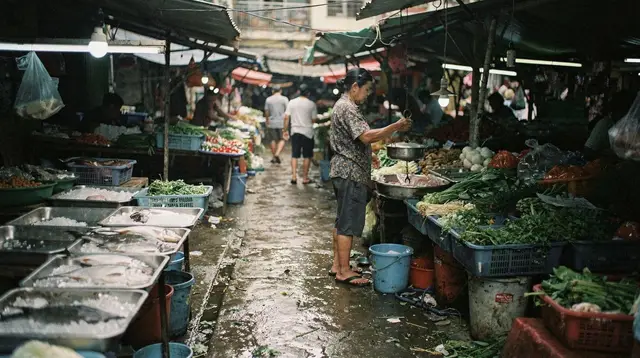
Com chay restaurants in Ho Chi Minh City work a lot like the com tam and com binh dan places that serve rice with meat, just swapped for plant-based versions. You walk along a glass counter, point at trays of stir-fried vegetables, braised tofu, mock meats made from soy or seitan, mushrooms cooked half a dozen different ways, and a scoop of rice goes on your plate with two or three choices from the tray. It is fast, cheap by any standard, and aimed at regular local diners rather than at visitors, which is part of why I like it.
The mock-meat side of com chay deserves a mention on its own. Vietnamese Buddhist cooking has a long tradition of shaping soy protein, wheat gluten, and mushroom stems into dishes that mimic the look of grilled pork, sweet-and-sour fish, or shredded chicken, right down to the char marks. It is playful cooking, not an attempt to trick anyone, and it is worth trying even if you have no interest in giving up meat generally.
Some of it is genuinely very good; some of it is clearly there for the sense of abundance and shared ritual rather than for the taste alone. If you want a wider sense of what the meat-and-seafood version of this cuisine looks like for comparison, our rundown of iconic southern Vietnamese dishes is a useful companion piece, and the broader question of how southern cooking differs from the north is covered separately in south versus north Vietnamese cuisine.
The confusion worth clearing up
There is a belief I have run into more than once, usually from visitors who have read that Vietnamese cooking is built on fish sauce, and who then assume that anything called vegetarian here must be quietly using it anyway. I understand where that comes from. Nuoc mam is everywhere in this cuisine, stirred into dipping sauces, marinades, and broths that otherwise look meat-free.
But I would not treat that as a rule you can apply blindly. Dedicated com chay kitchens, and pagoda kitchens especially, generally use their own soy-based or fermented plant sauces instead of fish sauce, precisely because they are cooking for a Buddhist vegetarian audience that takes the distinction seriously. Whether a given bowl of noodle soup at a general street stall is genuinely free of fish sauce is a separate question, and one I cannot answer for you from a guide.
If it matters to you, ask directly, in Vietnamese if you can manage “khong nuoc mam,” or “an chay,” which signals vegetarian eating in the Buddhist sense. Do not assume either way without checking, because I have seen confident claims made in both directions turn out to be wrong at the specific stall in question. A short list of basic Vietnamese phrases is worth learning before you land, and our general notes on Vietnamese etiquette and customs cover the polite way to ask about ingredients without causing offense.
Where I actually find vegetarian food outside dedicated com chay spots
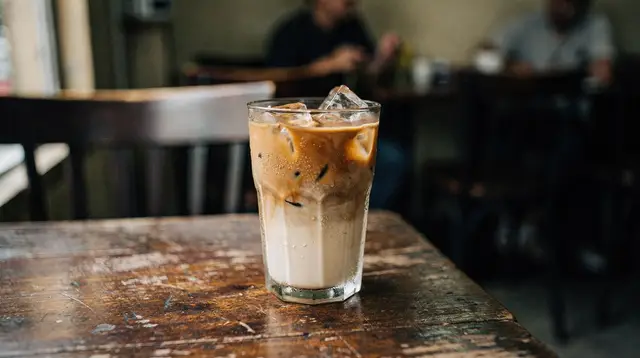
Away from com chay counters, Ho Chi Minh City has gotten noticeably easier for vegetarian eating over the years I have been visiting, though it still takes a bit of attention. Tofu appears constantly, in claypots, stir-fries, and soups. Vegetable-and-tofu versions of banh xeo, the crispy stuffed pancake, and of goi cuon, the fresh spring rolls, show up on plenty of menus once you start looking, sometimes under a small chay label, sometimes only if you ask. Cafes serving the city’s iced coffee culture are naturally vegetarian-friendly territory, and che, the sweet dessert drinks sold everywhere, are usually plant-based by default since they are built on beans, jelly, and coconut milk rather than dairy or meat.
Tourist-oriented restaurants in District 1 have adapted fastest, with English-language menus that flag vegetarian dishes clearly, and a general District 1 walking food tour is a reasonable way to get your bearings even if it is not vegetarian-specific. Once you move toward District 4’s tighter street-food lanes or out into the Mekong Delta, that labeling gets thinner, and I lean more on pointing, asking, and the fallback phrase above.
Two other pockets of the city are worth knowing about for vegetarian eating specifically. Cholon, the historic Chinatown spanning District 5 and District 6, has its own strong vegetarian tradition tied to its many Chinese temples; a Cholon pagodas tour or a dedicated Cholon street food tour will take you past com chay counters that most visitors to District 1 never see. And around Ben Thanh Market, the stalls documented in our Ben Thanh markets and shopping guide include a handful of vegetarian rice counters tucked between the more obvious tourist-facing food stands.
A guided way in, if you would rather not guess
On my first trip I spent an afternoon wandering in and out of com chay places without really understanding what I was looking at, which is part of why I now think a guided introduction is worth the money for anyone curious about this specific tradition rather than street food generally.
A guided evening walking a vegetarian street food route through the city does the explaining for you, stall by stall, which saved me from a lot of the guesswork I just described. There is also a guided motorbike tour built entirely around vegetarian eating, which covers more ground and gets you into neighborhoods you would not necessarily wander into alone.
If you want something calmer for an evening, a buffet dinner cruise on the Saigon River usually has enough vegetable and tofu dishes on the spread to make a full vegetarian meal, though I would still check with staff before assuming every dish qualifies. And if your curiosity about plant-based Vietnamese cooking extends past the city, a small-group day trip into the Mekong Delta is where you will see the coconut- and vegetable-heavy side of delta cooking up close, even if the tour’s set menus lean toward the region’s usual seafood and pork dishes by default.
If you have more time and want to eat with a family rather than at a set-menu tour stop, a Mekong Delta homestay is more likely to serve genuinely vegetable-forward home cooking, and the delta’s Khmer temples around Soc Trang and Tra Vinh have their own vegetarian food customs tied to Theravada Buddhist practice, distinct from the Mahayana com chay tradition in the city itself.
For a slower, coffee-focused counterpart to street food exploring, a Vietnamese coffee culture tour pairs naturally with a com chay lunch, since the city’s cafes are already vegetarian-friendly by default; our separate piece on Vietnamese coffee culture goes into where that tradition comes from.
Practical notes I keep coming back to
None of this requires special planning, but a few things are worth keeping in your head. Com chay is cheapest and most authentic at small local counters, not at upscale restaurants, and you will usually pay with cash there; a small tip is not expected at this kind of stall, though our general tipping in Vietnam guide covers where it does matter. If you are visiting around the lunar new year, Tet, be aware that some families eat vegetarian for stretches of that holiday too, on top of the regular monthly days, so what looks like a spike in com chay demand around that time is not a coincidence. And if a menu or a stall owner tells you a dish is chay, that word carries real weight here; it is a shorthand rooted in religious practice, not a marketing label, and most cooks I have met take getting it right seriously.
As with any street food in the city, ordinary caution still applies: busy counters with fast turnover are the safer bet, a point covered in more detail in street food safety in Ho Chi Minh City, and it is worth pairing that with our notes on water and health in Ho Chi Minh City if you are new to eating from street stalls generally. None of this is specific to vegetarian food, but a vegetable- and tofu-heavy diet does not make a stall automatically safer, only meat-free.
If vegetarian eating is just one piece of a wider first visit, our one-day Ho Chi Minh City highlights itinerary shows where com chay counters and pagodas fit alongside the city’s better-known sights, and a general motorbike food crawl is a good way to sample both the meat-heavy and vegetarian sides of Saigon street food back to back rather than choosing one for an entire trip.
Frequently asked questions about vegetarian food in Ho Chi Minh City
What does “com chay” mean?
Com chay literally means vegetarian rice. It refers to Buddhist-style vegetarian meals, and to the small restaurants that specialize in serving rice with a choice of vegetable, tofu, and mock-meat dishes rather than meat or seafood.
Why do some days of the month have more vegetarian food available?
Vietnamese Buddhist tradition treats certain days of the lunar month, most commonly the first and the fifteenth, as days for merit-making, and eating vegetarian is a common way to observe them. Because these dates follow the lunar calendar, they shift each month rather than falling on a fixed date.
Does Vietnamese vegetarian food always avoid fish sauce?
Not necessarily by default, and it is worth checking rather than assuming. Dedicated com chay kitchens and pagoda kitchens typically avoid fish sauce and use plant-based substitutes instead, but at a general street stall, whether a dish labeled vegetarian truly excludes fish sauce is something worth asking about directly.
Is it easy to find vegetarian food outside dedicated com chay restaurants?
It has become easier over recent years, especially in central areas, where tofu- and vegetable-based versions of common dishes are increasingly available and sometimes labeled chay on the menu. Away from the center, in tighter street-food lanes or in the Mekong Delta, asking directly still works better than reading a menu.
Is vegetarian street food in Ho Chi Minh City generally cheap?
Com chay counters tend to be priced similarly to their meat-serving equivalents, aimed at everyday local diners rather than visitors, which keeps them on the inexpensive end of the city’s food options.
Can I do a vegetarian food tour instead of finding places myself?
Yes. Guided options exist that focus specifically on vegetarian street food, including a walking tour and a motorbike-based tour, both built around introducing the com chay tradition and vegetarian-friendly stalls rather than the city’s meat-heavy signature dishes. Our separate vegetarian street food tour guide walks through what to expect from these routes in more detail.
Does the Mekong Delta have its own vegetarian cooking style?
The delta’s cooking leans heavily on coconut and vegetables generally, which makes it a pleasant region for vegetarian eating, though standard day-trip meals there are usually set menus built around the area’s seafood and pork specialties unless arranged otherwise.
Street Food Tours and Vietnamese Cuisine Tastings
Verified deep-linked GetYourGuide tours. Book through these links and we earn a small commission at no cost to you.
GetYourGuide does not provide a product photo for this activity — the image shows the meeting point, photographed by us.