Vietnamese Coffee Culture in Saigon: The Phin, the Condensed Milk and the Ritual
What makes Vietnamese coffee different from an Italian espresso?
Vietnamese coffee is brewed drop by drop through a small individual metal filter called a phin, almost always over sweetened condensed milk rather than sugar, and is very often served over ice. The result is slower, sweeter and heavier than an espresso, and it is meant to be sipped over time rather than drunk in one go.
The first time someone in Saigon set a small metal contraption on top of my glass and walked away, I genuinely did not know what to do with it. No espresso arrived, no barista hovered, nothing was handed to me finished. Instead there was this quiet little drip, drip, drip, and I had to wait. That wait, it turns out, is the whole point of Vietnamese coffee, and once I understood that, a lot of what confused me about drinking coffee here started to make sense.
The phin: coffee that makes you wait
The device is called a phin, and it is basically a small perforated metal cup that sits directly on top of your glass. Ground coffee goes in the bottom, a press disc sits on top of the grounds, and hot water is poured over. Gravity does the rest, one slow drop at a time, straight into whatever is waiting underneath. There is no rushing it, no reheating it, no pulling a shot in nine seconds. You watch it happen, or you look away and chat, and either way it takes several minutes before there is anything to drink.
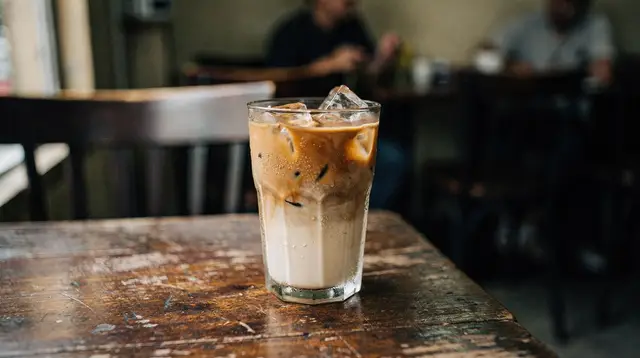
This is the detail that trips up people who arrive expecting something close to an Italian espresso bar. There is no crema, no forceful shot, no bitterness balanced by milk foam. What comes out of a phin is closer to a thick, strong drip coffee, and in Vietnam it is almost never drunk on its own. The glass underneath the phin usually already has a layer of sweetened condensed milk sitting in the bottom, and the coffee drips straight down into it. You stir once the dripping stops, and what you get is dark, sweet, dense, and nothing like a straight black coffee.
I mention this because I spent my first couple of days here quietly annoyed that my coffee tasted like a dessert, before realizing that was never a mistake. It is the recipe. Sugar and condensed milk are not optional extras added at your table, they are baked into the way the drink is built, and expecting an unsweetened black coffee by default is the surest way to be surprised.
Ca phe sua da: the everyday glass
The single most common order, in cafes across District 1 and everywhere else in the city, is ca phe sua da, iced coffee with condensed milk. The coffee drips through the phin, the condensed milk waits underneath, and once it has finished dripping the whole thing gets stirred and poured over ice. It is strong, it is sweet, and on a hot, humid afternoon it does something an espresso never quite manages for me: it actually feels refreshing rather than just caffeinating.
There is a black version too, ca phe den, still brewed the same slow way through the phin but without the condensed milk, sometimes with a little sugar stirred in instead. It is the closer of the two to what a visitor might expect from a “normal” coffee, but even that is a different animal from an espresso: less concentrated in volume, longer to prepare, meant to be nursed rather than knocked back at a counter.
What struck me most is how little urgency there is around any of this. Coffee here is not a quick transaction on the way to somewhere else. People sit for long stretches, watching the street, half working, half not, glass slowly sweating in the heat. A cafe stool facing the road is treated as a legitimate way to spend an hour, and nobody seems to think that is strange.
Egg coffee, yogurt coffee, and the local variations
Beyond the everyday glass, Vietnamese cafes have built a whole side repertoire of variations, and two of them surprised me enough that I want to flag them specifically. Egg coffee is exactly what it sounds like: a small amount of whipped egg yolk, sweetened and beaten until it turns airy and almost custard-like, sitting on top of a strong coffee base. It sounds like it should not work, and then it does, tasting closer to a warm dessert than a drink, somewhere between tiramisu and a coffee. It is served hot, usually in a small cup kept warm over a little dish of hot water so the egg foam does not collapse too fast.
Yogurt coffee is the other one worth knowing about, especially if the heat has you looking for something cooler and lighter. It layers coffee, condensed milk and plain yogurt over ice, so the sourness of the yogurt cuts against the sweetness of the milk and the bitterness of the coffee all at once. It reads almost more like a drinking dessert than a coffee order, and it tends to divide opinion sharply among visitors: people either love the tang against the sweetness or find it genuinely odd.
Neither of these variations is a gimmick invented for tourists. Both grew out of the same local habit of treating coffee as a base ingredient to build on, rather than a finished drink that has to stay pure. Once you accept that framing, the whole menu at a Vietnamese cafe stops looking eccentric and starts looking logical: coconut coffee, salt coffee, avocado coffee, all sit on the same idea that coffee here is a flavour to be combined, not a ritual to be kept plain.
Coffee as a social habit, not a caffeine stop
What I found harder to explain to people back home is how central coffee is to actually socializing in Saigon, rather than to just getting through the morning. Meeting someone for coffee here is not a quick errand squeezed before or after the real plan, it often is the plan. Friends, coworkers, even business contacts will sit at a cafe for an hour or more over a single glass, and refills are not really the point, the seat is.
Street-level cafes, plastic stools spilling onto the pavement, work exactly as well for this as the glossier cafes with air conditioning and better chairs. Both are legitimate, and which one people choose says more about mood or weather than about status. What stays constant is the pace: unhurried, low-key, built around watching the street go by from the same spot for a while. Coffee shops here also double as informal offices, plenty of people work from a laptop over a single ca phe sua da for a couple of hours without anyone blinking.
If you want to see the ritual up close rather than piece it together the way I did, joining a guided coffee session is the easiest shortcut. A coffee culture tour with a hands-on brewing workshop walks you through the phin step by step, and a more specialty-focused Vietnamese specialty coffee journey goes deeper into the different bean styles and preparations across a handful of stops. Either one turns a confusing first phin into something you can actually replicate once you are home.
Where the habit shows up around the city
The habit is not confined to one neighborhood. In Cholon, coffee culture blends with the area’s own Chinese-influenced tea and food habits, and it is common to see both drunk side by side at the same table.
Around District 1, cafes range from tiny street-level counters to multi-floor spaces built for people who want to sit for the afternoon, and it is worth reading a neighborhood guide before picking a base if quiet cafe mornings matter to your trip. Coffee also turns up in the city’s nightlife rhythm in a way I did not expect: plenty of people wind down an evening out around Bui Vien with an iced coffee rather than a last drink.
It also sits comfortably alongside the rest of the city’s food identity, which I am deliberately not covering here since it deserves its own space; if you want the wider picture, the street food safety guide, the roundup of iconic southern Vietnamese dishes, and the vegetarian food guide all cover that ground properly. Coffee, for me, ended up being the one habit from this trip that actually followed me home, phin and all.
Beyond the cafe itself, the same slow, drop-by-drop patience the phin demands echoes elsewhere in how this city moves: a river cruise or a walking tour through District 1 rewards the same unhurried attention, and understanding local etiquette and customs makes settling into a cafe stool feel a lot less foreign. For something further afield built around a similarly local pace, a Saigon River dinner cruise with a buffet lets you watch the city slow down after dark from the water, coffee cup habits and all.
Vietnamese coffee: common questions
Is Vietnamese coffee stronger than espresso?
It is typically brewed with a robusta-heavy blend and a slow drip method, which produces a dense, strong flavour, but because it is usually cut with condensed milk and often served over ice, the overall taste is sweeter and less concentrated on the tongue than a straight espresso shot.
Do I have to drink it with condensed milk?
No. Ordering ca phe den gets you black coffee, still brewed through the phin, with little or no sugar. Condensed milk is the local default rather than a fixed rule, and most cafes are used to both versions.
How long does a phin take to drip?
There is no fixed time; it depends on the grind and how tightly the press disc sits, but a few minutes of slow dripping is normal. It is meant to be unhurried, so ordering one is not a fast way to get a coffee before rushing off somewhere.
What is egg coffee actually made of?
A whipped mixture of egg yolk and sweetened condensed milk, beaten until airy, is spooned or poured over a strong coffee base and served warm. It tastes closer to a light coffee custard than to a standard coffee drink.
Is yogurt coffee served hot or cold?
Cold. It layers coffee, condensed milk and plain yogurt over ice, giving a tangy, slightly sour contrast to the sweetness of the milk, and it is meant to be drunk as a cooling drink rather than a hot one.
Can I find Vietnamese coffee outside Ho Chi Minh City cafes, like in the Mekong Delta?
Yes, the same phin method and condensed milk habit are common throughout the south, including in delta towns, though the pace and setting tend to be even more relaxed and closer to a family-run front room than a dedicated cafe.
Is it normal to sit for a long time over one coffee?
Very normal. Cafes here are used to people staying for an hour or more over a single glass, working, chatting or just watching the street, and nobody expects you to order a second round to justify the seat.
Is Vietnamese coffee culture the same as street food culture?
They overlap in spirit but are distinct habits: coffee is its own ritual of place, pace and preparation, separate from the meals and snacks that make up the city’s wider street food scene.
Street Food Tours and Vietnamese Cuisine Tastings
Verified deep-linked GetYourGuide tours. Book through these links and we earn a small commission at no cost to you.
GetYourGuide does not provide a product photo for this activity — the image shows the meeting point, photographed by us.