Mekong Delta Homestay: What Staying With a Local Family Is Really Like
What is a Mekong Delta homestay?
It is a night or two spent inside a local household in the delta, usually a stilt house on a canal or a working orchard and farm, rather than in a hotel. Comfort, food and activities vary from one family to the next because a homestay is someone's home first and an accommodation second.
What a Homestay Actually Means in the Mekong Delta
The word “homestay” gets used loosely, and in the Mekong Delta it is worth being precise about what it does and does not mean. A homestay is a private household — a family, a farm, a fruit orchard, a fishing operation — that has opened part of its home to overnight guests. It is not a small hotel dressed up in rustic decor, and it is not a branded product with a fixed set of rooms, a reception desk and a printed menu. Each homestay is simply someone’s house, and the experience of staying there depends on that particular family: how they farm, how they cook, how many generations live under one roof, and how used they are to hosting outsiders.
This distinction matters because travellers arriving with hotel expectations are often surprised, in both directions. Some households turn out warmer, better fed and more comfortable than any resort could manufacture. Others are genuinely basic, with shared bathrooms, simple bedding and no air conditioning beyond a ceiling fan. Neither outcome is a flaw in the concept — it is the nature of staying inside real rural life rather than inside a service designed around consistency. Anyone weighing whether a homestay is right for them should start from that premise rather than from a hotel comparison chart.
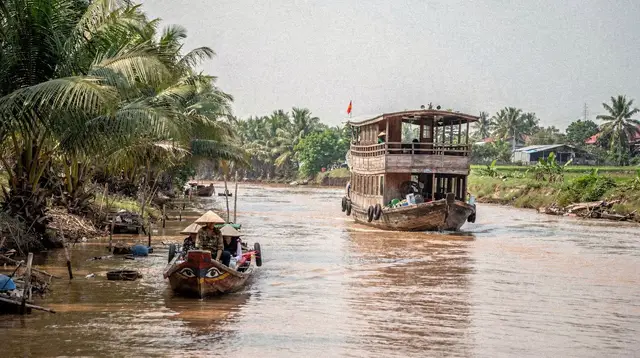
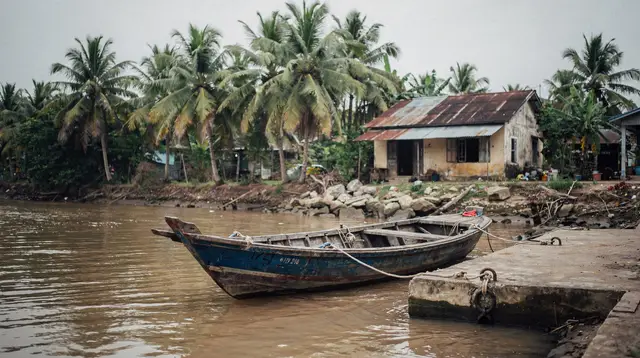
Two physical forms turn up most often across the delta. The first is the stilt house built directly over a canal, common around Cai Be and Vinh Long, where the water is both the front garden and the transport route. Wooden stairs lead down to a private jetty, boats tie up beside the kitchen, and the rhythm of canal traffic — a passing sampan, a neighbour calling out — is audible from the sleeping area.
The second is the farmhouse set among fruit trees or rice paddies a short walk or paddle from the water, which tends to feel quieter and more agricultural, with orchards, chicken coops and vegetable beds standing in for a garden. Neither type is “the real one”; both are authentic expressions of how delta households actually live, and which one a traveller experiences usually comes down to which family and which stretch of the delta an organised programme uses.
Life Inside a Delta Household
What fills the hours of a homestay is the daily rhythm of the family itself, not a schedule printed for guests. Mornings in a delta household start early, well before the heat builds, with feeding animals, tending the garden or heading out on the water for whatever the household’s livelihood happens to be — fishing, coconut processing, fruit growing, or small-scale farming. Guests are usually invited to join rather than simply watch: helping harvest vegetables, learning to husk a coconut, paddling a narrow sampan through a side canal, or sitting in on the preparation of a meal.
The pace slows through the middle of the day, when the tropical heat makes outdoor work impractical, and picks up again toward evening as the household gathers to eat and talk. This is where a homestay differs most sharply from a hotel stay: there is no separation between the household’s private life and the guest’s presence.
Conversation happens across a language gap that a guide typically bridges, since English is far less common in the delta than in central Ho Chi Minh City, but warmth tends to travel without much translation. Evenings on the water are often the quietest and most memorable part of the stay — no traffic noise, no city glow, just insects, frogs and the occasional boat engine drifting past in the dark.
Comfort is the one variable no traveller should assume in advance. Some homestays have upgraded a room specifically for guests, with a proper mattress, mosquito netting, a fan or even air conditioning, and a reasonably private bathroom. Others offer a mat on a shared sleeping platform with the rest of the household nearby, which suits travellers looking for immersion far more than those who need privacy. Because the standard genuinely varies household to household, it is worth choosing an organised homestay experience with a track record rather than arranging something informal and hoping for the best.
Meals Shared With the Family
Food is usually the centrepiece of a Mekong Delta homestay, and it is markedly different from a restaurant meal in one important way: it reflects whatever the household actually has that day, cooked the way that particular family cooks it. Rice is the constant.
Around it might sit grilled or steamed river fish pulled from a nearby canal, water spinach or morning glory sautéed with garlic, a simple soup built on tamarind or vegetables, and whatever tropical fruit is in season from the surrounding orchard — dragon fruit, longan, rambutan, jackfruit or pomelo depending on the time of year. The heavy use of coconut, in sauces, in caramelised pork dishes and in desserts, is one of the delta’s clearest culinary signatures, and a homestay kitchen is often the most direct way to taste it.
Meals are typically eaten together, seated on the floor or around a low table, with the household’s own children, grandparents and neighbours drifting in and out. Guests are frequently invited into the cooking itself — plucking herbs from the garden, learning to wrap a spring roll, or watching how a fish is prepared whole rather than filleted. This hands-on element is why several organised experiences pair a homestay night with a cooking component, treating the kitchen as part of the cultural exchange rather than a separate add-on.
It is worth setting expectations honestly: this is home cooking, not a curated tasting menu, and quality will vary with the household just as comfort does. A traveller hoping for the polish of a restaurant kitchen will be disappointed; a traveller curious about how families in the delta actually eat, day to day, tends to come away from a shared meal as the highlight of the whole trip.
Choosing How to Experience a Homestay
Very few independent travellers simply knock on a farmhouse door and ask to stay the night — language, logistics and basic etiquette make that impractical for a first visit. Nearly everyone experiences a Mekong Delta homestay through an organised programme that has an established relationship with a specific household or a small network of them, arriving by boat or bicycle as part of a broader visit to the Mekong Delta. Several of these pair the overnight stay with canal paddling, orchard walks or a cooking session, so the homestay becomes one strand of a fuller rural day rather than an isolated night.
a two-day departure from Ho Chi Minh City built specifically around a night with a local family is the most direct route into this kind of stay, threading canal travel and household life through a short overnight programme. Travellers who would rather sleep aboard a boat and add a family visit as one stop among several might prefer an overnight cruise experience that combines river life with a local visit, which suits anyone unsure about a full night inside someone’s home.
Further from the usual Can Tho and Vinh Long circuit, a two-day homestay on the coastal delta island of Cu Lao Dung reaches a quieter, less-visited pocket of the region where the same principles apply — real households, variable comfort, shared meals — but the surroundings are coastal orchards and sandbanks rather than the classic inland canals.
The choice between these formats comes down to temperament as much as itinerary. A land-based homestay puts a traveller fully inside one household for the night; a boat-based version keeps a private cabin available while still building in family time; a more remote option like Cu Lao Dung trades convenience for a landscape few visitors reach. None of them can be judged purely by price or by a fixed programme description, because so much of the experience rests on the individual household hosting that particular group on that particular night.
How a Homestay Fits a Longer Trip
A homestay works best as one deliberate night inside a longer visit to the delta, not as the entire reason for the trip on its own. Most travellers pair it with daytime stops that a homestay itself does not cover: orchard visits near Cai Be, the coconut country around Ben Tre, a paddle through narrower side canals, or a longer push toward Chau Doc near the Cambodian border.
Full detail on stringing these stops together over two or more days sits in the site’s two-day Mekong Delta itinerary guide and the separate overnight Chau Doc cruise guide, each of which treats the route and pacing question the homestay guide deliberately leaves aside.
Travellers still weighing where to start their delta trip from — My Tho, Cai Be or further south toward Can Tho — will find that comparison worked through in the guide to choosing a Mekong Delta departure point, and anyone still deciding whether an overnight commitment is worth it at all should read the companion piece on whether a Mekong Delta day trip is enough.
For a narrower, quieter angle on delta time that pairs naturally with a homestay’s slow pace, the Mekong Delta bird-watching guide covers the wetlands and orchard birdlife many households live alongside without ever mentioning.
Cooking-focused travellers should also look at the dedicated homestay cooking class guide, which goes deeper into the kitchen side of a family stay than this page does, and at the general Saigon cooking class guide for anyone who wants a cooking introduction before heading into the delta itself.
Those interested in getting onto the water beyond a single homestay night can compare a private Mekong Delta speedboat tour against slower sampan rides through the delta’s smaller canals — the speedboat covers distance quickly, while a sampan matches the unhurried pace a homestay itself is built around.
A Realistic Way to Think About It
The households that host Mekong Delta homestays are not running a tourism business dressed as a home — they are homes that have chosen, to varying degrees, to welcome outside guests. That framing explains almost everything about the experience: the comfort that shifts from one family to the next, the meals shaped by what a particular garden and river produce that week, and the warmth that comes from being folded, briefly, into someone else’s ordinary life rather than served by a business built for consistency.
Travellers who arrive expecting a rural night as good as any hotel will be missing the point; travellers curious about how the delta’s rice, water and family life actually fit together tend to leave with the story they remember longest from the whole trip through southern Vietnam.
Frequently Asked Questions About Mekong Delta Homestays
Is a Mekong Delta homestay the same as a hotel or resort?
No. A homestay is a private household that opens a room or a shared sleeping area to guests. There is no chain standard, no uniform amenity list and no guarantee that one family’s setup matches another’s, which is the opposite of how a hotel is designed to work.
Do all Mekong Delta homestays sit on stilts over water?
Many do, especially around the canals near Cai Be and Vinh Long, but plenty of others are simple farmhouses set among orchards or rice paddies with no water directly underneath. The stilt house on a canal is the classic image, not the only form a homestay takes.
Will I need to speak Vietnamese to stay with a family?
Basic English is uncommon in delta households compared with central Ho Chi Minh City, so most independent travellers join an organised homestay experience where a guide bridges the conversation. A phrasebook, gestures and goodwill go a long way even so.
What is the food like at a homestay?
Meals are usually cooked and shared with the household, built around what the farm or the river provides that day: rice, fish, garden vegetables, tropical fruit and the coconut-based cooking typical of the delta. It is home cooking, not a restaurant menu, so the dishes differ by family and by season.
Is a homestay comfortable enough for someone used to hotels?
Comfort ranges widely. Some households offer private rooms with fans or air conditioning and a clean bathroom; others are far more rustic, with shared or basic facilities. Anyone who needs hotel-level consistency should treat a homestay as a deliberate change of pace, not a hotel substitute.
Can a homestay be combined with a floating market or a boat trip?
Yes, and it usually is. Homestays sit naturally alongside sampan rides through the canals, orchard visits and early starts toward the region’s markets, because the household is already positioned inside the delta’s waterway network rather than beside a main road.
Is Mekong Delta homestay travel suitable for families with children?
It can be, but the experience depends heavily on the household and on how comfortable the family travelling is with a simple, unpredictable rural setting rather than a resort environment. Checking what a specific organised experience actually includes matters more than the general idea of a homestay.
Mekong Delta Cruises and Floating Markets
Verified deep-linked GetYourGuide tours. Book through these links and we earn a small commission at no cost to you.
GetYourGuide does not provide a product photo for this activity — the image shows the meeting point, photographed by us.