Cholon Street Food: A Chinatown Eating Guide
What makes Cholon's street food different from the rest of Ho Chi Minh City?
Cholon is the historic Chinatown of Ho Chi Minh City, spread across District 5 and District 6, and its food reflects generations of Chinese-Vietnamese communities living side by side. Expect Cantonese and Teochew-influenced noodle stalls, dim sum, herbal tea houses and roast meats alongside standard Vietnamese street food, a mix not found in the same density anywhere else in the city.
Eating in Cholon, Ho Chi Minh City’s Chinatown
Cholon is the part of Ho Chi Minh City where the sino-Vietnamese story is written into the food more clearly than anywhere else in the south. It is not a separate town and it never was: Cholon is a district-level neighborhood within Ho Chi Minh City itself, spread across District 5 and part of District 6, distinct from the central streets of District 1 that most first-time visitors see first.
Its name is often confused with Cho Lon, meaning “big market,” which is one specific market rather than the whole district — a mix-up worth clearing up before wandering in with the wrong picture in mind. This guide stays with the everyday eating of Cholon: its stalls, its tea houses, its noodle shops and its roast-meat counters. It leaves the museums and colonial landmarks of the center to the District 1 neighborhood guide, and it leaves the broader idea of a market-hopping, multi-neighborhood tasting crawl to a separate page on this site, since Cholon’s food culture is specific enough to deserve its own space.
Chinese communities began settling in what is now Cholon generations ago, and their descendants remain a visible part of the neighborhood today, running family businesses that have passed through several generations. That history shows up on the plate: dishes with roots in Cantonese and Teochew cooking sit next to standard Vietnamese street food, sometimes on the same stretch of pavement, sometimes inside the same shopfront. A visitor who has only eaten in central Ho Chi Minh City will notice the shift quickly — more roast meats hanging in windows, more congee and noodle soups built around Chinese seasonings, more dim sum-style snacks, and tea houses that feel unlike the coffee shops of District 1 or District 3.
Why Cholon’s food culture reads differently
The clearest way to understand Cholon’s food is to think of it as two culinary traditions that have been cooking side by side for a very long time, borrowing from each other without fully merging. A bowl of noodle soup here might carry the dark soy and five-spice notes of Chinese cooking while still being finished with the herbs and fish sauce a Vietnamese diner would expect. Roast duck and char siu pork hang in glass cases the way they would in a Cantonese quarter, but they are just as likely to be served over broken rice, a distinctly southern Vietnamese format, as over noodles.
Congee is a good entry point for anyone unsure where to start. Cholon’s congee stalls tend to cook it plainer and simpler than some visitors expect, then let the toppings — offal, preserved egg, shredded chicken, fried dough sticks — do the work. Dim sum-style snacks, from steamed buns to small dumplings, appear at stalls and modest shopfronts rather than in the trolley-service format some travelers associate with the word, and they are eaten standing or perched on a plastic stool rather than at a formal table.
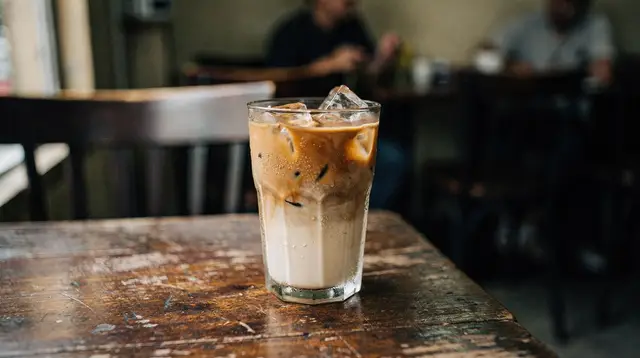
Tea houses are Cholon’s other signature, and they operate on their own rhythm. Older residents gather at them through the morning, and the drinks on offer — herbal infusions, chrysanthemum tea, sugarcane juice — sit apart from the iced coffee culture that dominates the rest of the city. A stop at one of these tea houses is as much about watching the neighborhood go about its day as it is about the drink itself. Visitors who want to understand where that iced-coffee culture sits in the wider picture, and how it differs from Cholon’s herbal tea houses, can find more context in the Vietnamese coffee culture tour guide, which covers the coffee shops of the central districts.
Where the eating happens
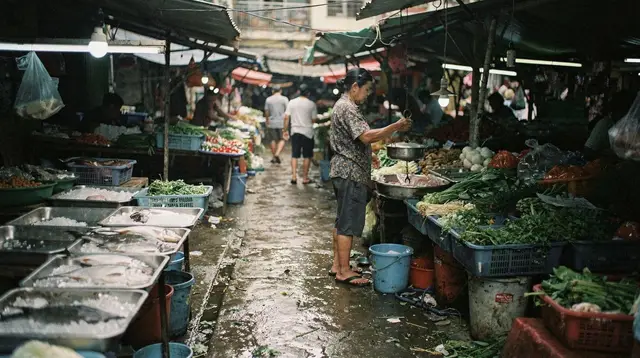
Cholon’s food is not concentrated in a single showcase street the way some neighborhoods package themselves for visitors. It is spread through market lanes, around temple entrances, and along residential blocks where a family has been cooking the same dish for decades. Binh Tay Market, Cholon’s best-known covered market, anchors one end of the neighborhood, and the streets radiating from it carry a dense run of food stalls, though the market itself leans more toward dry goods and wholesale trade than a food court. Thien Hau Temple, dedicated to a sea goddess still venerated by many Chinese-Vietnamese families, draws its own cluster of nearby vendors, since temple visits and eating have always gone together here.
Because Cholon is genuinely large and its best stalls are not always on the main roads, first-time visitors often do better with some local orientation, whether that comes from a guidebook, a resident’s recommendation, or a guided walk. For a structured introduction that covers a wider swathe of the city’s street food beyond Cholon alone, the Saigon street food walking tour pairs central stops with a guide who can explain what is on offer as you go, useful preparation before venturing into Cholon’s less-signposted lanes on your own.
Sino-Vietnamese dishes worth seeking out
| Dish | What it is | Where it leans |
|---|---|---|
| Hu tieu | Rice or egg noodle soup, often with pork and seafood | Shared Vietnamese-Chinese roots, strong Cholon presence |
| --- | --- | --- |
| Roast duck / char siu | Meats roasted and hung in glass cases, sliced to order | Cantonese-style technique |
| --- | --- | --- |
| Congee (chao) | Plain rice porridge with varied toppings | Common ground, dressed differently by vendor |
| --- | --- | --- |
| Dim sum-style snacks | Steamed buns, small dumplings, sold from stalls | Chinese tradition, informal Cholon format |
| --- | --- | --- |
| Herbal tea and sugarcane juice | Cold drinks sold at tea houses and carts | Chinese-Vietnamese tea house culture |
| --- | --- | --- |
| Com tam | Broken rice with grilled pork | Vietnamese staple, widely sold in Cholon too |
| --- | --- | --- |
| Che | Sweet dessert served in a glass | Vietnamese, sold by the cup across the neighborhood |
This is a starting list, not a ranking, and the best version of any of these dishes is usually the stall with the longest-standing local following rather than the one closest to a landmark. For a wider survey of the dishes that define southern Vietnamese cooking beyond Cholon’s sino-Vietnamese mix, the iconic southern Vietnamese dishes roundup places these plates in their broader regional context.
Getting to and around Cholon
Cholon sits far enough from District 1 that most visitors do not walk there directly; a taxi, a ride-hailing app, or an organized tour is the usual way in, and the Grab and taxis in Ho Chi Minh City guide covers how that works in practice, including what to expect from fares and pickup points. More general orientation on moving around the city, including buses and the metro where relevant, is in the getting around Saigon guide.
Once inside Cholon, the pace changes: narrow lanes, motorbikes, handcarts and pedestrians share the same space, and the general rules for crossing the street and dealing with traffic in Saigon apply here as much as anywhere in the city, arguably more given how often stalls spill onto the sidewalk itself.
Reading the neighborhood as you eat
Cholon rewards slow movement more than a checklist. A useful approach is to let the temples set your route: Thien Hau Temple and the smaller shrines scattered through the district mark natural stopping points, and the streets immediately around them tend to have reliable food because they have served worshippers and their families for years. Binh Tay Market is worth a walk-through even for visitors who are not there to shop, since its surrounding lanes give a sense of the produce and dry goods that feed the neighborhood’s kitchens.
Cholon is quieter on foot than central Ho Chi Minh City in one respect and busier in another: fewer tourists, but dense local traffic and narrow lanes where motorbikes, handcarts and pedestrians share the same few meters of space. The general advice for crossing streets in this city — a steady, predictable pace rather than darting or stopping — applies here as much as anywhere, and arguably more, since sidewalks are often used for cooking and seating rather than walking.
For visitors who want a guide’s context on the sino-Vietnamese history behind specific dishes, or who are short on time and want a curated route through Cholon rather than a self-directed wander, the Taste of Saigon local street food tour is built around exactly this kind of neighborhood storytelling, connecting individual dishes back to the communities that cook them.
Evening eating in and around Cholon
Cholon by day and Cholon in the evening feel different. Daytime brings market trade, tea houses in full swing, and the steady rhythm of family shops. As the afternoon turns to evening, some of the market-adjacent stalls quiet down while others — particularly noodle and congee vendors that cater to workers and families — pick up. Travelers who prefer to experience street food after dark, whether in Cholon or across a wider stretch of the city, sometimes find a motorbike-based route easier for covering ground once the heat of the day has passed.
The Saigon by night street food tour on motorbike and the Ho Chi Minh City street food tour with live acoustic music both operate in this after-dark register, moving between neighborhoods rather than staying fixed in Cholon, but they illustrate how differently the city’s street food reads once the sun is down.
Cholon in context: the wider Chinatown story
It helps to hold two facts in mind at once. First, Cholon has never been an administrative city of its own; it is, and has long been, part of Ho Chi Minh City, sitting alongside neighborhoods like District 3 and District 4 within the same municipal boundary.
Second, “Cho Lon” as a market name predates the district’s current shape, and the modern district contains multiple markets — Binh Tay among them — none of which is a single entity called simply Cho Lon today. Getting this distinction right matters mostly for avoiding confusion when reading older accounts of the city, which sometimes use “Cholon” and “Cho Lon” interchangeably in ways that can mislead a visitor trying to find a specific address.
Within the wider frame of southern Vietnam, Cholon sits at the sino-Vietnamese end of a food culture that is otherwise shaped by the Mekong Delta to the southwest and the coastal traditions further east. Visitors building a broader food-focused itinerary sometimes pair a Cholon visit with the more central lanes covered in the Cholon pagodas tour, which threads temple visits and street food together, or with the district-1 walking food tour for a contrasting, more central experience on the same trip.
Cholon’s markets are also worth comparing with the city’s best-known market experience. Ben Thanh Market, with its landmark clock tower, sits firmly in District 1 and caters heavily to visitors with souvenirs and ready-to-eat stalls, while Cholon’s markets stay closer to everyday wholesale trade. The Ben Thanh markets and shopping guide lays out that contrast in more detail for travelers deciding how to split their market time between the two neighborhoods. For a first visit that fits a Cholon detour alongside the city’s headline sights, the one-day Ho Chi Minh City highlights itinerary shows one way to sequence a short stay.
Practical notes for a Cholon food outing
Tap water is not drinkable anywhere in the city, Cholon included, so bottled or filtered water is the standard choice, and ice at established stalls and tea houses is generally the industrially made kind that is considered safe. Cash still does most of the work at street stalls and small tea houses; card payment is rare away from larger restaurants. English is spoken less consistently in Cholon than in the tourist-facing streets of District 1, so a translation app, a phrase or two of Vietnamese, and a willingness to point at what looks good will carry a visitor further than fluency would be needed for. Vendors are used to curious visitors pointing and gesturing, and it rarely causes friction.
Because Cholon covers real distance and its best stalls are scattered rather than clustered on one photogenic street, budgeting unhurried time works better than trying to move through it like a checklist. A late morning start lets you catch tea houses at their liveliest and markets before the midday heat sets in, while an early evening visit shows the neighborhood’s other rhythm, as families and workers stop for noodle soup and congee on the way home.
For travelers who want the sino-Vietnamese angle explained rather than guessed at, and who would rather have a local translate a menu or a vendor’s specialty on the spot, a guided walk remains the simplest shortcut. The Ho Chi Minh City street food tour with live acoustic music is one option that blends eating with a wider sense of the city’s street culture, useful for a visitor who wants Cholon as one stop within a broader evening rather than the sole focus.
Water, safety and everyday etiquette
The general food-safety habits that apply across Ho Chi Minh City apply in Cholon without much modification, and the street food safety guide is a useful read before a first stall-hopping outing anywhere in the city. The broader question of what is safe to drink, and how to handle the heat over a long day of walking and eating, is covered in the water and health guide.
Tipping is not expected at street stalls the way it might be at a sit-down restaurant, and the tipping in Vietnam guide sets out where a small tip is customary and where it is not, useful context for a neighborhood like Cholon where most transactions are quick, cash-based and informal.
Is Cholon a separate city from Ho Chi Minh City?
No. Cholon is a neighborhood within Ho Chi Minh City, not a separate municipality. It spans District 5 and part of District 6, and has been absorbed into the wider city for decades, though it keeps a distinct identity and streetscape.
Is Cholon the same thing as Cho Lon market?
No, and the two are easy to confuse because they share a name. Cho Lon means “big market” and refers historically to a market, while Cholon is the district name that grew up around it. Today the district contains several markets, including Binh Tay Market, none of which is simply called Cho Lon on its own.
What kind of food is Cholon known for?
Cholon is known for sino-Vietnamese cooking: Cantonese and Teochew-style noodle soups, roast duck and char siu, dim sum, congee, and herbal tea house drinks, served alongside familiar Vietnamese dishes like com tam and che, often in the same stretch of street.
Do I need to speak Vietnamese or Chinese to eat in Cholon?
No. Pointing at dishes, following the lead of other diners, and using a translation app for a handful of words works well. English is less common here than in central Ho Chi Minh City, so patience and a willingness to gesture go further than a phrasebook.
Is Cholon safe to walk around and eat street food?
Yes, in the general sense that applies to Ho Chi Minh City as a whole: violent crime is rare, and the main practical risks are traffic, heat, and the usual advice to keep bags and phones away from the edge of the pavement near passing motorbikes.
Should I visit Cholon on my own or with a tour?
Both work. Independent visitors get more time to linger over tea houses and side streets, while a guide can open doors to stalls and family-run kitchens that are easy to walk past without knowing their reputation, and can translate on the spot.
Is Cholon walkable, or do I need transport?
Cholon rewards walking once you’re there, since its markets, temples and stalls sit close together, but it is far enough from District 1 that most visitors arrive by taxi, ride-hailing app, or as part of an organized tour rather than on foot.
Street Food Tours and Vietnamese Cuisine Tastings
Verified deep-linked GetYourGuide tours. Book through these links and we earn a small commission at no cost to you.
GetYourGuide does not provide a product photo for this activity — the image shows the meeting point, photographed by us.