Vegetarian and Vegan Street Food in Ho Chi Minh City
Is it easy to eat vegetarian or vegan street food in Ho Chi Minh City?
Yes. Saigon has a long-standing Buddhist vegetarian tradition (com chay) alongside its omnivorous street food, plus plant-based versions of classics like pho and banh mi. The main thing to know is that 'vegetarian' in local usage does not always mean vegan, so specifics still need to be asked for.
Eating meat-free in a meat-heavy food city
Ho Chi Minh City’s street food culture is built, on the whole, around pork, beef and above all fish sauce, which is stirred into broths and dipping sauces as an everyday seasoning rather than an optional extra. That can make the city look unpromising for a vegetarian or vegan visitor at first glance. It is not. Saigon also carries a long, largely separate tradition of Buddhist vegetarian cooking, known locally as “chay,” that runs in parallel to the omnivorous mainstream, plus a growing set of plant-based takes on the very dishes the city is famous for.
This guide stays inside that meat-free lane. It does not cover the general street food scene, which Saigon’s food tours and evening food crawls already handle well; it is here to explain what “chay” actually means, where the traps are, and how the vegetarian and vegan options fit into the wider city.
What “chay” actually means
Chay food grew out of Mahayana Buddhist practice, where many lay followers and monastics avoid meat, poultry and fish on religious grounds, at least on certain days if not permanently. A dish labelled chay is built from tofu, mushrooms, seitan-style wheat gluten, vegetables and rice, seasoned with soy sauce, sesame oil and the same aromatics used everywhere else in Vietnamese cooking: lemongrass, chilli, garlic, five-spice.
Mock-meat versions of classic dishes are common and often genuinely delicious rather than a grudging substitute: braised “chicken” made from soy protein, “shrimp” formed from taro or potato, “pork belly” made from layered tofu skin. None of this is a modern wellness trend. It has been part of the city’s food landscape for generations, concentrated historically around pagodas and Buddhist neighbourhoods, and it sits alongside, rather than inside, the everyday street food repertoire covered by Cholon’s street food scene.
The full moon and new moon connection
A detail that surprises many visitors: a meaningful share of vegetarian eating in Ho Chi Minh City is tied to the lunar calendar rather than offered every day everywhere. Observant Buddhists commonly eat only vegetarian food on the first and fifteenth days of the lunar month, the new moon and the full moon. Around those dates, stalls and market vendors who serve ordinary, meat-based food the rest of the month put out vegetarian versions of their usual dishes, sometimes for that day only.
A vendor’s own vegetarian pho or com chay plate lunch might therefore only appear on the calendar’s vegetarian days, then disappear again until the next one. This is not a reason to avoid visiting outside those windows; dedicated chay restaurants near pagodas serve full vegetarian menus every day of the year, and the growing plant-based cafe scene does the same. It simply explains why a street stall’s vegetarian option can seem to come and go.
The vegetarian-versus-vegan confusion, spelled out
This is the single most useful thing to understand before eating meat-free in Saigon: local “vegetarian” is not automatically vegan, and the two words get used loosely by staff who are translating on the fly for a foreign customer. A dish built for Buddhist vegetarian practice avoids meat, poultry and fish flesh by definition, but it can still contain honey, and in some regional interpretations, eggs or dairy are considered acceptable.
More importantly for a strict vegan, a dish described in English as “vegetarian” by a stall that does not normally cook chay food may simply mean “we left the meat out of your bowl” while the broth underneath was made with fish sauce or a meat stock days earlier and never separated. The fix is not complicated: ask specifically, ideally with the phrase “khong nuoc mam” (no fish sauce) added to “chay,” rather than trusting the single word “vegetarian” to cover it. Dedicated chay kitchens and the newer plant-based cafes are far more reliable on this point than a general stall improvising a vegetarian plate.
Fish sauce: the ingredient that hides in plain sight
Nuoc mam, fermented fish sauce, is close to a base seasoning in southern Vietnamese cooking, the way salt or soy sauce might function elsewhere. It goes into broths, into the dipping sauce (nuoc cham) served alongside grilled meats and fresh spring rolls, and into stir-fries as a savoury backbone, often in small enough quantities that a dish tastes simply “seasoned” rather than obviously fishy.
A vegetable stir-fry, a bowl of greens, even certain versions of banh xeo batter can carry it without any visual sign. This is the main reason a vegetarian traveller who does not ask directly can end up eating fish sauce without realising it, and it is also why dedicated vegetarian kitchens matter: they are set up from the start to season with soy sauce and mushroom-based stocks instead, removing the guesswork entirely.
Vegetarian and vegan versions of the city’s signature dishes
Pho chay (vegetarian pho)
The broth is the whole dish for pho, and vegetarian pho rebuilds it from vegetables, dried mushrooms, charred onion and ginger, and the same warming spices — star anise, cinnamon, cloves — used in the meat version, simmered long enough to develop real depth rather than tasting thin. It is usually finished with fried tofu, mushrooms and the same herb plate and rice noodles as the everyday version, so the eating experience is close to identical even though the base is completely different.
Banh mi chay (vegetarian banh mi)
The same crusty, airy baguette gets filled with marinated and fried tofu, mock pate or mock cold cuts, pickled carrot and daikon, cucumber, coriander and chilli, so the texture contrast that makes banh mi work — crunchy crust, soft crumb, crisp pickle, warm filling — carries over even without any meat inside.
Com chay (vegetarian rice plates)
The chay answer to com tam and other rice-plate lunches: steamed rice served with a rotating selection of braised tofu, stir-fried greens, mock-meat dishes and a light broth, sold buffet-style at dedicated vegetarian eateries in the same way com tam is sold everywhere else.
Other everyday dishes with credible meat-free versions
Goi cuon (fresh spring rolls) adapt easily to tofu and extra herbs in place of shrimp and pork, provided the dipping sauce is swapped away from the standard fish-sauce-based nuoc cham. Banh xeo, the turmeric-yellow crepe, can be made with mushrooms and bean sprouts instead of shrimp and pork, though the batter itself should still be confirmed as fish-sauce-free. Che, the sweet dessert drinks sold by the glass across the city, are generally plant-based already, built from beans, jellies, coconut milk and fruit rather than any animal product, which makes them one of the safest defaults for a vegan visitor with a sweet tooth.
Vietnamese coffee, condensed milk and dairy-free options
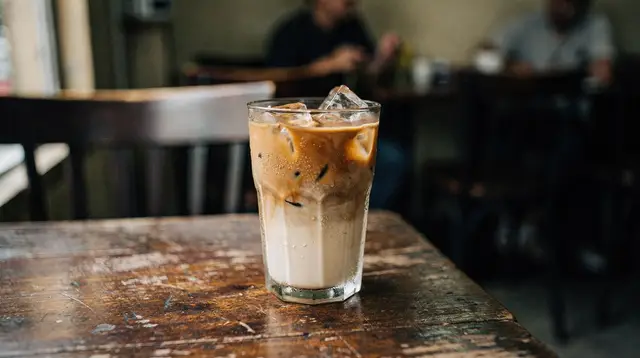
Ca phe sua da, the iconic iced coffee, is built on sweetened condensed milk by default, which rules it out for a vegan without adjustment. The good news is that this has become much easier to work around: cafes in the central districts that cater to visitors increasingly stock soy or oat milk on request, letting a customer keep the strong drip coffee and swap only the dairy element.
A street-corner coffee vendor working from a cart, by contrast, is far less likely to carry an alternative, so the reliable move for a strict vegan is to seek out a sit-down cafe rather than the cheapest roadside stand. The wider culture around Vietnamese coffee, condensed milk included, is covered in more depth in the dedicated coffee culture guide.
Where to look: pagodas, markets and the newer cafe scene
Three overlapping layers make up the vegetarian and vegan landscape in the city. The first is the older layer, clustered around pagodas such as the Jade Emperor Pagoda and through the historic Cholon district, where com chay eateries have served the local Buddhist community for decades and remain some of the most reliably meat-free (though not always vegan) kitchens in the city.
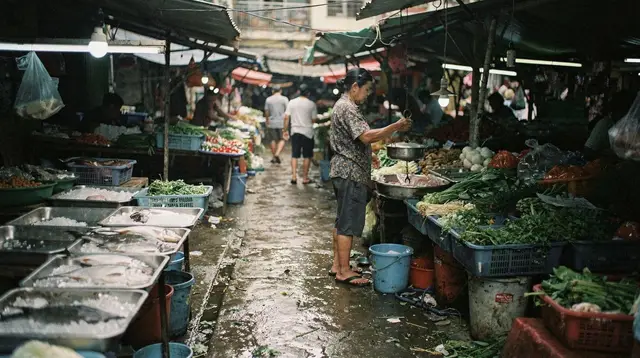
The second layer is the wet markets, where a handful of stalls specialise in chay food on ordinary days and many more do so around the lunar vegetarian dates described above. The third is newer: a wave of dedicated vegan cafes and restaurants, mostly in District 1 and District 3, aimed at both health-conscious locals and visiting travellers, offering fully plant-based menus with clear labelling in English, which removes most of the ambiguity that street stalls carry.
A comparison at a glance
| Setting | Vegetarian reliability | Vegan reliability | Best for |
|---|---|---|---|
| Pagoda-area com chay restaurant | High | Medium (ask about eggs, dairy, honey) | Traditional Buddhist vegetarian plates |
| --- | --- | --- | --- |
| Dedicated vegan cafe | High | High | Strict vegans, clear English labelling |
| --- | --- | --- | --- |
| Wet market stall, lunar vegetarian day | High on that date | Medium | Local atmosphere, authentic chay dishes |
| --- | --- | --- | --- |
| General street stall, ordinary day | Depends on the dish | Low unless confirmed | Only with a specific, confirmed request |
| --- | --- | --- | --- |
| Tourist-oriented restaurant, general menu | Medium | Low unless labelled | Convenience over authenticity |
Taking this further outside the city
The same Buddhist vegetarian tradition and plant-forward habits extend into the surrounding region, though the emphasis shifts. In the Mekong Delta, coconut-based cooking already leans vegetable-heavy in places, and homestay kitchens can often prepare a chay version of a set meal with advance notice. Chau Doc and Soc Trang, with their Khmer Buddhist communities, carry their own vegetarian dishes tied to different religious calendars again.
None of this is a reason to build a whole itinerary around meat-free eating alone, but it is useful to know the option travels with a visitor beyond the city centre, into destinations covered by the region’s Mekong day-trip guides and multi-day itineraries.
Tours that make this easier
Navigating fish sauce, lunar vegetarian dates and the vegetarian-versus-vegan gap alone takes some local knowledge, which is exactly what a guided food walk supplies. A guide who already knows which stalls cook properly plant-based food, and which merely leave the meat out of a bowl that started life in a shared fish-sauce-based kitchen, removes most of the guesswork in a single outing.
a walking tour built specifically around Saigon’s Buddhist vegetarian and plant-based street food is the most direct match for this angle, moving between pagoda-area eateries, market stalls and modern vegan cafes with a guide who can confirm ingredients on the spot.
For a broader taste of the city’s street food culture with vegetarian requests accommodated along the way, a general street food walking tour through the city’s central lanes covers more ground, while an evening street food outing paired with live acoustic music adds an after-dark, more social version of the same idea; both are easiest to enjoy meat-free with the request flagged when booking.
Practical notes for vegetarian and vegan travellers
A short phrase card goes a long way further than pointing at a menu. “Toi an chay” (“I eat vegetarian”) is understood everywhere, including by stalls that do not cook chay food themselves, and it usually prompts a genuine attempt to accommodate rather than a shrug. Adding “khong nuoc mam” (no fish sauce) closes the biggest single gap for a vegan.
English menus in the central, visitor-facing parts of the city are common enough that a dedicated vegan cafe will usually mark dishes clearly, while a market stall almost never will, which is where the phrase card earns its keep. None of this requires research into prices, opening hours or exact stall counts, all of which shift too often to be worth memorising; what holds steady is the underlying logic — chay traditions run alongside, not inside, the mainstream street food scene, and “vegetarian” needs a follow-up question before it can be trusted as “vegan.”
Related reading
For dishes and drinking culture beyond the meat-free lane, the guide to iconic southern Vietnamese dishes and the street food safety guide fill in the wider picture, while the etiquette and customs guide helps with the small courtesies around eating that apply regardless of diet.
Anyone wanting to build hands-on cooking skills around plant-based Vietnamese dishes can also look at the Saigon cooking class guide, and travellers extending into the delta will find more depth in the Ben Thanh Market shopping guide for market-based eating and the banh mi guide for the sandwich’s many variations, meat-free ones included.
Street Food Tours and Vietnamese Cuisine Tastings
Verified deep-linked GetYourGuide tours. Book through these links and we earn a small commission at no cost to you.
GetYourGuide does not provide a product photo for this activity — the image shows the meeting point, photographed by us.