One Day in Ho Chi Minh City: District 1 Highlights
What can you realistically see in one day in Ho Chi Minh City?
A single day comfortably covers District 1 on foot: Ben Thanh Market, the Reunification Palace, Notre-Dame Cathedral Basilica and the Central Post Office, the War Remnants Museum, and a walk down to the Saigon River near Bach Dang. It is a city-only day; anything outside Ho Chi Minh City belongs on a separate itinerary.
A Saigon Day That Never Leaves the City
This itinerary is built around a simple decision: stay inside Ho Chi Minh City for the whole day and go deep rather than wide. It threads together the historic core of District 1, the covered stalls of Ben Thanh Market, the sobering rooms of the War Remnants Museum, and a late walk along the Saigon River. Everything on this page sits within a short ride-hailing trip of everything else, which is what makes it possible to cover on foot and by app-hailed taxi without a private car or driver.
One thing worth settling before you start walking: Ho Chi Minh City is not the capital of Vietnam. Hanoi holds that role, far to the north, and nothing in this itinerary heads anywhere near it. Locals still call this city Saigon in everyday speech, especially for the central districts covered here, and both names are correct — you will hear both from guides, drivers and shopkeepers over the course of the day.
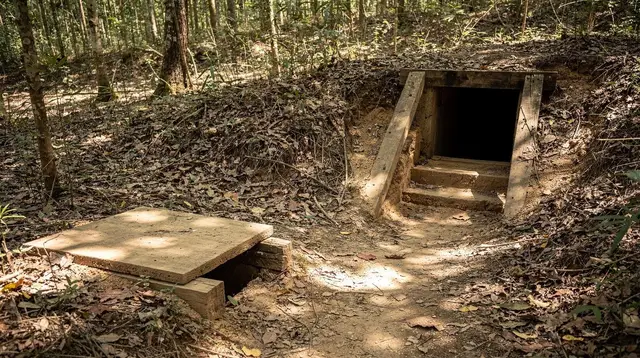
If your plan includes anything beyond the city limits — the Cu Chi Tunnels, the Mekong Delta, or the coast toward Vung Tau — those trips deserve their own day and their own page, starting with the one-day Cu Chi Tunnels itinerary or the broader three-day Saigon, Cu Chi and Mekong classic.
This page does not try to squeeze either of them in, and it does not go into depth on shopping or nightlife either — those get their own coverage in the dedicated Ben Thanh shopping guide and the Bui Vien nightlife guide.
Day 1: District 1, Ben Thanh Market and the War Remnants Museum
Morning: Ben Thanh Market and the Colonial Core
Start in the heart of District 1, where the city’s oldest covered market and its grandest colonial-era buildings sit within easy walking distance of one another. Ben Thanh Market, with its landmark clock tower marking the main entrance, is the natural anchor for the morning: a dense grid of stalls selling everything from lacquerware and coffee to fresh produce and cooked food, and one of the most recognisable single images of the city.
Go early enough that the aisles are still manageable and the heat hasn’t fully built, and keep bags close — the streets immediately around the market are one of the spots in the city where bag- and phone-snatching from passing motorbikes is a real, if rare, risk.
From the market, walk north into the grid of streets that hold the city’s grandest French colonial architecture. Notre-Dame Cathedral Basilica of Saigon anchors one end of this cluster, though it has been under a long-running restoration for some time — do not expect to see its towers unwrapped or its exterior freshly revealed, since scaffolding has been part of the view for years now. Right beside it stands the Central Post Office, still a working post office and still one of the most photographed interiors in the city. For background on both before you arrive, the guide to Notre-Dame Cathedral and the Central Post Office is worth a read.
Continue on to the Reunification Palace, the former Independence Palace and the building most closely tied to the end of the war in 1975. Its 1960s and 1970s interiors — war rooms, reception halls, a rooftop helicopter pad — are largely untouched, which is what makes a visit worthwhile even for travellers who aren’t especially drawn to political history. The history of the Reunification Palace and the companion ticketing guide both lay out what to expect before you go.
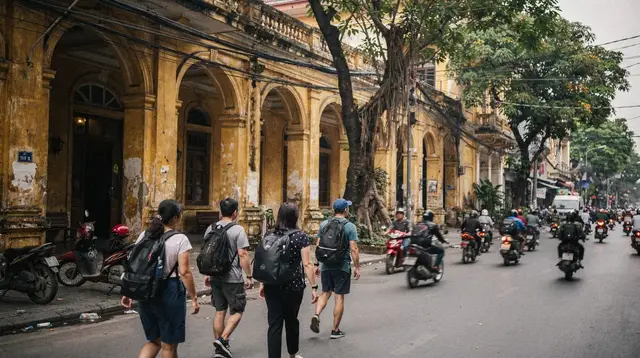
By late morning, the walking loop around Dong Khoi street and the Nguyen Hue pedestrian boulevard makes an easy connector between these sights, lined with cafés that are a natural place to sit down out of the sun. If you’d rather have all of this framed for you rather than self-guided, the Ho Chi Minh City walking tour and the more offbeat Saigon cyclo tour both cover this same core on a fixed route with a local guide.
Midday: The War Remnants Museum
The single heaviest stop of the day sits a short ride from the colonial core, in the part of District 3 that borders District 1: the War Remnants Museum. This is not a Cu Chi Tunnels site and it is not outside the city — it is a purpose-built museum in central Ho Chi Minh City, and one of the most visited sights in the country. Exhibits move through captured military hardware in the courtyard, photojournalism from the war years, and rooms addressing the long-term effects of the conflict on Vietnamese civilians; several sections are genuinely difficult, and most visitors find that this stop asks for a slower, quieter pace than the rest of the day.
Because the museum sits so close to the colonial cluster, it slots naturally into the middle of the day rather than requiring a separate trip. The War Remnants Museum guide is the fuller read on what the exhibits cover, and the tickets guide walks through the practical side of getting in. Travellers who want the visit arranged for them, with context supplied along the way, can book the War Remnants Museum entry ticket rather than turning up independently.
Give yourself room to decompress after this stop — a short walk, a coffee, or simply sitting somewhere quiet before moving on to the next part of the day tends to work better than rushing straight into more sightseeing.
Afternoon: Jade Emperor Pagoda and the City’s Vertical Views
With the museum behind you, the afternoon shifts tone. The Jade Emperor Pagoda, tucked into a quieter side street a short ride from the centre, is one of the most atmospheric temples in the city — thick with incense smoke, carved wooden figures, and a genuinely local devotional crowd rather than a tourist set piece. The Jade Emperor Pagoda guide covers what to look for once you’re inside.
From there, the Bitexco Financial Tower offers the clearest way to see the shape of the city you’ve been walking through all day: the tight grid of District 1 below, the curve of the Saigon River, and on a clear afternoon the skyline reaching toward Landmark 81 across the water in Binh Thanh. The Bitexco Tower skydeck guide has the practical detail on getting up to the viewing deck.
If you have appetite left for more streets rather than more sights, District 4’s dense street-food lanes sit just across the canal from the southern edge of District 1 and make a natural late-afternoon or early-evening detour; the District 4 street food guide maps out the area, and a guided version is bookable as the District 4 street food walking tour if you’d rather follow a local host than wander alone.
Evening: Dong Khoi, the Bitexco View and the Saigon River
As the light fades, work your way back toward the Saigon River. The stretch along Bach Dang, near where Dong Khoi meets the water, is the easiest place in the city to actually stand beside the river rather than just glimpse it between buildings, and it’s a natural spot to watch the water traffic and the lit-up skyline settle in for the evening. Short river cruises depart from piers along this stretch, though this itinerary treats the riverfront walk itself as the closing stop of the day rather than building in a full cruise — that’s a worthwhile addition for a second evening rather than a forced fit into an already full first day.
For dinner, the choice between the polished restaurants around Dong Khoi and the plastic-stool street kitchens a few blocks over is really a choice of register rather than quality — both are legitimate ways to end a day that started at Ben Thanh Market. If you’re weighing where to base yourself for a longer stay rather than just this one day, the guide to where to stay in Saigon by neighborhood breaks down District 1 against the quieter alternatives.
Getting Around This Itinerary
Nothing on this route requires a private car, and the whole day is built around walking the short distances and hailing a ride for the longer ones.
| Move | How | Notes |
|---|---|---|
| Ben Thanh Market to the colonial core | On foot | The clock tower and the cathedral cluster sit within a short walk of each other |
| --- | --- | --- |
| Colonial core to War Remnants Museum | Ride-hailing app or metered taxi | Grab, Be and Xanh SM all operate across District 1 and District 3 |
| --- | --- | --- |
| War Remnants Museum to Jade Emperor Pagoda | Ride-hailing app or metered taxi | The pagoda sits off the main tourist grid, so an app is easier than trying to walk it |
| --- | --- | --- |
| Jade Emperor Pagoda to Bitexco Tower | Ride-hailing app or metered taxi | Both sit within central District 1 |
| --- | --- | --- |
| Bitexco Tower to the riverfront | On foot | Dong Khoi and Nguyen Hue both lead down toward the water |
Crossing the street on this route is its own small skill: traffic here is dominated by motorbikes more densely than almost anywhere else in the country, and the trick is a steady, predictable pace rather than waiting for a gap that never quite arrives. The guide to crossing the street and traffic in Saigon and the broader guide to getting around Saigon cover both on-foot movement and the ride-hailing apps in more depth, and the Grab and taxis in Ho Chi Minh City guide is worth reading before your first ride if you haven’t used either app in Vietnam before.
If this day falls right after landing, the Tan Son Nhat airport transfer guide covers getting into District 1 from the airport, and travellers with only a handful of hours between flights should look at the dedicated Ho Chi Minh City layover half-day tour instead, which compresses this same core into a shorter window.
Where This Day Ends and the Rest of the Trip Begins
Treat this page as the city half of a longer trip rather than the whole trip. Once District 1 is covered, the two most common next moves are heading north-west for the Cu Chi Tunnels — bookable as the Ho Chi Minh Cu Chi Tunnels Tour for travellers who’d rather not organise transport and a guide themselves — or heading south-west into the Mekong Delta toward Can Tho.
Neither belongs inside a single city day, which is exactly why they’re kept off this page and given their own itineraries instead. For a first-timer trying to decide how the whole trip should be paced, how many days to spend in southern Vietnam is a useful next read, and anyone still mixing up Vietnam’s two biggest cities should start with Ho Chi Minh City versus Hanoi.
Frequently Asked Questions About This One-Day Ho Chi Minh City Itinerary
Is Ho Chi Minh City the capital of Vietnam?
No. Ho Chi Minh City is Vietnam’s largest city and economic centre, but the capital is Hanoi, roughly 1,100 km to the north. This itinerary stays entirely within Ho Chi Minh City and does not touch Hanoi.
Is the War Remnants Museum in Cu Chi?
No, and this is a common mix-up. The War Remnants Museum sits inside District 3, close to District 1, and is part of this one-day city itinerary. The Cu Chi Tunnels are a separate site north-west of the city and belong on their own day trip.
Can this itinerary be done without a car or driver?
Yes. District 1 and the adjoining part of District 3 are walkable, and the short hops between clusters of sights are easily covered by ride-hailing apps or metered taxis, which is how most independent travellers move around on a day like this.
Should I visit Ben Thanh Market in the morning or the evening?
Either works, and this itinerary treats it as a morning stop before the heat builds, but the streets around the market also run an evening food scene, so a second, shorter pass later in the day is common.
Does this day include Cholon or the Mekong Delta?
No. Cholon, the historic Chinatown across Districts 5 and 6, and the Mekong Delta are both left to their own guides and itineraries. This page is deliberately limited to central District 1 and the immediately adjacent part of District 3.
Is one day enough to see all of Ho Chi Minh City?
One day is enough for a solid first impression of central District 1, not for the whole city. Cholon, Binh Thanh’s Landmark 81, and Thao Dien across the river each deserve their own time, and none of them is forced into this itinerary.
What should I do the next day if I want to leave the city?
The most common follow-on is a day trip to the Cu Chi Tunnels, sometimes paired with the Cao Dai Holy See at Tay Ninh, or a day in the Mekong Delta toward Can Tho. Both are covered on their own itinerary pages rather than folded into this city day.
tours.1 days
Verified deep-linked GetYourGuide tours. Book through these links and we earn a small commission at no cost to you.
GetYourGuide does not provide a product photo for this activity — the image shows the meeting point, photographed by us.