Street Food Safety in Ho Chi Minh City: What I Actually Look For
How do I know if a street food stall in Ho Chi Minh City is safe?
Look at who is eating there, not what the stall looks like. A plastic stool set surrounded by local regulars and fast turnover, food cooked to order in front of you, and a vendor who handles raw and cooked ingredients separately are far more reliable signals than price or how polished a stall appears.
I did not arrive in Ho Chi Minh City with any particular theory about street food. I arrived with the ordinary nervousness most visitors have, and a vague sense that cheap, plastic-stool stands were somehow riskier than anything with a menu and a roof. A few weeks of eating on the street, mostly following whoever seemed to know what they were doing, changed that completely. The stalls I trust most now are often the least reassuring-looking ones, and the instinct I arrived with was backwards.
What I actually watch for before I sit down
The single habit that has served me best is simple: I look at who else is eating there. A stall with a constant stream of local customers, cycling through in twenty or thirty minutes, is moving through its ingredients fast. That turnover matters more than anything about how the stall looks. Meat, herbs and broth sitting there for hours before anyone touches them is the real risk, not a plastic stool or a hand-painted sign.
Cooking style is the second thing I pay attention to. When a dish is assembled or fried to order, right in front of me, I can watch the process: raw ingredients going into hot oil or a hot pan, not sitting at room temperature waiting to be reheated. A vendor working a single wok non-stop, taking orders and cooking each one fresh, tells me more than any certificate ever could.
Third, I watch hands and surfaces for a minute before I commit. Tongs instead of bare hands for cooked food, a cutting board that gets wiped between uses, raw ingredients kept separate from the herbs and garnishes going straight into my bowl. None of this requires fluent Vietnamese or any special knowledge, just paying attention for the length of time it takes to order.
The confusion I had to unlearn
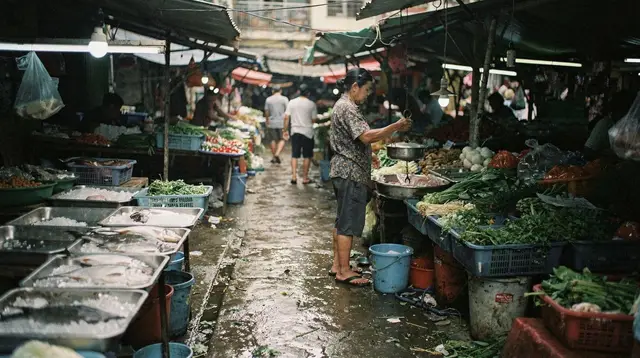
My first instinct, like most visitors I’ve talked to, was to associate a stall’s price and appearance with its safety. A tourist-facing restaurant with air conditioning and laminated menus felt inherently safer than a woman cooking over a single burner on the pavement. In practice it is often the opposite. The busiest, most basic-looking stands are usually the ones locals have already vetted through years of daily habit, and their volume of customers forces fast ingredient turnover almost automatically. A quieter, more polished restaurant can leave food sitting far longer between customers.
None of this means every rudimentary stall is automatically safe, or that every clean-looking restaurant is a risk. It means neither price nor appearance is the signal worth trusting. Local crowd and visible cooking are.
How this plays out around the city
In central Ho Chi Minh City, this is easiest to practice around the busy lanes near Ben Thanh Market, where dense competition between stalls tends to reward the ones doing things right. I found a walking food tour through District 1 useful early on, mostly because it let me watch a guide apply exactly this kind of judgment stall by stall, rather than reading about it. The same logic held up wandering Cholon, where a dedicated street food route through the old Chinatown mixes long-running family stalls with genuinely busy market corners.
If you would rather not do the vetting yourself at all, someone who already eats there regularly can do it for you. An afternoon city tour paired with a street food stop is a low-effort way to get a first, well-vetted introduction before you start choosing stalls on your own. For a longer, motorbike-based version that stops at multiple vendors in one evening, an evening street food tour by motorbike, similar in spirit to a guided evening motorbike street food tour, covers more ground with someone doing the stall selection for you.
Vegetarian travellers face a slightly different version of the same question, since ingredient separation matters even more when cross-contact with meat or fish sauce is the concern rather than freshness alone; a vegetarian street food route is worth following for that reason. Coffee stalls have their own rhythm too, and a coffee culture walk is a gentle, low-risk way to build confidence before tackling heavier dishes.
If bread and fillings are more your interest, a dedicated banh mi route applies the same turnover logic to a single, very popular dish. And a morning wet market tasting outing is a good place to watch how vendors actually handle raw ingredients before they ever reach a stall.
Once you leave the city centre, the same rules travel with you. On a small-group Mekong Delta day trip, food is usually served at set stops chosen by the operator, which removes most of the guesswork, though the same crowd-and-turnover instinct is worth keeping if you wander off on your own in a Mekong Delta town.
What this page does not cover
I have deliberately left dish names, prices, exact addresses and opening hours out of this page. Prices and hours change too often to be worth pinning down here, and specific dishes are covered properly on the southern Vietnamese dishes guide and the vegetarian food guide.
Water and general hygiene questions get their own treatment on the water and health page, and if overcharging rather than food safety is your worry, the common scams guide is the better read. None of what follows here, or anywhere on this site, replaces an individual medical opinion — if you have specific dietary restrictions, a compromised immune system or ongoing symptoms, that conversation belongs with a doctor, not a travel blog.
Street Food Safety FAQ for Ho Chi Minh City
Is cheap street food more likely to make me sick?
No, price tells you almost nothing about safety. A basic plastic-stool stall with constant local traffic is often safer than a pricier tourist-facing restaurant with slow turnover, because volume forces fresh ingredients and quick cooking.
Does a rundown-looking stall mean the food is unsafe?
Not necessarily. Some of the busiest, safest stalls in Ho Chi Minh City look basic by design. What matters more is whether ingredients move fast, whether cooking happens in front of you, and whether the stall is full of local customers.
What is the single best sign that a stall is safe?
Local crowds at the hour when a dish is meant to be eaten. Vietnamese diners are more sensitive to freshness and hygiene than any visual inspection I can do in a few seconds, and a queue of them is a stronger signal than anything else.
Should I avoid food that is not cooked in front of me?
I am more cautious with it, yes. Dishes assembled from ingredients that have been sitting out for a while carry more risk than something dropped into hot oil or a hot pan the moment you order it.
Is ice safe in Ho Chi Minh City?
In established restaurants and cafes, ice is generally made industrially and considered fine. At a very informal stall I simply watch what everyone around me is doing and follow the same habits.
What should I do if I do get sick from something I ate?
Mild stomach upset is common enough while adjusting to new food and is usually short-lived with rest, hydration and simple food. Anything more serious or lasting deserves an actual medical opinion rather than travel advice, and this page is not a substitute for that.
Do vendors separate raw and cooked food safely?
The better ones do, and it is visible if you watch for a minute: separate boards or trays, tongs instead of bare hands for cooked food, and raw meat kept apart from herbs and garnishes rather than piled together.
Is street food safer at certain times of day?
Meal-time peaks, when a stall is turning over food quickly for a steady stream of customers, tend to be the safer window. A stall with the same tray of food sitting untouched well past lunch is one I would skip.
Street Food Tours and Vietnamese Cuisine Tastings
Verified deep-linked GetYourGuide tours. Book through these links and we earn a small commission at no cost to you.
GetYourGuide does not provide a product photo for this activity — the image shows the meeting point, photographed by us.