South vs North Vietnamese Cuisine: Why the Food Tastes Different
Is Vietnamese food the same in the north and the south?
No. Southern cooking, shaped by the Mekong Delta and by Khmer and Chinese influence, leans sweeter, uses more coconut milk and piles on fresh herbs. Northern cooking keeps broths plainer and lighter on sugar and herbs. The same dish, like pho, can taste noticeably different in each region.
The first time someone told me my pho tasted “too sweet to be real,” I laughed, because to me it tasted completely normal. That conversation, with a traveler who had just flown down from Hanoi, is basically the reason I wanted to write this page. We were both eating pho. We were both eating it in Vietnam. And we were both right that it tasted different, because in a country this long, “Vietnamese food” is not one cuisine.
One country, two very different tables
I live in the south, so my daily food reference point is Ho Chi Minh City, and everything below is a southern eater’s perspective on a northern cuisine I only visit occasionally. What struck me early on, before I’d thought much about geography or history, was just how often a dish I loved here turned out to have a stricter, plainer northern cousin with the same name.
The short version, before I get into why: southern food tends to be sweeter, richer with coconut milk, and loaded with fresh herbs and raw vegetables on the side. Northern food tends to keep its broths clearer, its seasoning more restrained, and its herb plates smaller. Neither is “the real one.” They grew up answering to different climates, different neighbors, and a different history.
Why the south tastes the way it does
A few things converge here, and once you notice them you start tasting them everywhere.
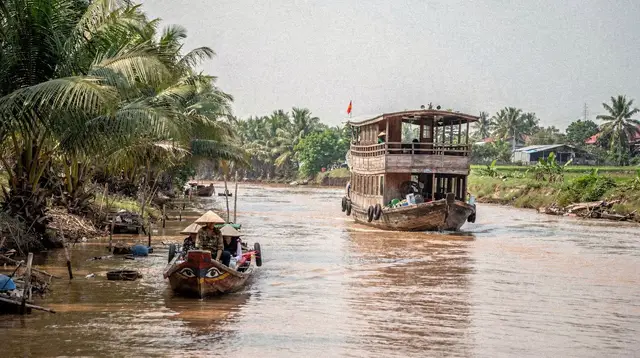
The first is geography. This is the Mekong Delta’s back yard. Sugar cane, coconuts and a huge range of fresh herbs grow easily in the warm, wet south, and southern cooks have never been shy about using them. A bowl of soup here is as likely to arrive with a full plate of mint, perilla, saw-tooth herb and bean sprouts on the side as it is to arrive “finished.” You build the last layer of flavor yourself, at the table.
The second is history. The south spent centuries next to, and mixing with, Khmer and ethnic Chinese communities, especially around Cholon and throughout the delta. That shows up as an easy hand with coconut milk in savory dishes, a fondness for slightly caramelized, sweet-salty sauces, and a general comfort with bolder, more layered flavor than you’ll find further north.
The north, by contrast, developed its food culture in a cooler climate with a shorter growing season for tropical produce, closer historically to Chinese court cooking further from Khmer influence, and with a culinary sensibility that favors balance and subtlety over sweetness. Broths are simmered to be clean rather than rich. Sugar is used sparingly, if at all. The herb plate, when it appears, is usually smaller.
The pho mistake almost everyone makes
If there’s one confusion I want to correct here, it’s the idea that pho is pho everywhere, one dish with one recipe, and that some restaurants just make it better than others. That’s not quite what’s happening.
Pho started in the north, and the northern version stays close to its roots: a clear, restrained broth, thinner rice noodles, and a short, simple garnish of scallion and maybe a little coriander. What most people outside Vietnam picture as “pho” is closer to what happened once the dish traveled south. Southern pho typically comes to the table sweeter, often with a touch more sugar in the broth, and it arrives with that generous plate of fresh herbs, bean sprouts and lime on the side that has become almost a symbol of Vietnamese food internationally.
So when a visitor tells me their pho in Hanoi tasted “plainer” than the pho they had in Ho Chi Minh City, they’re not wrong, and neither bowl is a lesser version of the other. They’re regional siblings, not the same recipe made carelessly in one place.
What this means for how you eat here
None of this is really about naming southern specialties one by one, that’s a job for a different page. It’s more about resetting expectations. If you fly in from the north, or you’ve eaten Vietnamese food elsewhere and built a mental picture of what it “should” taste like, give the southern version a fair try on its own terms rather than judging it against a northern reference point you didn’t know you had.
The easiest way I know to actually taste this difference, rather than just read about it, is to eat with someone who can point out what’s regional and what’s just a particular cook’s style. A guided street food walk through the city’s stalls and markets does exactly that, and it’s how I’d suggest starting if food is a real reason you’re here. If you’d rather understand the cooking from the inside, a homestyle Vietnamese cooking class will walk you through the coconut milk, the sugar, the herb plate, and why southern cooks reach for them so readily.
Since so much of what makes southern food distinct traces back to the delta itself, it’s worth going to see where the coconuts, herbs and produce actually come from. A day trip out to the Mekong Delta puts you in orchards and villages that explain a lot about why this region’s food leans the way it does, and a slower river dinner cruise with a Vietnamese buffet is a relaxed way to sample a broad spread of southern dishes side by side in one sitting.
Where to go deeper
If this comparison has you curious about the food itself rather than just the regional divide, the southern Vietnamese dishes guide covers the specific plates I’ve deliberately left out here. For the drink that southern Vietnam is arguably just as proud of as its food, there’s a whole piece on Vietnamese coffee culture, and if the delta’s mix of communities interests you, the page on Mekong Delta ethnic communities gets into the Khmer and Chinese influence I only touched on above.
Most people build their food experience around a short stay in the city and a day or two outside it. If you’re still figuring out how many days that needs, how many days in southern Vietnam is a reasonable starting point, and planning a trip across the city, the delta and the coast covers how to fit food-focused days in around the sightseeing.
For the actual eating, I’d point you toward a district 1 walking food tour, a Cholon street food tour if you want the Chinese-influenced side of the city, and a banh mi sandwich tour if you only have time for one outing.
Vegetarians should look at the vegetarian street food tour, and if markets interest you as much as restaurants, the wet market tasting tour is worth a look. Anyone curious how the delta’s own ingredients turn into dishes at home should read about homestay cooking classes in the Mekong Delta, and Mekong Delta craft workshops cover some of the food-adjacent traditions, like coconut candy making, that you’ll see on delta day trips.
Frequently asked questions about south vs north Vietnamese cuisine
Is southern Vietnamese food sweeter than northern food?
Generally, yes. Southern cooks use sugar more freely in broths and sauces, partly reflecting the region’s easy access to sugar cane and coconut, while northern cooking keeps sweetness minimal and lets other seasonings lead.
Does pho taste different in the south than in the north?
Yes, noticeably. Northern pho, where the dish originated, favors a clearer, more restrained broth with a small garnish. Southern pho is typically sweeter and comes with a large plate of fresh herbs, bean sprouts and lime added at the table.
Why does southern food use so much coconut milk?
The south’s warm climate and coconut-growing delta, combined with historical Khmer culinary influence, made coconut milk a natural, everyday ingredient in savory southern cooking, something far less common in northern kitchens.
Are fresh herbs a southern thing specifically?
Largely, yes. The south’s climate supports year-round herb growing, and southern meals commonly arrive with a generous plate of mint, perilla and other fresh herbs added by the diner. Northern meals tend to use herbs more sparingly and as a finishing touch rather than a main component.
Is one region’s cuisine more “authentic” than the other?
No. Both are authentic expressions of Vietnamese cooking, shaped by different climates, neighbors and history. Southern food isn’t a sweeter deviation from a northern original, and northern food isn’t a blander version of southern cooking; they developed in parallel.
Where does Chinese influence show up most in southern cooking?
Most visibly in Cholon, the historic Chinatown spanning District 5 and District 6, where noodle dishes, braises and market cooking carry a clear Chinese imprint layered onto southern Vietnamese technique.
Can I taste both regional styles without leaving Ho Chi Minh City?
You can find northern-style restaurants in the city, since it’s home to residents from all over Vietnam, but the everyday street food and home cooking you’ll encounter here is overwhelmingly southern in character.
Tour Comparisons
Verified deep-linked GetYourGuide tours. Book through these links and we earn a small commission at no cost to you.
GetYourGuide does not provide a product photo for this activity — the image shows the meeting point, photographed by us.