District 4: Ho Chi Minh City's Real Street Food Neighborhood
Is District 4 in Ho Chi Minh City safe and worth visiting for street food?
Yes. District 4 sits just across a narrow channel from District 1 and has become one of the city's most celebrated street-food neighborhoods, especially after dark. Its reputation as an area to avoid is outdated and no longer matches how locals or visitors actually experience it.
The neighborhood behind Ho Chi Minh City’s best street food
Ask a longtime resident of District 1 where to eat, and District 4 comes up more often than any tourist guidebook would suggest. It sits directly across a narrow channel of the Saigon River from the city center, close enough to feel like an extension of downtown, yet distinct enough to have kept its own identity: dense low-rise housing, working-class roots, and a street-food culture that locals treat as one of the best in the entire city.
For a long time, District 4 carried a different reputation. Older guidebooks and older residents alike described it as a rough part of town, best avoided after dark, tied to a period of the city’s history that has little to do with how the neighborhood actually functions today. That reputation has not kept pace with reality. Ho Chi Minh City has changed enormously, and District 4 has changed with it — into a neighborhood defined far more by grilled seafood and late-night noodle stalls than by any lingering sense of danger. This guide is about the district itself: its layout, its food identity, and why the old warnings deserve to be retired.
If you are looking specifically for organized street-food tours rather than a neighborhood overview, the street food tours category covers those in depth. This page focuses on District 4 as a place.
Where District 4 sits on the map
District 4 occupies a compact peninsula-like strip of land wrapped by branches of the Saigon River, positioned immediately south of District 1 and facing it across the water. That proximity is the single most useful thing to understand about the neighborhood: it is not a detour from the center, it is practically an extension of it, separated by water rather than distance.
To the west, District 4 faces toward District 3 and the villa quarters covered in the District 3 neighborhood guide; to the east, across the main river, sits Thao Dien in Thu Duc City, the expat-oriented riverside area with its own café and canal scene, explored in the Binh Thanh canal guide. District 4 has none of Thao Dien’s polish and none of District 1’s tourist infrastructure — and that is largely the point. It remains a residential, working neighborhood that happens to have some of the city’s most concentrated street food.
Compared with the historic Chinatown of Cholon, covered in the Cholon neighborhood guide, District 4’s food identity is younger and less tied to a single ethnic community. Where Cholon’s stalls sit alongside temples and market halls documented over generations, District 4’s food scene reads more like an organic, ongoing evolution of a dense urban neighborhood finding its own culinary voice.
Why the “dangerous” reputation is outdated
District 4’s old reputation traces back to a specific period of the city’s past, when the area was known for petty crime and a rougher social fabric than its neighbors. That history is real, but it is also history. Ho Chi Minh City as a whole has urbanized and modernized substantially, and District 4 has been part of that shift: new housing, new small businesses, and a steady stream of visitors drawn specifically by its food have reshaped daily life in the neighborhood.
What travelers find today is a district that behaves like most dense residential quarters in the city center: busy, informal, full of motorbikes and narrow lanes, and entirely walkable once you’re inside its food streets. The same everyday awareness that applies across central Ho Chi Minh City — watching for traffic, keeping bags close in crowded lanes, being mindful with phones near passing motorbikes — applies here too, no more and no less than in District 1 or Cholon. Locals from across the city routinely travel to District 4 specifically to eat, often well into the evening, which says more about the neighborhood’s current standing than any outdated warning does.
If you’re deciding where to base yourself in the city, the neighborhood-by-neighborhood accommodation guide puts District 4 in context alongside District 1, District 3, and Thao Dien — useful for understanding how it fits into the wider map of where people actually stay and eat.
What District 4’s food identity actually looks like
District 4’s food reputation rests on a few pillars. Grilled and barbecue stalls are everywhere, with charcoal smoke drifting down entire lanes as vendors fan skewers of pork, seafood, and vegetables over open flame. Seafood hot pots and simmering pots of broth are another signature, often set up on the same plastic-stool, open-air format found across southern Vietnamese street food but concentrated here with unusual density.
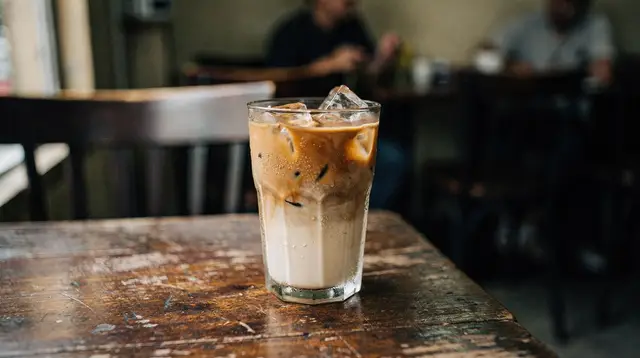
Alongside the grilled and simmered specialties, District 4 shares the wider southern Vietnamese repertoire: broken rice, banh mi from stalls that have operated on the same corners for years, sweeter southern-style pho, and the ever-present iced coffee with condensed milk that punctuates a day of eating anywhere in the city. What sets District 4 apart is less the individual dishes than the atmosphere they’re served in — plastic stools spilling onto the pavement, entire families running a single stall for decades, and a level of local-only clientele that’s increasingly rare in the more tourist-facing lanes of District 1.
Evenings are when District 4 comes into its own. As the heat of the day breaks, lanes that felt quiet in the afternoon fill with smoke, steam, and the sound of orders being called out, and the neighborhood becomes one of the more atmospheric places in the city to simply wander and eat.
If you’d rather have a local pace the evening for you, District 4 is the anchor for a dedicated street food walking tour through District 4’s own lanes, built specifically around this neighborhood rather than the wider city. It’s a straightforward way to hit a sequence of vetted stalls without needing to read a menu in Vietnamese or guess which stand is the good one on a given block.
Getting to District 4 and back
District 4 has no dedicated station on the city’s growing metro and bus network, and its narrow, food-dense lanes aren’t built around public transport in the first place. In practice, almost everyone arrives the same way: a short ride-hailing trip from District 1, Thao Dien, or wherever else they’re staying. The Grab and taxis guide covers how that works in Ho Chi Minh City specifically, and the broader getting around Saigon guide is useful if you’re still deciding how to structure movement around the city more generally.
Because the crossing from District 1 is so short, District 4 works well as a late addition to a day that started elsewhere — an hour or two tacked onto the end of sightseeing in the center, rather than a destination that needs its own dedicated day. Visitors who prefer to explore on two wheels rather than on foot sometimes fold District 4 into a wider motorbike food crawl that also touches other lanes across the city, or into an evening tour by scooter that treats several neighborhoods, District 4 included, as stops on a single night out.
A guided motorbike street food tour that eats where Saigon actually eats is a practical way to cover District 4 alongside a couple of other local-only lanes in one outing, without needing to plan the route yourself.
District 4 versus District 1’s food scene
The two districts sit almost on top of each other geographically, but they serve food to different audiences. District 1 balances tourist-oriented restaurants, cafés, and a smaller layer of street stalls, all with fairly reliable English signage and menus. District 4 skews far more local: fewer concessions to non-Vietnamese speakers, more family-run operations, and a clientele that’s still mostly residents of the city rather than visitors.
| District 1 | District 4 | |
|---|---|---|
| Food style | Mixed restaurants and street stalls | Almost entirely street and stall food |
| --- | --- | --- |
| English menus | Common | Uncommon |
| --- | --- | --- |
| Typical visitor | Tourists and expats | Mostly local residents |
| --- | --- | --- |
| Best time to visit | All day | Evening into night |
| --- | --- | --- |
| Atmosphere | Polished, tourist-facing | Working neighborhood, informal |
Neither approach is better; they’re simply different layers of the same city. Travelers who’ve already explored District 1’s central food streets, covered in the District 1 walking food tour guide, often describe District 4 as the natural next step — the version of Ho Chi Minh City street food with fewer compromises made for outside visitors.
For a broader sense of how Vietnamese coffee culture threads through neighborhoods like this one, the Vietnamese coffee culture guide is a useful companion piece; District 4’s own corner cafés follow the same rituals found across the city, just with a distinctly local crowd.
Getting the most out of a District 4 food outing
Because District 4 rewards wandering rather than a fixed itinerary, the best approach is to arrive without a rigid plan and let the smell of charcoal and the crowd at a given stall guide the next stop. That said, a few practical notes make the experience smoother. Crossing between District 4 and District 1 is simple thanks to the short distance separating them, and the general approach to moving through busy Ho Chi Minh City streets — a steady, predictable pace rather than stopping or darting — applies here exactly as described in the crossing the street and traffic guide.
Language can be more of a barrier here than in District 1, since fewer vendors are used to non-Vietnamese speakers. Pointing at what looks good, or at what a neighboring table is eating, works well as a fallback.
For visitors who’d rather not navigate that on their own, a guide fluent in both the food and the language closes that gap; the private street food tour led by a locally known guide and the private walking tour built around personal, unhurried pacing both work well for visitors who want District 4’s food without the trial and error, and both can be tailored to include the district as a stop.
Those who’d rather combine District 4 with a livelier, group-oriented evening can look at the street food tour paired with live acoustic music, which trades some of the intimacy of a private tour for a more social, event-like atmosphere — useful if District 4 is one stop among several rather than the sole focus of the evening.
District 4 in the wider city
District 4 is easy to treat as a single-evening food outing, but it’s worth remembering it’s also a real residential district with its own markets, riverside edges, and daily rhythms that have nothing to do with tourism. That’s part of what makes it feel different from more curated food destinations elsewhere in the city, including the historic stalls of Cholon or the newer café culture of Thao Dien.
District 4’s markets serve the same everyday role as markets in any Ho Chi Minh City neighborhood — fresh produce, dry goods, and household basics for people who actually live there, distinct from the souvenir-heavy stalls found around Ben Thanh Market in District 1. That contrast is worth keeping in mind: District 4’s food scene grew out of genuine daily life rather than tourist demand, which is part of why it still feels less curated, and often less expensive, than food streets built with visitors in mind. Travelers comparing how markets and shopping fit into a District 1 itinerary can see that side of the city in the Ben Thanh and Saigon markets shopping guide, which makes the contrast with District 4’s working markets more concrete.
For visitors mapping out where District 4 fits alongside the rest of Ho Chi Minh City’s neighborhoods — District 1’s tourist core, District 3’s quieter villas, Cholon’s Chinatown, and Thao Dien’s riverside calm — the Ho Chi Minh City neighborhood overview ties these pieces together. District 4 no longer deserves a footnote about danger; it deserves recognition as one of the city’s genuine food destinations, hiding in plain sight just across the water from District 1.
Frequently asked questions about District 4’s street food scene
Is District 4 dangerous for tourists?
No. District 4’s rough-neighborhood reputation dates back decades and no longer reflects the area today. It functions like any dense, working residential quarter of Ho Chi Minh City, with the same everyday precautions that apply anywhere in the city center.
What makes District 4 different from District 1’s food scene?
District 1 mixes tourist restaurants with street food. District 4 is almost entirely local: narrow lanes of family-run stalls, plastic stools, and dishes cooked to order, with far fewer English menus and far more regulars.
How far is District 4 from District 1?
District 4 is immediately adjacent to District 1, separated only by a channel of the Saigon River, which is why it works so well as an evening add-on to a day spent in the center.
What should I order in District 4?
Grilled and barbecue stalls, seafood hot pots, and late-night snack lanes are the neighborhood’s signature, alongside the same broken rice, noodle soups, and iced coffee found across the south.
Is District 4 walkable, or do I need transport?
Its core food lanes are compact and walkable once you arrive, but getting there from elsewhere in the city is easiest by ride-hailing app or taxi rather than on foot.
Is District 4 only about street food?
Food is what draws most visitors, but the district is also a genuine residential neighborhood with markets, riverside views back toward District 1, and a slower pace than the tourist core.
Do I need to join a tour to eat well in District 4?
No, but a guided evening walk removes the guesswork of language and ordering, and several District 4-focused street-food tours exist for exactly that reason.
Ho Chi Minh City by Neighborhood
Verified deep-linked GetYourGuide tours. Book through these links and we earn a small commission at no cost to you.
GetYourGuide does not provide a product photo for this activity — the image shows the meeting point, photographed by us.