3 Days in Saigon: Cu Chi Tunnels and the Mekong Delta
What does a classic 3-day Saigon, Cu Chi and Mekong Delta itinerary look like?
Day 1 covers central Ho Chi Minh City on foot, Day 2 is a full day at the Cu Chi Tunnels north-west of the city, and Day 3 goes south-west into the nearby Mekong Delta around My Tho and Ben Tre. All three days work with a private car and driver, and the delta day returns to Saigon the same evening.
A First Taste of Southern Vietnam, Day by Day
This three-day route is the most common way to get a first, well-rounded look at southern Vietnam without spreading a short trip too thin. It stays close to Ho Chi Minh City the entire time: one day inside the city, one day at the Cu Chi Tunnels north-west of it, and one day in the nearer reaches of the Mekong Delta around My Tho and Ben Tre. All three days work comfortably with a private car and driver, which is how most visitors cover the two out-of-town days.
The itinerary deliberately stops short of the delta’s interior. Towns further in, such as Can Tho with its Cai Rang floating market or Chau Doc near the Cambodian border, belong to longer trips built specifically around the deep delta — see the four-day deep Mekong itinerary for that version. Trying to fit both the near delta and the far delta into three days usually means arriving everywhere tired and leaving with almost no time anywhere.
The logic behind the sequence is simple: one day that needs no vehicle, and two days that each need a full day with a car, kept separate so neither trip has to be rushed to fit around the other. Ho Chi Minh City is not the country’s capital — that is Hanoi, roughly 1,100 km to the north and far outside the scope of a short trip like this one — but it is Vietnam’s largest city and its economic center, and everything in this itinerary sits within a couple of hours of it by road. Nothing here requires a flight or an overnight stay away from the city.
Day 1: Ho Chi Minh City on Foot
The first day stays entirely within District 1 and its immediate surroundings, on foot or with short rides between stops. It is the one day of the three that needs no car booked for the whole day, which makes it a sensible choice for an arrival day once the initial transfer from the airport is done.
A typical sequence starts at Ben Thanh Market and its landmark clock tower, then moves toward the Reunification Palace and the War Remnants Museum, two stops that between them cover much of the city’s twentieth-century history. Anyone who wants more background before visiting can read the dedicated Reunification Palace history guide and the War Remnants Museum guide beforehand.
The afternoon and evening are looser: Notre-Dame Cathedral Basilica and the Central Post Office nearby, a walk down Dong Khoi or along the Nguyen Hue walking street, and, for those who want a break from the heat, a stop in one of the city’s coffee shops. Getting between these points rarely needs more than a short ride-hailing trip, and the getting around Saigon guide covers the practical side of taxis, apps and walking distances. Travelers landing that same morning should also check the airport transfer guide so the day starts smoothly. The cathedral itself has been under a long-running restoration, so travelers expecting an unobstructed view of the facade should not be surprised to find scaffolding still up.
Travelers with energy left after the historic sites often add the Bitexco Financial Tower’s Saigon Skydeck for a rooftop view over the Saigon River, or the Jade Emperor Pagoda, one of the city’s most atmospheric temples — both covered in more detail in the Bitexco Skydeck guide and the Jade Emperor Pagoda guide. In the evening, the backpacker strip of Bui Vien is the main nightlife draw in District 1, and the Bui Vien nightlife guide covers what to expect there for travelers who want a livelier close to the day. None of these additions require leaving District 1, so they slot into the same car-free day without changing its shape.
Day 2: The Cu Chi Tunnels
Day 2 is a full day trip north-west of the city to the Cu Chi Tunnels, one of the most visited sites in southern Vietnam and usually the second stop any first-time visitor adds after the city itself. The tunnels are reached by road, and a private car or an organized tour both work; either way, this is not a half-day add-on to something else, it is its own day.
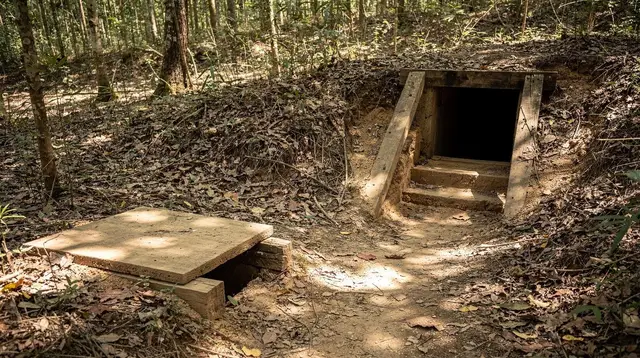
There are two separate tunnel sites, Ben Dinh and Ben Duoc, and picking the right one matters more than it might seem — the Ben Duoc vs Ben Dinh comparison and the half-day vs full-day guide both walk through the trade-offs of crowds, distance and how much of the network is actually seen. Whichever site is chosen, expect some walking on uneven paths and short, low crawls through maintained tunnel sections, which is worth knowing in advance rather than discovering on the spot.
a private car and guide for the Cu Chi Tunnels keeps the day flexible and avoids syncing with a group’s pace, which matters given how much of the day is spent on the road getting there and back. Some visitors extend the day toward Tay Ninh and the Cao Dai Holy See, but that combination changes the day’s length and shape enough that it is better treated as its own trip rather than bolted onto this one. Cu Chi itself is a district of Ho Chi Minh City, while Tay Ninh is a separate province further out — one more reason the two are usually kept apart rather than merged into a single rushed day.
The tunnel network itself is worth a little background before descending into it: it was expanded over years into a network of passages, hidden air vents, trapdoors and underground rooms, far more extensive than the short maintained sections visitors actually walk or crawl through today. The how the Cu Chi tunnel network worked guide covers that history for anyone who wants the context before the visit rather than reading it off a sign on site. Comfortable closed shoes and clothes that can get a little dusty are worth packing for this day specifically, since both tunnel sites involve dirt paths and low, narrow crawl sections.
Day 3: My Tho and Ben Tre in the Mekong Delta
The third day heads south-west into the Mekong Delta, to My Tho and Ben Tre, the closest delta towns to Ho Chi Minh City and the standard choice for a single accessible delta day. It is worth being clear about what these two places are: they are Mekong Delta provinces in their own right, not neighborhoods of Saigon, and they sit apart from the deep delta towns like Can Tho that headline longer itineraries.
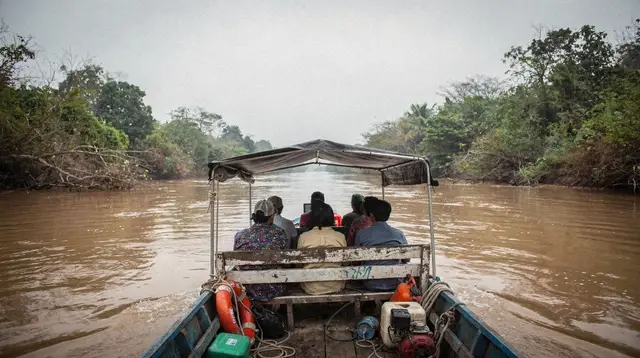
The day typically combines a short boat ride on one of the river’s smaller branches, a stop at a coconut candy or honey workshop, and a walk or cycle through orchard villages — the kind of day covered in more depth by the My Tho and Ben Tre full-day guide. One recurring point of confusion is worth correcting here: neither My Tho nor Ben Tre has a floating market comparable to Cai Rang, which trades at dawn much further south near Can Tho. Anyone expecting that particular scene on this day should adjust expectations, or look instead at the My Tho vs Can Tho comparison to see how the two experiences differ.
a full-day My Tho and Ben Tre tour from Ho Chi Minh City is the most common way to cover the day, since it bundles the boat transfer with the workshop and village stops in one organized loop. For a version built around Ben Tre specifically, with more time on its river branches and coconut country, a full-day Ben Tre tour shifts the balance away from My Tho without adding a second day.
The scenery on this day is a large part of the appeal: narrow canals lined with water coconut palms, small wooden or sampan boats replacing cars and motorbikes for a few hours, and villages built around a single craft such as coconut candy, brick making or woven mats. It is a gentler pace than either of the previous two days, which is part of why it works well as the closing day of the loop rather than the opener — travelers arrive at it already used to the heat and the road time, and can simply enjoy the slower rhythm of the river before heading back to the city for the evening.
Fitting the Three Days Together
Because each day is self-contained, the order can be adjusted around flight times, opening days or simple preference — the planning guide for city, delta and coast covers how this loop fits into a longer trip if more time is available. For travelers unsure whether three days is even the right length, the how many days in southern Vietnam guide lays out how this itinerary compares to shorter and longer versions.
The table below summarizes the shape of each day.
| Day | Focus | Where | Car needed |
|---|---|---|---|
| Day 1 | City sightseeing | Ho Chi Minh City, District 1 | No |
| --- | --- | --- | --- |
| Day 2 | Tunnels and history | Cu Chi Tunnels | Yes, full day |
| --- | --- | --- | --- |
| Day 3 | River and orchards | My Tho and Ben Tre | Yes, full day |
For travelers weighing whether to book each day separately or as one combined package, a joint Ho Chi Minh City and Cu Chi Tunnels tour is the closest single booking that pairs the first two days into one itinerary, leaving the Mekong Delta day free to book on its own once the pace of the trip is clearer.
Where to Stay for This Itinerary
Since Day 1 is spent entirely on foot in District 1, staying inside or near that district cuts down on transfer time before the two out-of-town days begin. Both the Cu Chi Tunnels and My Tho/Ben Tre are collected by car directly from central hotels, so the choice of neighborhood affects Day 1 far more than Days 2 and 3. The where to stay in Saigon by neighborhood guide breaks down the trade-offs between District 1, District 3 and the newer Thao Dien area across the river, for travelers still deciding on a base before the trip starts.
Best Time of Year for This Loop
All three days can run in most months, but the two road days are the ones most affected by weather, since a wet road trip to Cu Chi or the delta is less pleasant than a wet day of city sightseeing that can duck into museums and cafés between showers. The dry season guide for southern Vietnam lays out which months keep the Cu Chi and Mekong Delta days most comfortable, and how the rainy season tends to concentrate its downpours into short afternoon bursts rather than washing out an entire day.
Group Tour or Private Car
This itinerary is written around a private car and driver for Days 2 and 3, which is what allows the order to be reshuffled and the pace to be set independently each day. Group day tours to the Cu Chi Tunnels and to My Tho/Ben Tre exist and typically cost less, but they run on a fixed schedule shared with other travelers, with set stop lengths and a set return time. The group tour vs private tour comparison sets out that trade-off in more detail for travelers deciding between the two options before booking either day.
Visa and SIM Card Before Arrival
Two practical items are worth sorting out before this three-day loop begins rather than during it: the entry visa and a working data connection. The Vietnam visa and e-visa guide covers current entry requirements for visiting Ho Chi Minh City and the south, and the Vietnam SIM card and eSIM guide covers getting connected on arrival, which matters for booking ride-hailing cars in the city and staying in touch with a driver on the two out-of-town days.
What to Expect Physically
Each of the three days asks something slightly different of travelers. Day 1 is mostly flat walking on city pavements, broken up by rides between the further-apart stops. Day 2 adds stooping and short crawls through the maintained tunnel sections at Cu Chi, along with dirt paths that can be uneven underfoot. Day 3 trades walking for small boat transfers on narrower canals, which suits travelers who prefer a lower-impact day after two more active ones. Southern Vietnam’s heat and humidity are a constant across all three days regardless of season, so light clothing, sun protection and water are worth carrying every day of the loop, not just the ones that feel the most strenuous on paper.
War History: Cu Chi Tunnels and the War Remnants Museum
Verified deep-linked GetYourGuide tours. Book through these links and we earn a small commission at no cost to you.
GetYourGuide does not provide a product photo for this activity — the image shows the meeting point, photographed by us.