War Remnants Museum: Tickets, Access and How Much Time to Give It
How do I plan a visit to the War Remnants Museum, and how long should I give it?
The museum sits in District 1, a short ride from most central hotels, and a ticket can be bought on-site or reserved in advance online. Give it far more time than a typical museum stop: the collection is dense across several buildings and an outdoor yard, and a rushed pace is the single most common regret travelers report afterward.
Getting Your Visit Right, Not Just Getting There
The War Remnants Museum sits in District 1, the compact central district that holds most of what first-time visitors come to see in Ho Chi Minh City. It is close enough to the cathedral, the Central Post Office and Ben Thanh Market that it slots naturally into a District 1 sightseeing loop — and that proximity is exactly why it gets underrated.
Travelers plan a morning around three or four nearby stops, treat this museum as one line item among them, and walk out having seen a fraction of what is there. This guide is about the practical side of avoiding that: how to get there, how to handle the ticket, and above all how to size the visit correctly. For the history behind what you’ll see — why the museum exists, what the collection documents, and its place in the wider story of the war in the south — that context lives on its own dedicated page rather than here.
Getting There From Central Ho Chi Minh City
Most visitors reach the museum from a District 1 hotel by ride-hailing app or metered taxi, both of which are the standard way of moving around the city center. See Grab and taxis in Ho Chi Minh City if you haven’t used either yet, and getting around Saigon for the wider picture of buses, the new metro line and walking. If you are arriving straight from the airport, note that transfers land you in District 1 in well under an hour on a normal traffic day — see the Tan Son Nhat airport transfer guide for the options.
On foot, the museum is within a reasonable walking distance of Notre-Dame Cathedral Basilica and the Central Post Office when the heat and humidity aren’t at their worst — worth checking against the season, since a walk that feels easy in the cooler months can be a different proposition at the height of the dry season. If you’re still choosing where to base yourself, the neighborhood guide to staying in Saigon covers how central District 1 hotels sit relative to sights like this one.
The Ticket, Handled Simply
You can buy an entry ticket at the gate, and on most days that is entirely sufficient. Where a pre-booked ticket earns its keep is on days when you have a tight schedule stacked around the visit — an afternoon flight, a tour bus waiting, or a multi-stop itinerary where any delay cascades into everything after it. Reserving in advance removes that variable entirely: you arrive with entry already sorted and walk straight past the counter.
Reserve a War Remnants Museum entry ticket in advanceIf you’d rather have someone build the visit around you, a guided option adds route and pacing on top of the ticket itself, which is particularly useful for a first-time visitor unsure how to sequence the different buildings and the outdoor yard.
a guided walk through the museum paired with the nearby Independence Palace groundsFor travelers who want the museum folded into a broader half-day introduction to the city rather than handled as a standalone errand, a guided city highlight format covers the ticket alongside other central sights.
a guided highlights tour of central Ho Chi Minh City that includes museum entryWhichever route you choose, treat the ticket as the easy part. The part that actually shapes how the visit goes is the next section.
The Real Planning Question: How Much Time to Give It
Here is the misconception worth correcting before you set foot inside: this is not a quick museum. It gets treated as one because it’s compact on a map, sits conveniently among other District 1 sights, and doesn’t have the physical footprint of somewhere like a national park or an entire old quarter. But footprint has nothing to do with how long a visit actually takes here. What determines the pace is the density of the material — room after room of photographs with substantial captions, several separate buildings to move between, and an outdoor yard with armored vehicles and aircraft that visitors often assume is a five-minute pass-through and then find themselves lingering in far longer than expected.
The pattern reported again and again by travelers is the same: they allotted a slot sized for a conventional stop, treated it as one of several boxes to tick on a District 1 morning, and either left having skimmed past entire sections or had to cut the next stop on their itinerary short to compensate. The fix isn’t complicated — it’s simply building the schedule around the museum rather than squeezing the museum into a schedule built for something else. If you’re mapping out a full day that includes it, look at how a one-day Ho Chi Minh City highlights itinerary sequences its stops, and be willing to trim elsewhere in the day rather than trim this visit.
A few practical habits make the difference:
- Go first, not last. Arriving with a fresh pace, rather than as the final stop on a tired afternoon, lets you actually engage with the material instead of speed-walking the back rooms.
- Decide your reading style before you go in. Some visitors read every caption; others skim images and slow down only where something catches them. Either is valid, but know which one you are before the density of the first room forces the decision on you.
- Don’t schedule anything immediately after that can’t flex. A hard appointment right after the visit is the single most common reason people cut the museum short.
- Treat the outdoor yard as its own stop, not a hallway. It’s easy to walk past the aircraft and vehicles on the way in or out without really looking; give it a deliberate pass on its own.
Pairing It With Nearby District 1 Sights
Because the museum sits so close to other major District 1 landmarks, it’s tempting to build a single loop that includes the Reunification Palace, the cathedral and post office, and Ben Thanh Market all in one outing. That loop works, but only if the museum is given room to breathe within it rather than being the first casualty when the day runs long.
If your real interest is the history and memory sites of the city as a set, consider a dedicated Saigon war sites walking tour that’s built around that theme specifically, rather than bolting the museum onto an otherwise unrelated shopping-and-sightseeing loop. For the historical background on what the Reunification Palace represents alongside this museum, see the separate Reunification Palace history guide — again, that context sits apart from the practical planning covered here.
If you’d rather have the day’s logistics handled end to end, a half-day format that bundles the museum with the palace and a local coffee stop is a straightforward way to get both major sights covered without having to sequence the transport yourself.
a half-day tour combining the War Remnants Museum with a local coffee stopFor a slower independent alternative, a District 1 neighborhood guide or a dedicated Ho Chi Minh City walking tour can help you build a looser route where the museum isn’t competing for time against five other fixed stops.
Practical Notes Before You Go
Comfort matters more here than at a typical sightseeing stop, precisely because you should be planning to stay longer than expected. Wear something you can sit and walk in comfortably across an extended visit, and check the season against your plans — the best time to visit Ho Chi Minh City guide covers how the dry and wet seasons affect a day that involves meaningful time outdoors in the vehicle and aircraft yard. Bring water, since the outdoor sections offer little shade, and pace your movement between the indoor buildings and the yard rather than doing all of one before the other.
If mobility is a consideration for anyone in your group, plan the route between buildings in advance rather than discovering the layout on arrival — a museum spread across multiple structures and an open yard benefits from knowing roughly where you’re headed next; the wheelchair accessibility guide to Ho Chi Minh City covers the wider picture of getting around the city center if that’s a factor for your group.
Etiquette, Photography and How to Move Through the Space
This is not a museum to treat casually, and how you carry yourself through it matters as much as how long you stay. Photography is common throughout the galleries, but pause before pointing a camera at other visitors, and be especially deliberate around the rooms documenting the effects of wartime chemical exposure — some visitors, including Vietnamese families, are there for reasons closer to personal history than sightseeing. The guide to Vietnamese etiquette and customs is worth a read before you go if you want the broader context for how to behave respectfully in spaces like this one, and the photography in southern Vietnam guide covers how to handle a camera thoughtfully at sites with this kind of weight, as distinct from a purely scenic stop.
Keep your voice down in the indoor galleries even when they’re busy, and resist the urge to narrate what you’re seeing to a companion in the same rooms where other visitors are reading quietly. None of this slows you down — it simply changes the register of the visit from a sightseeing stop to something closer to what the museum actually is.
Combining the Museum With a Longer Day Beyond District 1
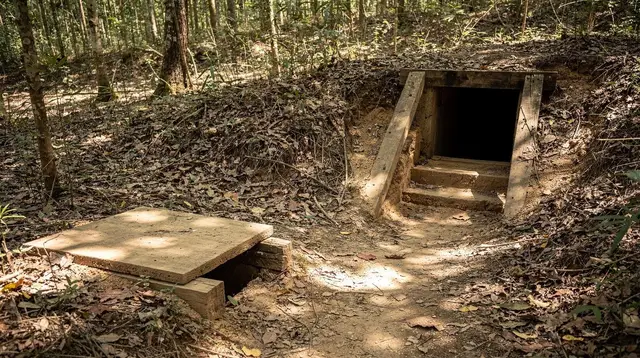
Some travelers fold the War Remnants Museum into a day that reaches well beyond District 1, most often toward the Cu Chi Tunnels to the north-west. If that’s the shape of your trip, a half-day versus full-day comparison for Cu Chi and a combined Cu Chi Tunnels and Mekong Delta day trip guide both cover how the logistics stack up against a museum morning. A tour that pairs the museum directly with the quieter of the two Cu Chi entry sites is one way to cover both without separately arranging transport for each.
a combined day covering the War Remnants Museum and the quieter Ben Duoc tunnel siteBe realistic about what a single day can hold. The museum on its own deserves the unhurried treatment described above, and Cu Chi is roughly an hour and a half to two hours from the city center each way, so a combined day is a long one — worth it for travelers on a tight overall schedule, but not something to add on top of an already-full District 1 morning without cutting something else.
Budget and Format Choices
Ticket cost aside, the bigger budget decision is format: independent visit with an on-site ticket, a pre-booked entry, or a guided package that bundles the museum with other stops. None of these is inherently the “right” one — it depends on how much of your day is already planned and whether you value a fixed route over flexibility. The budget travel in Ho Chi Minh City guide has the wider picture on where a museum visit fits into a lower-cost day, and the group tour versus private tour comparison is useful if you’re weighing a shared group format against paying more for a private, self-paced version of the same visit.
For travelers already comparing connectivity options for their trip, some combined museum-and-palace packages are bundled with a data eSIM, which can be a convenient way to handle both errands — tickets and getting online — in a single booking rather than two separate transactions.
a War Remnants Museum and Independence Palace package bundled with a data eSIMReading a Ticket-and-Time Plan at a Glance
| Planning question | Practical answer |
|---|---|
| Buy ticket at the gate or in advance? | Either works; book ahead if your day has a hard deadline afterward |
| --- | --- |
| Best position in the day | Early, when pace and attention are freshest |
| --- | --- |
| Combine with the Reunification Palace same morning? | Only if you give the museum room first — don’t compress it to fit the palace in |
| --- | --- |
| Indoor or outdoor? | Both — several indoor buildings plus an outdoor vehicle and aircraft yard |
| --- | --- |
| Guided or independent? | Both work; a guide adds context and route, independent visits let you set your own pace |
| --- | --- |
| Biggest planning mistake to avoid | Sizing the visit like a quick stop instead of a full, unhurried outing |
Frequently Asked Questions About Planning a War Remnants Museum Visit
Do I need to book a ticket in advance?
Booking ahead is not essential outside peak periods, but a pre-purchased entry ticket removes any uncertainty about queuing and lets you walk straight in, which matters more than it sounds on a tight multi-stop day.
Is the War Remnants Museum suitable for children?
Some of the imagery, particularly around the effects of wartime chemical exposure, is graphic and upsetting. Many families still visit, but it is worth previewing what a child will see and pacing the visit rather than treating it as a quick add-on stop.
Can I combine the museum with the Reunification Palace in one outing?
Yes, the two sit close together in District 1 and are commonly paired, but travelers consistently underestimate how long the museum alone needs. Treat the palace as a separate, unhurried stop rather than squeezing both into a single rushed morning.
Is the museum mostly indoors or outdoors?
Both. The outdoor grounds display armored vehicles and aircraft, while several indoor buildings hold the bulk of the photographic and documentary collection, so plan for a mix of sun exposure and slower indoor reading time.
How much reading is actually involved?
A significant amount. Most exhibits are built around photographs with dense captions and panels, so the pace of a visit is set by how much you choose to read rather than by how large the physical building is.
Where does the museum sit relative to other District 1 sights?
It is within walking distance, in good weather, of Notre-Dame Cathedral Basilica of Saigon and the Central Post Office, and a short ride from Ben Thanh Market, which is why it so often gets rushed as one stop among several.
Should I hire a guide or go independently?
Either works. A guide can add context as you move through, while an independent visit lets you set your own pace — the more important choice is giving the visit enough time regardless of which format you pick.
War History: Cu Chi Tunnels and the War Remnants Museum
Verified deep-linked GetYourGuide tours. Book through these links and we earn a small commission at no cost to you.
GetYourGuide does not provide a product photo for this activity — the image shows the meeting point, photographed by us.