Best Time to Visit Ho Chi Minh City
When is the best time to visit Ho Chi Minh City?
Ho Chi Minh City only has two seasons: dry from roughly December to April, and wet from roughly May to November. There is no cool winter here and no four-season pattern like in Hanoi, so the real choice is between dry heat and short, predictable afternoon downpours, not between warm and cold months.
Forget everything you know about Vietnamese winters
The first time a friend asked me when to visit Ho Chi Minh City, I caught myself about to answer the way I would for Hanoi — spring is nice, avoid the cold snap in January, pack a jacket for the north-east wind. Then I stopped myself, because none of that applies down here. That confusion is the single most common mistake I see people make when planning a trip to Ho Chi Minh City, and it comes from treating Vietnam as one climate when it’s really at least two.
Vietnam is a long, narrow country, and Ho Chi Minh City sits deep in the south, close to the Mekong Delta and the tropics. Hanoi and the north genuinely get four seasons, including a real winter with grey skies and jackets. The south doesn’t. There’s no cool season here, no frost, no need for a coat, not in December and not in July. What the south has instead is two seasons defined by rain, not by temperature.
The two-season reality: dry and wet, not spring and winter
The dry season runs roughly from December through April, and the wet season runs roughly from May through November. That’s it — that’s the whole framework. I’ve stopped thinking in months when I plan trips here and started thinking in these two blocks, because they explain almost everything about how a day in the city or the Mekong Delta will actually feel.
During the dry season, skies stay mostly clear and humidity is a bit more bearable, though “bearable” is relative in a city this close to the equator. March and April sit at the hot end of that dry stretch — this is when the heat feels heaviest, well before any rain arrives to cut through it. I’ve walked around District 1 in April at midday and genuinely needed to duck into a café every twenty minutes just to cool down.
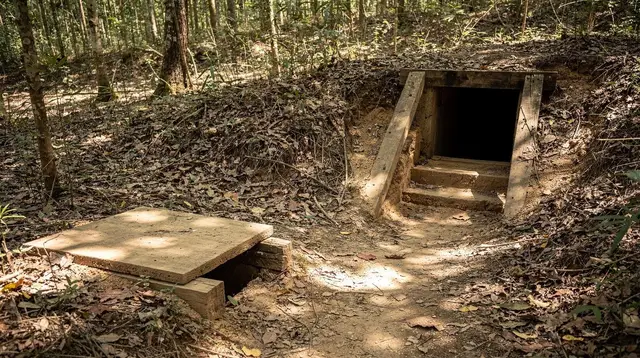
The wet season, by contrast, isn’t the grim all-day soaking some people imagine. What I’ve experienced, again and again, is a short, violent downpour late in the afternoon — the sky goes dark, it pours for thirty or forty minutes, motorbikes pull ponchos out of nowhere, and then it’s over and the streets are steaming again. Mornings and early afternoons during the wet season are usually just fine for sightseeing, boat trips on the Saigon River, or a day out to Cu Chi. I plan indoor stops — a museum, a long lunch, a coffee shop — for that late-afternoon window, and the rest of the day carries on normally.
Why I don’t pick a “best” month here
I get asked to name one best month, and I always resist it, because the honest answer depends entirely on what someone wants from the trip. Someone chasing the driest, clearest days will lean toward the December–April window. Someone who doesn’t mind an afternoon shower in exchange for greener countryside in the Delta and thinner crowds might actually prefer the wet season. Neither choice is a mistake — they’re just different trade-offs inside the same two-season system.
This is also why I’ve deliberately kept this page general. If you want the texture of a specific month — what late July actually feels like on the ground, or what to expect if you land in February — that detail lives in the twelve month-by-month pages on this site, one for each month of the year, and in the two deeper season guides that go far beyond what I’m covering here. Those pages get into daily patterns and practical packing choices in a way a single overview page never could. This page’s job is just to fix the framework in your head before you go looking at those details.
What genuinely doesn’t happen here
One thing worth saying clearly: typhoons do not hit the far south. They’re a real hazard for central and northern Vietnam, and if you’re researching a trip that also includes Hanoi or the central coast, that’s relevant information for those legs. But Ho Chi Minh City and the territory this site covers — the Mekong Delta, the coast around Vung Tau, Mui Ne and the dunes, Con Dao — sit well south of the typhoon belt. I’ve never had a trip here disrupted by one, and it isn’t something I plan around.
How this shapes what I actually book
In practice, the season affects my choices more than it affects whether I go at all. A river cruise or a day out on the water is pleasant in both seasons, though I’ll time it for morning or early evening during the wet months. A long day trip out to Tay Ninh and the tunnels works either way, since most of it is outdoors walking that’s easier to reroute around a single afternoon shower than around a whole rainy day.
If I’m arranging a private driver for that kind of trip, I’d rather have someone who can shift the schedule around the forecast — that’s part of why I like booking a private car and driver for the Cu Chi Tunnels rather than a fixed-departure coach when I’m visiting in the wetter months.
The Mekong is its own case, since so much of it happens on boats and along canal-side markets. A small-group Mekong Delta day trip that starts early tends to beat the afternoon rain entirely, which is one more reason morning departures are worth prioritising regardless of month. And for something that barely notices the weather either way, a Saigon River dinner cruise in the evening works comfortably across both seasons, since the worst of any daytime rain has usually passed by dinner.
If your trip stretches across several days and mixes the city with day trips, it’s worth reading how the season interacts with a longer plan — I’d point you to a guide like planning a trip across the city, the Delta and the coast or, if you’re combining the tunnels with the Delta in one multi-day run, the Ho Chi Minh City, Cu Chi and Mekong Delta tour, which some travellers book as a 4-day Cu Chi and Mekong Delta tour to cover both in one go without worrying about a single afternoon’s weather derailing the whole itinerary.
Frequently asked questions about the best time to visit Ho Chi Minh City
Does Ho Chi Minh City have four seasons like Hanoi?
No. Hanoi and the north experience four distinct seasons including a cool winter, but Ho Chi Minh City and the south run on a two-season system: a dry season and a wet season, with no cold period at any point in the year.
When is the dry season in Ho Chi Minh City?
Roughly December through April. March and April are the hottest part of this stretch, since the wet season’s rain hasn’t yet arrived to break up the heat.
When is the wet season in Ho Chi Minh City?
Roughly May through November. Rain typically falls as a short, heavy downpour in the late afternoon rather than as steady rain all day, so mornings are usually clear.
Is the wet season a bad time to visit?
Not necessarily. Mornings and early afternoons are usually fine for sightseeing and day trips, and the brief afternoon downpour is easy to plan around with an indoor stop like a museum, café or long lunch.
Do typhoons hit Ho Chi Minh City?
No. Typhoons affect central and northern Vietnam. Ho Chi Minh City and the southern region covered by this site are well outside the typhoon belt.
Should I pack for cold weather at any point in the year?
No. There is no cool winter in Ho Chi Minh City at any time of year, unlike in Hanoi. Lightweight, breathable clothing works year-round, with a light rain layer useful during the wet season.
Which page should I check for a specific month?
This page only sets out the two-season framework. For month-specific detail, this site has a dedicated page for each of the twelve months, plus deeper guides to the dry season and the wet season individually.
tours.Seasons
Verified deep-linked GetYourGuide tours. Book through these links and we earn a small commission at no cost to you.
GetYourGuide does not provide a product photo for this activity — the image shows the meeting point, photographed by us.