Photographing Southern Vietnam: Light, Subjects and Respect
What is the single most useful photography habit in southern Vietnam?
Working around the light rather than the clock: shooting early and late, resting the camera through the harsh midday hours, and asking before pointing a lens at someone. The dry season gives cleaner light overall, the wet season gives dramatic skies once the afternoon downpour has passed.
Why I stopped shooting at noon
I used to treat every free hour as a photography hour, which meant a lot of frustrating midday sessions in Ho Chi Minh City with flat, colourless light and hard shadows cutting across every face. The sun here sits almost directly overhead for a large part of the day, and it is unflattering rather than dramatic — it flattens the colonial facades along Dong Khoi, turns market stalls into a mess of glare and black shadow, and makes people squint in a way no portrait needs.
The fix is not a piece of equipment, it is a schedule: I shoot in the two or three hours after sunrise and the two or three hours before sunset, and I use the middle of the day for things that do not depend on light — eating, resting, or moving between neighbourhoods in District 1 and Cholon.
This matters more here than it did anywhere else I have travelled, because the season also changes what that light looks like, not just when it is good.
Working with two seasons, not four
Southern Vietnam runs on a dry season and a wet season rather than four distinct ones, and each gives me a different kind of picture rather than a better or worse one. I am not going to repeat the month-by-month detail here — that lives on its own page, along with a broader look at when to visit — but the broad pattern matters for how I plan a session.
In the dry months, the air is clearer and the light is more consistent day to day, which is useful when I only have one morning at a location and cannot afford to wait out weather. Skies tend toward a pale, bright blue rather than a dramatic one, so I look for colour and texture in the subject itself — the produce piles on a sampan, the patina on a temple gate in Cholon — rather than relying on the sky to do the work.
In the wet months, the light is less predictable but often more rewarding. The rain usually arrives as a short, hard downpour in the late afternoon rather than an all-day soak, and the twenty or thirty minutes right after it passes are some of the best I have had anywhere: wet pavement throwing back neon and streetlight, dramatic broken cloud, a version of Nguyen Hue walking street that looks nothing like the postcard shots. I have learned to wait out the rain under an awning with a coffee rather than pack up and go home.
The Mekong at first light
If there is one subject that rewards getting up early more than any other, it is the floating markets of the Mekong Delta. Boats loaded with produce start trading at dawn, and the market is largely over as a working scene well before the heat and the day-trip crowds arrive. I have done this as part of a small-group day trip and found the early departure worth the lost sleep — the light is soft, the water carries mist, and the sellers are still doing genuine business rather than posing for cameras. The Cai Rang floating market at Can Tho is the version I keep going back to, precisely because the sunrise light and the trading activity peak at the same hour.
a full-day trip into the delta that includes time on the water for exactly this kind of early sceneAway from the markets themselves, the canals around Can Tho and the smaller waterways reached by sampan are quieter and, to me, more interesting to photograph precisely because nothing is staged for visitors. Coconut palms leaning over narrow channels, a woman rowing standing up, laundry strung between stilted houses — these are everyday scenes, not performances, and I try to photograph them as such.
a small-group boat trip through the delta’s canalsRecurring subjects worth planning for
A few subjects come up again and again in my own photos of this region, and each one benefits from a bit of forethought rather than luck:
-
Water and boats — the Saigon River at dusk, the delta’s canals at dawn, and any of the sampans that thread through them. A dinner or sunset cruise is also a straightforward way to photograph the city’s skyline from the water without arranging your own boat.
-
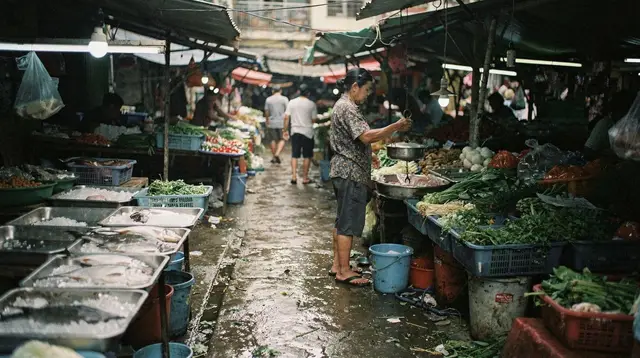
Markets — not only the floating ones, but the wet markets and street stalls of Cholon and District 1, where colour, produce and human activity are dense and constant.
-
Religious buildings — pagodas and temples in Cholon and beyond have strong colour, incense smoke and repeating architectural lines, though I always check whether photography is welcome inside before raising a camera.
A dedicated pagoda tour through Cholon is a straightforward way to see several in one morning without missing the best light.
-
Street life at the edges of the day — the hour when shopfronts open, motorbikes stream past in their thousands, and the heat has not yet built up.
-
Architecture with texture — weathered shopfronts, shuttered villas, faded signage. The city’s colonial-era buildings are a subject in their own right, and I go into that in more depth in a separate piece on Saigon’s colonial heritage rather than repeating it here.
Photographing people, not just scenes
The most common mistake I see — and the one I made myself early on — is treating people going about ordinary life as scenery. A vendor weighing fruit, a monk at a pagoda, a family on a boat: these are not props, and the way I ask matters. A smile, a raised camera and a pause for a nod before shooting goes a long way, and a “no” is a no, not a negotiation.
Inside pagodas and temples, I look for any sign asking visitors not to photograph the interior or specific altars, and I follow it even where enforcement is loose. At markets, I try to buy something small from a stall before photographing the seller closely — it costs little and changes the whole interaction. Photographing children without a parent’s clear consent is something I avoid entirely, however appealing the shot.
This applies as much on the water as on land: a rower steering a sampan through a narrow canal is working, not posing, and I keep my distance and my zoom rather than leaning in close.
a river cruise that combines dinner with skyline views if you’d rather shoot from a boat than arrange one yourselfBeyond the city and the delta
The sand dunes around Mui Ne are the other place I make a point of shooting at first light — the low sun rakes across the dunes and brings out a texture and colour that flattens out completely once the day heats up, and by mid-morning the sand is already too bright and too hot underfoot to linger. The same early-and-late logic that works in the city works here, just with sand instead of streets.
Documentary subjects need a different kind of care
Not everything I photograph here is a market or a landscape. The War Remnants Museum in District 1 is one of the most-visited sites in the city, and it is also one where I put the camera down more than I raise it — the subject matter is heavy, other visitors are often processing it quietly, and a lens pointed at someone’s face in that setting can feel intrusive in a way it would not on a street corner. If I do shoot there, it is wide architectural or object shots rather than close portraits of strangers.
The Cu Chi tunnels area, out to the north-west of the city, is a different kind of documentary subject — dense secondary forest, narrow tunnel entrances, and reconstructed wartime scenes. The canopy makes for harder, patchier light than the open delta, so I plan for shade rather than sun there and treat it as texture-and-detail work rather than wide, sunlit landscape photography.
A realistic kit, not a technical one
I am not going to give settings, camera models or prices here — that changes constantly and depends entirely on what you already own. What has mattered more than any single piece of gear is timing: showing up when the light is doing something interesting, and being willing to wait twenty minutes for a downpour to pass rather than shooting through it. A phone used well in good light beats an expensive camera used carelessly at noon.
Photography in southern Vietnam: frequently asked questions
Is midday light ever usable for photography here?
Rarely for anything with texture or shadow. The sun sits high and hard for much of the day, which flattens colour and creates harsh shade. Midday is better spent eating, resting or moving between locations, saving the camera for the hours around sunrise and sunset.
Is the dry season or the wet season better for photography?
Neither is strictly better — they give different results. The dry season offers clearer, more predictable light and pale skies, useful when you only have one chance at a location. The wet season brings dramatic clouds and vivid light right after the daily downpour, though timing is less certain.
Do I need permission to photograph vendors at a market?
You do not need formal permission, but a smile, a gesture asking, and a pause for a nod is basic courtesy, and a refusal should be respected without argument. Buying something small before photographing a stall closely is a simple way to make the exchange feel fair.
Can I photograph inside pagodas and temples?
Often yes, but not always, and not everywhere inside the building. Look for signage restricting photography around specific altars or interiors, and follow it even where it is not actively enforced.
What is the best time of day to photograph the Cai Rang floating market?
At dawn, while boats are still actively trading. The market thins out as a working scene once the morning progresses, which is one of the reasons early-departure day trips into the delta exist.
Are the sand dunes near Mui Ne worth an early start for photography?
Yes — low, raking light early in the day brings out the shape and colour of the dunes, and both the sand’s surface and the heat make later mornings much less comfortable for lingering.
Is it safe to bring a good camera onto the street in Ho Chi Minh City?
Violent crime is rare, but bag- and phone-snatching from passing motorbikes does happen in busy central streets, so keep straps secure, stay aware near traffic, and avoid dangling a camera loosely from one shoulder in crowds.
Should I photograph children I meet on a market or homestay visit?
Only with clear consent from a parent or guardian present. It is one of the few situations where I pass on a shot entirely rather than push for it.
Street Food Tours and Vietnamese Cuisine Tastings
Verified deep-linked GetYourGuide tours. Book through these links and we earn a small commission at no cost to you.
GetYourGuide does not provide a product photo for this activity — the image shows the meeting point, photographed by us.