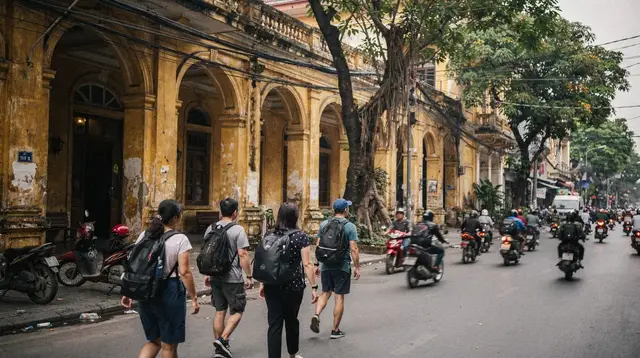
How to Travel Ho Chi Minh City and the South on a Budget
Is Ho Chi Minh City and southern Vietnam a cheap destination?
It can be, but not evenly. Saigon itself, and especially the outlying islands such as Con Dao, run noticeably more expensive than the rural Mekong Delta, so a realistic budget plan treats the region as several price zones rather than one uniformly cheap country.
Southern Vietnam Is Not One Price Zone
Travellers often arrive expecting southern Vietnam to be uniformly inexpensive, and then find their budget draining faster than planned once they spend most of their trip inside Ho Chi Minh City or add an island extension.
The reality is that this territory behaves like several distinct price zones stitched together: a large, economically dominant city; a rural delta where costs drop noticeably; a stretch of coast and desert scenery with its own mid-range pricing; and an offshore archipelago that is, by its very geography, the most expensive corner of the region. Rather than quoting figures that will be out of date within a season, this guide focuses on the trade-offs that actually shape a budget, so the choices still make sense whenever you read them.
The core idea is simple: your money moves in three channels — where you sleep, how you move between places, and what you choose to pay for once you get there. Southern Vietnam gives you real room to control each of those channels independently, which is exactly why a blanket assumption of “cheap country” or “expensive country” misses the point.
Ho Chi Minh City Sets the High End of Your Baseline
As the country’s largest city and its economic centre, Ho Chi Minh City carries city-level costs across the board — accommodation, restaurants aimed at visitors, and most organised activities are priced closer to what you would expect in any major regional capital than to what you will find an hour or two outside it. That is worth internalising early, because it reframes the question from “is Vietnam cheap” to “how much time and money am I putting into the city portion of my trip.”
None of this means Ho Chi Minh City should be skipped — its historic core in District 1, the Cholon quarter, and neighbourhoods like Binh Thanh and Thao Dien are central to what makes the destination worth visiting. It means treating the city deliberately: decide how many nights genuinely need to be spent here, and let everything past that baseline shift toward the delta, the coast or the countryside, where the same categories of spending come in noticeably lower.
A well-paced first stop in the city is a guided orientation, which helps you calibrate neighbourhoods, distances and pricing before you start making your own decisions.
a first-timers orientation walk with a local guide gives you that grounding early, so the rest of your budget decisions are made with real context rather than guesswork.
Accommodation Choices That Move the Whole Budget
Where you sleep is the single biggest lever available to a budget-conscious traveller in this region, because the gap between a central Saigon hotel and a rural homestay in the Mekong Delta is structural, not incidental. A room in District 1 reflects the same downtown pricing you would expect near any major financial district, while a homestay near My Tho, Ben Tre or Vinh Long reflects village-level costs, often with meals included as part of the experience rather than billed separately.
This is not an argument for avoiding the city centre altogether — proximity to the sights around Ben Thanh Market, the Reunification Palace and the riverfront has real value for a short stay — but it is an argument for being deliberate about how many nights go where.
A common budget-friendly pattern is to anchor only a portion of the trip in central Saigon, treat outlying districts such as Binh Thanh or Thao Dien as a calmer and often better-value alternative within the same city, and then push most of the remaining nights out into the delta or the coast, where a similar amount of money buys noticeably more comfort. The neighbourhood trade-offs within the city are covered in detail in the guide to where to stay in Saigon by neighbourhood, which is worth reading before booking anything.
Transport Decisions You Actually Control
After lodging, transport is the second lever, and it is one where small decisions compound over a multi-day trip. Ho Chi Minh City’s airport sits unusually close to the centre, and getting from there into town or between neighbourhoods can be handled by public buses, shared minibuses, metered taxis or ride-hailing apps such as Grab, Be and Xanh SM — each with a different balance of cost, comfort and predictability. The city’s first metro line has also opened, adding a fixed-cost option along its corridor that did not exist a couple of years ago.
For getting out of the city, nearly every day trip in this guide’s coverage area runs by road, in a shared coach, a “limousine” minibus, or a private car, with the Mekong routes finishing on the water once you reach the river. A shared coach or minibus is almost always the cheaper way to cover ground, while a private car buys flexibility and time that only pays for itself once several travellers are splitting the cost. Con Dao is the one clear exception: it sits offshore and is reached only by air or by fast ferry, so its transport cost profile does not follow the same logic as anywhere else on the mainland.
Renting your own scooter or motorbike is a route some travellers take to cut per-trip costs over a longer stay, but it comes with a hard condition: without the correct licence, most insurers will not honour a claim, which turns a modest saving into a serious liability. The full detail on licensing, rules and safer alternatives is in the guide on renting a scooter and the motorbike licence question, and general options for moving around the city day to day are laid out in getting around Saigon and in Grab and taxis in Ho Chi Minh City.
Eating Well Without Overspending
Food is one of the easier categories to keep affordable almost anywhere in this region, because the southern Vietnamese repertoire — com tam, banh mi, the sweeter southern-style pho, hu tieu, banh xeo, goi cuon, bun thit nuong, banh khot and iced coffee finished with condensed milk — is built around street stalls, market kitchens and small family restaurants rather than formal dining rooms.
The budget question here is less about the food itself and more about where you eat it: tourist-facing restaurants along Dong Khoi or Bui Vien price closer to what you would pay for similar fare at home, while stalls a few streets away, or lanes in District 4 and Cholon known for their density of street food, deliver the same cuisine at a different price point entirely.
Cash still matters for this kind of eating — hotels, tours and larger restaurants take cards, but the markets, street stalls and small cafés that define the everyday food scene generally expect cash. Carrying enough for a day of eating and moving around, rather than relying on cards throughout, avoids both awkward moments and any temptation to default to pricier, more card-friendly venues purely for convenience.
Deciding What to Pay For and What to Skip
Not every experience in Ho Chi Minh City and the south needs to be a paid one. Wandering District 1’s landmarks, the Nguyen Hue walking street, the Jade Emperor Pagoda, or the markets and temples of Cholon costs little beyond your own time, and a well-planned walking route can cover a surprising share of the city’s character for free. Paid attractions and organised tours earn their place when they unlock something you genuinely cannot access on your own: a boat trip along the canals, a guided walk through the War Remnants Museum and the city’s war history sites, or transport to destinations that are impractical to reach independently, such as the Cu Chi Tunnels or the Cao Dai Holy See at Tay Ninh.
The trick for a limited budget is separating “nice to have” from “practically necessary.” A single well-chosen half-day city tour can replace several smaller paid activities and a chunk of guesswork about routing, which sometimes ends up more efficient than piecing together your own itinerary of individually ticketed sights.
a half-day city tour covering the main downtown landmarks is a useful way to see the essentials in one organised outing rather than several separate paid entries and taxi rides.
Day Trips, Group Tours and the Private-Tour Trade-Off
The choice between a shared group departure and a private car or guide is one of the clearest budget levers available once you start planning excursions out of the city. A group tour spreads the cost of the vehicle and the guide across everyone on board, which almost always makes it the cheaper route for a solo traveller, a couple, or a small independent group. A private arrangement only starts to make financial sense once you are travelling with enough people to fill a comparable share of that cost yourselves, at which point it buys back flexibility, a custom pace, and the ability to skip or extend stops as you like. The comparison is walked through in more depth in the guide on group tours versus private tours in southern Vietnam.
The Mekong Delta is the clearest example of how this plays out. A single day trip out of the city, taking in a stretch of the river, an orchard or a market, keeps costs contained to the day itself and avoids paying for an extra night’s accommodation anywhere. An overnight stay costs more overall but replaces a long there-and-back drive with unhurried time in the delta and, often, a homestay experience that is itself part of the appeal. Neither option is objectively better for a budget; it depends on whether you would rather save the cost of a room or save the return journey — the trade-off is explored further in is a Mekong Delta day trip worth it and in Mekong Delta day trip versus two-day tour.
a Mekong Delta day trip that includes lunch is a straightforward way to sample the delta’s canals and orchard villages without committing to an overnight stay, and it pairs naturally with the broader planning notes in the guide on getting to the Mekong Delta and the coast by bus, van or boat.
The Coast, the Dunes and the Cost of Distance
East and north-east of the city, Vung Tau and the Mui Ne–Phan Thiet coastline both sit within reach of a day trip or a short overnight stay, and both come with a slightly different budget profile from either the city or the delta — closer to mid-range coastal pricing than to rural delta pricing, reflecting their role as beach and resort destinations in their own right. Choosing a single well-run day trip to either area, rather than trying to fit both the coast and the delta into the same short window, tends to keep costs and travel time more manageable, a decision covered further in Vung Tau versus Mui Ne for the beach.
a day trip from Ho Chi Minh City to the seaside city of Vung Tau covers the closer of the two coastal options, while a Mui Ne day trip that includes kayaking reaches the sand dunes and coastline further along the coast for travellers with a bit more time to spend on a single excursion.
Islands Change the Calculation Entirely
If there is one place in this territory where the “uniformly cheap” assumption breaks down completely, it is Con Dao. Reached only by air or by fast ferry, with no road option at all, the archipelago’s remoteness limits supply on everything from transport to accommodation, and prices there reflect that scarcity rather than the delta’s rural cost base. A budget-conscious itinerary treats a Con Dao extension as a deliberate splurge decision, not a default add-on, and budgets extra time and money for it specifically rather than assuming it will slot into the trip at delta-level cost. The full picture on what the island involves is in the Con Dao archipelago guide.
Timing Your Trip Around Demand
Southern Vietnam runs on two seasons rather than four: a broadly drier stretch and a wetter one, with the wet season typically bringing short, intense downpours in the late afternoon rather than all-day rain. Demand for accommodation and tours tends to ease outside the busiest dry-season stretch, which can work in a budget traveller’s favour, though it should be weighed against your own tolerance for the wet season’s rhythm rather than treated as a guaranteed saving.
One date that deserves special attention regardless of season is Tet, the lunar new year: it falls on a different date each year, many family-run restaurants and businesses close for several days around it, and transport books up well in advance, all of which can work against a tight budget if your dates land on top of it. The seasonal trade-offs are covered further in the guides on visiting southern Vietnam in the rainy season and visiting southern Vietnam in the dry season, and Tet’s specific impact is explained in the guide on Tet holiday closures in Vietnam.
Building Your Own Simple Allocation
Rather than chasing specific numbers that will inevitably drift, a more durable approach is to think in shares: decide roughly how much of your trip’s nights and spending you want anchored in the more expensive city centre, how much you want to push out into the lower-cost delta and countryside, and how much, if any, you are deliberately setting aside for a higher-cost stretch like Con Dao or the coast. The table below summarises the trade-offs in relative terms rather than currency, since relative positioning holds up far longer than any specific price.
| Category | Lower-cost choice | Higher-cost choice |
|---|---|---|
| Accommodation | Homestay or guesthouse in the Mekong Delta or countryside | Hotel in central Ho Chi Minh City, especially District 1 |
| --- | --- | --- |
| Getting out of the city | Shared coach or group-tour minibus | Private car or dedicated driver |
| --- | --- | --- |
| Local movement | Public bus, metro line, or shared ride-hailing | Metered taxi hailed on the street, especially near tourist zones |
| --- | --- | --- |
| Eating | Street stalls and neighbourhood restaurants | Restaurants aimed squarely at visitors, especially in nightlife strips |
| --- | --- | --- |
| Delta visit | Single day trip from the city | Overnight stay or multi-day delta tour |
| --- | --- | --- |
| Coast or islands | A single well-chosen coastal day trip | A Con Dao extension |
None of these choices is inherently right or wrong — they are trade-offs between money, time and comfort, and the best allocation depends entirely on how you personally want to spend both. What matters is making the choice deliberately, rather than assuming the whole region prices the same way everywhere you go. For a broader look at how many days to set aside across the city, the delta and the coast before you start allocating budget at all, see the guide on how many days to spend in southern Vietnam and the companion piece on planning a trip across the city, the delta and the coast.
Travellers building out a full route rather than a single trip should also see three days on a budget bus from Saigon to the Mekong and seven days on a budget backpacker route through the south, and anyone still finalising entry paperwork should check the Vietnam visa and e-visa guide before booking anything non-refundable.
Budget Travel in Ho Chi Minh City and the South: Frequently Asked Questions
Is Ho Chi Minh City expensive compared to the rest of southern Vietnam?
Yes. As the country’s economic centre, Ho Chi Minh City carries city-level pricing for accommodation, dining and organised activities, while towns in the Mekong Delta and inland areas tend to be markedly cheaper for the same categories of spending.
Why is Con Dao more expensive than the Mekong Delta?
Con Dao is an offshore archipelago reached only by air or by fast ferry, never by road, which limits supply and pushes up the cost of getting there and staying there compared with delta towns that are simply a bus or car ride from Saigon.
Should I book a group tour or arrange private transport to save money?
It depends on group size and flexibility. A shared group departure spreads the cost of a vehicle and a guide across more travellers, while a private car or driver only becomes competitive once several people are travelling together and want to set their own pace.
Does staying in a homestay in the Mekong Delta save money over a hotel in Saigon?
Generally yes, because a rural homestay reflects delta-level costs rather than city costs, though the comparison depends on what is included and on the standard of the specific property rather than on the region alone.
Is it cheaper to travel in the wet season?
Demand tends to soften outside the busiest dry-season months, which can work in a budget traveller’s favour, but the wet season’s short late-afternoon downpours are a lifestyle trade-off, not a guaranteed discount, so it should not be the only reason to choose those dates.
Should I spend more nights in Saigon or head out to the delta and coast quickly?
A budget-minded itinerary generally benefits from limiting nights in the more expensive city centre and shifting time toward delta towns and countryside stays, using Saigon mainly as an arrival, departure and day-trip base.
Are day trips or overnight stays better value in the Mekong Delta?
A single day trip avoids an extra night’s accommodation entirely, while an overnight stay costs more but replaces a long return journey with unhurried time in the delta, so the better value depends on how much you weigh saved time against the cost of a room.
Does renting a motorbike save money over taxis and ride-hailing apps?
It can reduce per-trip costs over a longer stay, but only for travellers who hold the correct licence, since riding without it voids most travel insurance and exposes you to liability that easily outweighs any savings.
Trip Planning
Verified deep-linked GetYourGuide tours. Book through these links and we earn a small commission at no cost to you.
GetYourGuide does not provide a product photo for this activity — the image shows the meeting point, photographed by us.