Bird Watching in the Mekong Delta
Where can travellers go bird watching in the Mekong Delta?
Bird watching in the Mekong Delta happens at specific wetland reserves and bird gardens scattered across the delta, not across the delta as a whole. These are separate outings from a Cai Rang floating market cruise or a My Tho and Ben Tre boat trip, and they call for their own half-day or full-day plan.
A quieter side of the delta
Most travellers who head south-west from Ho Chi Minh City are thinking about a boat gliding between fruit orchards, a stop at a coconut candy workshop, or the crowded, colourful chaos of the Cai Rang floating market. All of that is real, and it is the version of the Mekong Delta most day trips are built around. Bird watching is a different outing entirely, tucked into a handful of wetland reserves and bird gardens rather than spread across the whole delta, and it rewards a traveller who wants the region’s quieter, slower register rather than its busiest market scene.
It helps to be clear from the start about what this guide is not. It is not a description of the Can Gio mangrove biosphere reserve, which sits south-east of Ho Chi Minh City in brackish, tidal mangrove — a different ecosystem, a different set of species and a different day trip altogether. It is also not Cat Tien National Park, the inland lowland forest reserve to the north of the city, visited for primates, forest birds and night walks in dry tropical forest rather than delta wetland. The Mekong Delta’s own bird sites are freshwater, flat, low-lying, and built around flooded forest, reed beds and fish ponds rather than mangrove or upland forest.
Where the delta’s bird sites actually sit
The single biggest misconception about bird watching in the Mekong Delta is that it is a delta-wide activity, available more or less anywhere a boat can go. It is not. Bird life concentrates at specific protected wetlands and privately managed gardens, scattered across provinces from My Tho and Ben Tre in the east through Vinh Long and Can Tho toward Chau Doc and Soc Trang in the west.
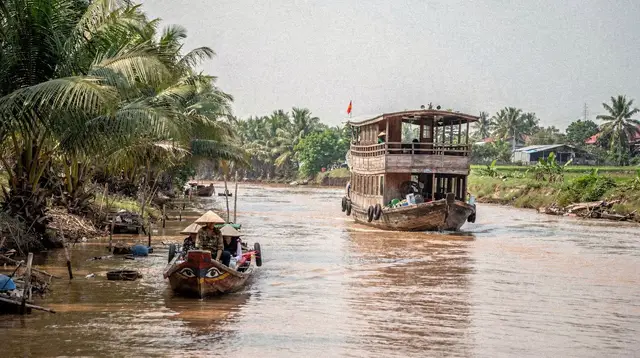
A cruise past orchards on the Tien or Hau river branches, or an afternoon on the canals around Cai Be, is a scenic boat trip through inhabited, cultivated delta landscape — pleasant for spotting egrets and kingfishers along the way, but not the same thing as visiting a dedicated wetland where large numbers of birds roost, feed or nest in a protected or semi-protected setting.
That distinction matters for planning. A traveller who books a generic delta day trip expecting a serious bird watching stop will usually be disappointed, because the itinerary is built around villages, orchards and the market rather than a reserve. Conversely, a traveller who wants to combine both experiences needs to look specifically for an itinerary that names a wetland or a bird garden as a stop, or accept that bird watching may need its own separate excursion.
What a delta bird watching outing looks like
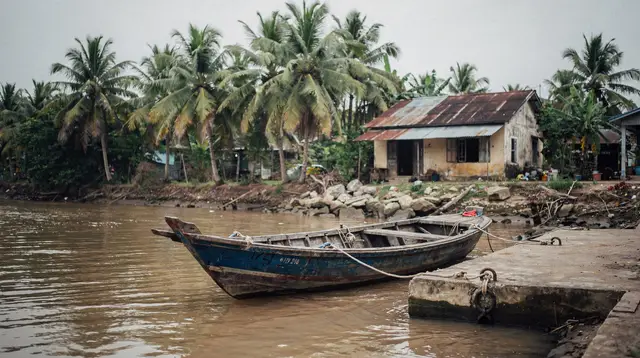
Sites vary, but the shape of the experience is fairly consistent across the delta. Access is typically a combination of road transfer and a smaller boat — sometimes a low, flat-bottomed sampan poled or paddled quietly through flooded forest, since a noisy engine scatters the birds a visitor came to see.
Some reserves have raised boardwalks or observation towers that let visitors look out over a canopy of flooded melaleuca or bamboo where herons, storks, cormorants and egrets roost in mixed colonies. Others are smaller, garden-like sites, sometimes attached to a pagoda, a private orchard or a rural homestead, where storks or egrets have settled in a stand of bamboo or trees near the water and locals have simply left them undisturbed for years.
The best light and the most bird activity generally comes early or late in the day, which is worth keeping in mind when comparing a bird watching stop to the rest of a delta itinerary — a floating market visit also wants an early start, so combining the two in one morning takes some planning, or a realistic choice about which one gets priority.
Binoculars make a real difference, since much of the interest is birds roosting or feeding at some distance across open water or a wide canopy rather than at arm’s length. A guide familiar with the specific site is worth having, both because the wetlands are not signposted for independent access and because a local boatman knows where the birds are likely to be on a given morning, tide or season, which an outsider has no way to judge on a first visit.
What travellers actually see
Species vary by site and season, but the general pattern across the delta’s wetlands is roosting and feeding colonies rather than solitary sightings. Storks, herons, egrets and cormorants are the birds most visitors come away remembering, often in mixed colonies numbering into the hundreds where a stand of flooded melaleuca or bamboo has been left undisturbed for years. Smaller wetland species — kingfishers, moorhens, various waders working the muddy margins — are easy to miss without a guide pointing them out, since they tend to stay low in the reeds rather than perching in the open the way the larger colonial nesters do.
This is also why patience matters more here than at most delta stops. A floating market or a canal cruise delivers its highlight within minutes of arriving; a wetland rewards sitting still, letting the boat drift or the boardwalk go quiet, and waiting for birds that scattered at the sound of an engine to settle back into their usual routine. Visitors expecting a quick photo stop are often the ones who come away disappointed, while those who budget real time at the site tend to rate it as the calmest part of their whole delta trip.
Who this suits, and who it does not
Bird watching in the Mekong Delta is a good fit for travellers who already enjoy slow, nature-led travel elsewhere — a keen photographer, someone who has done wetland or forest birding before, or simply a traveller who found the busiest parts of Ben Thanh Market or a packed floating market more overwhelming than enjoyable and wants the opposite register for a morning. It also works well for families with older children who are comfortable sitting quietly in a boat, though very young children or anyone who needs constant activity are likely to find a long, quiet wetland stop harder going than a market or a homestay kitchen.
It is a poor fit for a traveller with only one day in the delta who has never seen a floating market, since the market experience is the more singular and time-limited one — it only really works at dawn, and only at Can Tho — while a wetland stop can more easily be shifted into a second day or a different itinerary. Anyone weighing that trade-off between a single rushed day and a fuller two-day loop should read the dedicated comparison of a one-day trip versus a two-day tour before committing to either.
For travellers who want the floating market and a wetland stop on the same longer trip, a two-day floating markets and cultural exploration tour is built around exactly that kind of pacing, with enough time on the ground to add a quieter nature stop without crowding out the market morning.
How this fits into a wider delta trip
For most travellers, bird watching is one layer added onto a broader Mekong Delta plan rather than a stand-alone reason to travel south-west from the city. It pairs naturally with the slower, more rural side of delta travel: a village walk, a stretch of kayaking on the canals, a stay at a homestay, or a hands-on session learning to cook with a local family. All of these share a pace and a setting — quiet water, greenery, small boats — that a wetland stop slots into comfortably, in contrast to the market-and-orchard rhythm of a classic one-day tour.
Travellers deciding between the delta’s two east-west entry points, My Tho closer to the city and Can Tho further west near the Cai Rang floating market, should factor in which wetland sites sit near each route, since a bird stop tacked onto an eastern loop through My Tho and Ben Tre looks quite different from one built into a longer trip toward Can Tho, Chau Doc or Soc Trang. A multi-day loop gives far more room to fit in both a market cruise and a proper wetland morning without rushing either.
a kayaking, cycling and cooking day through the delta’s quieter canals suits travellers who want the slower, nature-facing side of the region alongside village life, and it is a natural base to build a bird watching stop around if a wetland sits along the route.
For a longer, more complete look at the delta — orchards, canals, a floating market and time in the countryside — a two-day Mekong Delta tour spreads the ground out enough that a wetland or bird garden stop does not have to compete for the same morning as the market.
Travellers drawn to the delta’s rural and ecological side specifically, rather than its markets, might prefer a small-group eco tour focused on local fishing and farming life, which tends to move at the same unhurried pace as a bird watching stop and is often arranged in the same region.
A stay that blends slow river life with local cooking, such as a floating village visit paired with a cooking experience, is another good anchor for travellers who want the wetlands and the water without a market-heavy schedule.
Bird watching versus the delta’s other water-based activities
It is worth being explicit about how bird watching differs from three activities it sometimes gets mixed up with, since the boats, the water and the greenery can look similar from a brochure photo even though the purpose is different.
| Activity | Setting | What it is for |
|---|---|---|
| Bird watching | Flooded forest, reed beds, bird gardens | Observing roosting and feeding birds at a specific reserve or garden |
| --- | --- | --- |
| Floating market cruise | Open river at Can Tho | Watching boat-to-boat trade at dawn |
| --- | --- | --- |
| Canal and sampan trip | Narrow village canals | Moving through inhabited delta scenery by small boat |
| --- | --- | --- |
| Homestay | Family home near the water | Staying overnight and joining daily rural life |
None of these substitutes for another. A floating market cruise is a commercial scene on open water at first light; a canal trip is transport through village life; a homestay is accommodation and immersion; bird watching is a nature-focused stop at a site chosen specifically because birds concentrate there. A well-planned delta itinerary treats them as separate ingredients to combine, not as different names for the same boat ride.
Practical notes for planning
Because bird watching sites are localized rather than spread evenly across the delta, the first planning question is not “when” but “where” — which province, and which specific reserve or garden, sits closest to the rest of the itinerary. A trip anchored near My Tho and Ben Tre will look at different sites than one anchored near Can Tho, Vinh Long or further west toward Chau Doc and Soc Trang, and trying to fit a distant wetland into a tight single-day loop usually means sacrificing something else on the schedule.
Weather also shapes the experience more than most first-time visitors expect. Southern Vietnam runs on two seasons rather than four, and a wetland reserve behaves differently depending on water levels, which shift between the dry months and the wet season’s afternoon downpours. A guide or operator familiar with the specific site is the best source on which season suits that particular reserve, rather than assuming one blanket rule applies across the whole delta.
Finally, comfort matters more here than at a market stop: expect sun, humidity, insects near standing water, and stretches of quiet waiting rather than constant movement. Light, breathable clothing, a hat, insect repellent and patience serve a visitor far better than trying to rush a wetland the way one might rush past market stalls.
Bird watching in the Mekong Delta — questions travellers ask
Is bird watching included in a standard Mekong Delta day trip?
No. A standard day trip from Ho Chi Minh City is built around canals, orchards and the floating market, not a wetland reserve, so bird watching has to be planned as its own stop or its own day.
Do I need to choose between a floating market cruise and bird watching?
Often yes, within a single day trip, since the two sit in different parts of the delta and serve different rhythms. A traveller who wants both usually needs a longer itinerary or a dedicated multi-day loop.
Is Can Gio a bird watching site?
Can Gio is a mangrove biosphere reserve south-east of the city, a different ecosystem from the freshwater wetlands of the Mekong Delta, and it is covered separately from this guide.
Is Cat Tien part of the Mekong Delta bird watching circuit?
No. Cat Tien National Park is inland to the north, a lowland tropical forest reserve rather than a delta wetland, and it has its own distinct wildlife profile.
What kind of landscape should I expect at a delta bird watching site?
Expect flooded forest, reed beds, orchards or fish ponds bordering open water, reached by a mix of road and small boat, with viewing typically done from a boardwalk, a low boat or a raised platform.
Can bird watching be combined with a homestay or cooking experience in the delta?
Yes, several operators pair a wetland stop with village life, a homestay or a cooking session on the same loop, since both are slower-paced activities that suit the same kind of traveller.
Is a guide necessary for bird watching in the Mekong Delta?
A local guide or boatman is strongly recommended, since the wetlands are not signposted for independent visitors and access is often by narrow channel or private landholding rather than a public trail.
Mekong Delta Cruises and Floating Markets
Verified deep-linked GetYourGuide tours. Book through these links and we earn a small commission at no cost to you.
GetYourGuide does not provide a product photo for this activity — the image shows the meeting point, photographed by us.