Sampan Rides Through the Mekong's Narrow Canals
What is the sampan ride included in Mekong Delta tours?
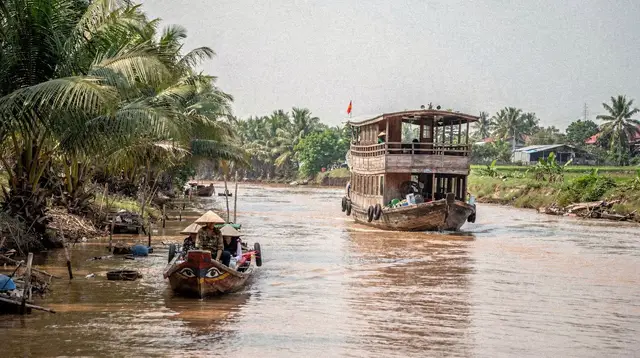
It is a short paddle in a small, narrow wooden boat along shaded canals lined with water coconut palms, usually paddled by a local rower rather than a tour guide. It is meant for exploring narrow waterways up close, not for covering distance between towns, and it is a different boat and a different purpose from the speedboats or ferries used to travel between provinces.
What the sampan ride actually is
Almost every description of the Mekong Delta that a first-time visitor reads mentions boats, and it is easy to assume they are all the same boat. They are not. The delta’s tour itineraries typically use two entirely different kinds of craft for two entirely different jobs, and the confusion between them is one of the most common misunderstandings travellers arrive with.
The first kind is a larger motorised boat, sometimes a proper ferry, used to cover real distance: crossing the main channel of the river, reaching an island, or travelling the open stretch of water toward Cai Rang floating market near Can Tho. These boats move at a reasonable clip because they have to; the water they cross is wide and can carry current and other river traffic.
The sampan is the other kind, and it exists for the opposite reason. It is a small, narrow wooden boat, low enough in the water to slip under overhanging branches, paddled or rowed by a local boatman along canals that are sometimes barely wider than the boat itself. These canals thread between water coconut palms, nipa palm and dense green cover, and a larger boat simply could not turn in them. The sampan’s entire purpose is to go where the bigger boats cannot: into the shaded, narrow waterways that make up the fine-grained texture of the delta, rather than across its open water.
This is worth fixing clearly before booking anything, because it changes what to expect. A sampan ride is not a way to get from one delta town to another; it is a way to look closely at one particular stretch of canal for a short while. If a tour description promises transport between provinces, that is a different boat, and a different page: see the guide to speedboat travel in the Mekong Delta for that.
Where the canal rides happen
The narrow-canal sampan experience is built into itineraries centred on the towns closest to Ho Chi Minh City on the delta’s northern edge, rather than the further destinations reached mainly for their own market or town.
My Tho, the delta town closest to the city, and neighbouring Ben Tre, known for its coconut groves and coconut-based crafts, are where this kind of ride shows up most often on standard day trips. The canals here are numerous, close to the drop-off points, and shaded densely enough that the boat ride feels like a real change of pace from the road.
Further along, Cai Be and Vinh Long sit among fruit orchards and brick kilns threaded by their own canal networks, and itineraries built around these two towns often include a similar sampan segment, sometimes combined with a stop at an orchard or a small workshop reached only by water.
Can Tho, by contrast, is visited mainly for Cai Rang floating market, which trades at dawn on the open water rather than in a narrow canal, so the emphasis there sits with the larger boat and the market rather than with a sampan ride through overhanging greenery. Some Can Tho-based tours still add a short canal detour, but it is a secondary element rather than the reason for going.
None of the towns in this list are visited only for the boat; the sampan segment is one part of a longer day that usually also includes a market stop, an orchard, a workshop or a meal, and the balance between those elements varies from one operator to another.
What the ride is for, not what it measures
Because this experience is included on so many day trip itineraries, it tends to get summarised into a single sentence — “sampan ride through the canals” — without much explanation of why it is there. It is worth being specific about the purpose, since that is what tells a traveller whether to prioritise it.
The value of the sampan is proximity and shade. Sitting low in a narrow wooden boat, moving quietly under a canopy of water coconut palms, gives a close view of plant life, small canal-side houses, and the rhythm of a waterway too small for any vehicle or larger boat to reach. It is a slower, quieter counterpoint to the road transfer and the market stop that usually bookend it on a typical day trip, and many travellers describe it afterward as the part of the day that felt least like being herded through a tourist stop.
What it is not for is distance or spectacle. It does not carry passengers between provinces, it is not where the floating market happens, and it is not built around a schedule or a fixed stretch to complete. Descriptions that promise a specific route length or a set duration for this part of the day are describing the operator’s own itinerary choice, not a fixed feature of the experience itself, and it is worth treating any such number as approximate rather than something to plan tightly around.
How it fits into a full day trip
A sampan ride on narrow canals is almost never the entire content of a Mekong day trip; it is one stage within a longer sequence that typically also includes a road transfer from Ho Chi Minh City, a stop at a workshop or fruit orchard, and often a tasting of local specialties such as honey tea or coconut candy.
The table below sketches how the sampan segment typically sits relative to the other common elements of a day trip built around My Tho, Ben Tre, Cai Be or Vinh Long. It is a rough sequence rather than a fixed schedule, since operators order the stops differently.
| Stage of the day | What happens | Boat type |
|---|---|---|
| Transfer from Saigon | Road transfer to the delta town | None |
| --- | --- | --- |
| Larger boat segment | Wider channel, island or workshop stop | Motorised boat |
| --- | --- | --- |
| Sampan segment | Narrow canal under palm cover | Small wooden sampan |
| --- | --- | --- |
| Tasting or craft stop | Honey tea, coconut candy, or a local workshop | None |
| --- | --- | --- |
| Return transfer | Road back to Ho Chi Minh City | None |
Travellers who want to compare the different ways of structuring this kind of day, including options that lean more heavily on cycling, cooking or an overnight stay instead of a straightforward loop, can look at the broader Mekong Delta day trip guide or the side-by-side comparison of a one-day trip against a two-day tour.
Choosing a tour that includes the canal ride
Because the narrow-canal boat segment is a near-standard feature of My Tho and Ben Tre based itineraries, most travellers do not need to search specifically for it; the harder choice is usually which overall itinerary to pick, since the sampan portion will likely be included regardless.
a Mekong Delta day trip that pairs the canal ride with a visit to a hat-making artisan is a straightforward single-day option built around this stretch of the delta, useful for travellers who want the canal experience without extending the trip to two days.
Travellers combining the delta with the well-known tunnel network further north can look at a combined day trip covering both the Cu Chi Tunnels and the Mekong Delta, which fits both into a single long day, though it inevitably compresses the time available on the water compared with a delta-only itinerary.
For a more active version of the same canal environment, a Mekong Delta itinerary combining kayaking, cycling and a cooking session swaps some of the passive boat time for a kayak paddled by the traveller, which suits those who would rather move under their own effort than be paddled by a boatman.
Further south, around Can Tho, a Con Son Islet tour near Can Tho with local cake making shifts the emphasis toward an island stop and a hands-on food activity, with any canal boat time playing a smaller role than it does on the My Tho and Ben Tre itineraries described above.
Travellers weighing up which delta base to start from at all, rather than which specific tour to book, will find a broader comparison in the guide to choosing a Mekong Delta departure point, and those deciding between the shorter day trip and an overnight stay can check the dedicated guide to a Mekong Delta homestay or the longer multi-day cruise toward Chau Doc and the Cambodian border.
Practical notes for the canal segment
A few points are worth knowing before the boat stage of the day, independent of which specific tour is booked.
Sun and insect protection matter more on the water than they might seem to from a distance: the canals are shaded by tree cover in most stretches, but the approach to and from the boat launch point is often in open sun, and standing water along canal banks can carry mosquitoes, particularly in the late afternoon.
A life vest is standard practice on a well-run tour, even though the water in these narrow canals is calm and shallow compared with the open river; if one is not offered, it is reasonable to ask.
The boat itself is narrow and sits low, and getting in and out at the launch point usually means stepping from an unstable bank or a low wooden platform, so footwear that can get slightly wet or muddy is more practical than anything delicate.
Because the ride happens on inland canals rather than the open river, it is unaffected by tides or river conditions in the way that trips further out toward Cai Rang floating market can be, which makes it one of the more weather-tolerant parts of a delta day trip even during the wetter months. For guidance on the wider seasonal picture, see the notes on visiting southern Vietnam in the rainy season and in the dry season.
Sampan canal rides — frequently asked questions
Is the sampan the same boat used to reach Cai Rang floating market?
No. The floating market at Can Tho is usually visited by a larger motorised boat or a speedboat, because the crossing covers real distance on open water. The sampan is a separate, much smaller craft used afterward, or on a different stretch of the itinerary, specifically for narrow canals that a bigger boat cannot enter.
Do I paddle the sampan myself?
Usually not. A local rower, often using a traditional standing or seated paddling style, handles the boat while passengers sit back and take in the canal. Some operators let visitors try paddling for a few strokes, but this is not the point of the experience.
Is the sampan canal ride safe for children or nervous travellers?
It is a low, slow, sheltered ride on calm inland water, well away from river traffic and currents, and it suits most ages and comfort levels. A basic life vest is standard practice; ask the operator if one has not been offered.
Why is the boat sometimes called a sampan and sometimes something else?
Tour itineraries in the Mekong Delta use several English words loosely for the same idea: sampan, rowing boat, canoe or small wooden boat. What matters for planning is not the label but the description: a narrow canal ride under a canopy of trees, distinct from a river crossing or a market visit.
Does every Mekong Delta day trip from Saigon include a sampan ride?
Most itineraries built around My Tho, Ben Tre, Cai Be or Vinh Long include one, since the narrow canals around those towns are exactly where this kind of boat works best. It is less central to Can Tho-focused trips, which put more weight on the floating market.
How does the sampan ride connect to the rest of a Mekong day trip?
It typically comes after a stop by road or larger boat, as the transition into a quieter, closer look at the waterways, often paired with a coconut candy or honey tea stop before returning to the main channel.
Is the sampan ride worth including if I only have time for one Mekong stop?
It is one of the few parts of a Mekong day trip that cannot be replicated from a road vehicle or a larger boat, since it goes where those cannot, so most travellers who make time for the delta at all find it a worthwhile half hour.
Mekong Delta Cruises and Floating Markets
Verified deep-linked GetYourGuide tours. Book through these links and we earn a small commission at no cost to you.
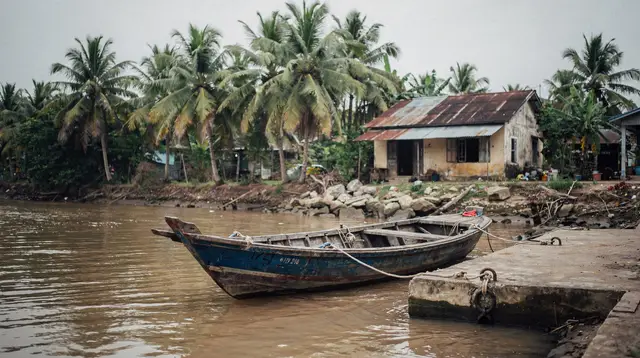
GetYourGuide does not provide a product photo for this activity — the image shows the meeting point, photographed by us.