A forest destination that stands apart from the rest of the south
Every other region covered on this site connects to another one. The Mekong Delta towns feed into each other along the same rivers, the coast runs in one long line from Can Gio to Mui Ne, and Cu Chi and Tay Ninh sit close enough to combine into a single day. Cat Tien National Park does none of that. It sits inland, north of Ho Chi Minh City, in lowland tropical forest that spreads across the boundary of several provinces rather than belonging neatly to one.
There is no delta channel running through it, no coastline nearby, and no obvious pairing with a second destination on the way there or back. If you are building a trip around this site’s other regions — the city, the delta, the coast — Cat Tien stands on its own, and that is the point of this page: to describe what the park actually is, and to clear up where it is not.
Where Cat Tien actually sits
The confusion is understandable. Southern Vietnam’s identity, for most visitors, is built around water: the Saigon River through the city, the nine mouths of the Mekong fanning out across the delta, and a curving coastline running from the mangroves of Can Gio past Vung Tau to the dunes of Mui Ne. Cat Tien breaks that pattern entirely.
It lies well inland, on high, dry ground far from any river mouth, in a belt of lowland forest that has nothing to do with either the delta’s canals or the coast’s sand and salt water. Locating it correctly matters for planning: it is reached by road from the city, in the opposite direction from the delta towns and the coastal routes described elsewhere on this site, and it cannot be tacked onto a delta or beach itinerary without a long detour.
The park itself covers a large area of largely flat, low-lying tropical forest, threaded with streams and seasonal wetlands rather than tidal channels. It was recognised as a UNESCO Biosphere Reserve in 2001 — a conservation designation, not the World Heritage List. That distinction matters on a site that covers no World Heritage Sites at all: Can Gio’s mangroves and Cat Tien’s forest are the territory’s two Biosphere Reserves, a different UNESCO programme entirely, and neither should be described as a World Heritage Site. The nearest actual World Heritage Sites sit far to the north and centre of the country, outside everything this guide covers.
What kind of nature this is — and what it is not
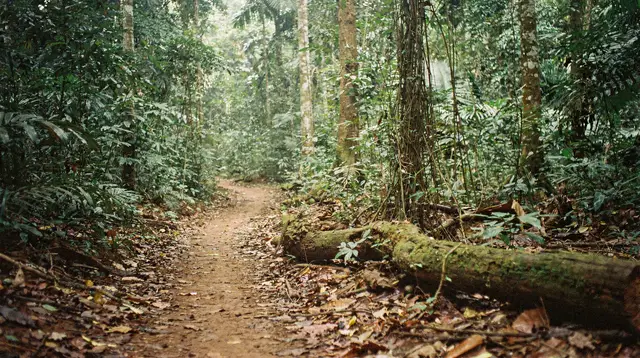
Cat Tien is lowland tropical forest: tall closed canopy, dense understorey, strangler figs, and a network of trails that thread between old-growth trees and open clearings. The centrepiece for many visitors is Bau Sau, a wetland area inside the park reached on foot or by a short vehicle transfer, known for waterbirds, reptiles and the kind of quiet, patient wildlife-watching that rewards an early start and a slow pace rather than a checklist of sightings. Visitors who want that wetland walk built into a guided itinerary rather than arranged on their own can look at a guided trip into Cat Tien National Park that includes the Bau Sau wetlands, known locally as Crocodile Lake.
The park is a serious birdwatching destination, with a long list of resident and migratory species drawing dedicated birders from well beyond Vietnam, and it also shelters primates, including gibbon populations that are more often heard than seen, along with a wide range of smaller mammals, reptiles and insects that come out at night.
What Cat Tien is not is a place to visit expecting guaranteed encounters with large, iconic mammals. This is a forest of quiet observation, not a safari park, and visitors who come with that expectation set correctly leave far more satisfied than those chasing a specific animal. Night walks with a park ranger or guide are the best way to see nocturnal wildlife, and even then, patience and low expectations serve visitors better than a fixed wish list.
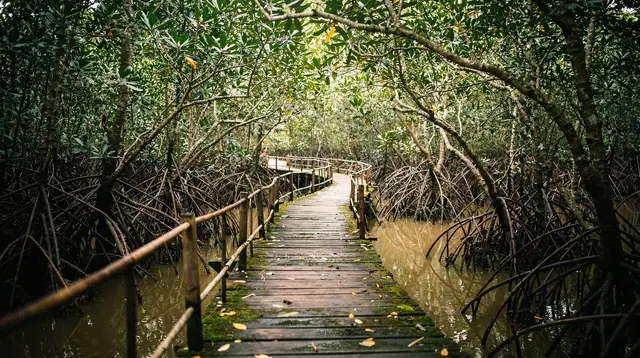
It is worth being explicit about the ecosystem, because this site also covers Can Gio, the mangrove Biosphere Reserve closer to the coast. The two are frequently lumped together in visitors’ minds as “the nature side trips from Saigon,” but they could hardly be more different. Can Gio is tidal, brackish, low mangrove forest reached by boat through channels near the coast, replanted after wartime defoliation and now a wildlife refuge close to the sea.
Cat Tien is inland, freshwater, tall closed-canopy rainforest on dry, elevated ground, with no tidal influence and no proximity to salt water at all. Anyone deciding between the two, or wondering how they relate, should read the dedicated guide to a Cat Tien jungle and cocoa cycling day from Ho Chi Minh City alongside the Can Gio mangrove biosphere reserve guide rather than assuming the two experiences are interchangeable.
Getting there and the nature of the trip
The park lies inland, well away from the city’s usual day-trip radius, and reaching it means a private car, a tour minibus or a self-driven route rather than any of the boat transport that defines the Mekong Delta and coastal excursions. Because it sits at a genuine remove from the city, most visitors treat it as either a long single day with an early departure and a late return, or, better, an overnight stay inside or near the park that allows for an evening or pre-dawn walk when the forest is at its most active. A same-day round trip is workable but leaves comparatively little time inside the park itself once transfer time is accounted for; an overnight stay is the difference between a rushed glimpse and a proper visit.
Inside the park, movement is on foot along marked trails, sometimes combined with a short boat crossing to reach the wetland areas, or by bicycle on some of the flatter tracks near the entrance. None of this resembles the canal-boat cruises of the Mekong Delta or the beach access of the coastal towns — it is walking-paced, forest-floor travel, and visitors should come prepared for humidity, uneven ground and biting insects rather than for a leisurely boat ride.
When to visit
Southern Vietnam runs on two seasons, not four, and Cat Tien follows the same pattern as the rest of the region: a drier stretch roughly from December through April, and a wetter stretch roughly from May through November when short, heavy afternoon downpours are the norm rather than all-day rain.
For a forest destination reached mostly on foot, the drier months make for firmer trails and more comfortable walking, and are generally the easier window for visitors without much tolerance for mud or humidity. The wetter months bring the forest to a different kind of life — the understorey is lush and stream flows are stronger — but trails can turn slick and some of the wetland walking becomes harder going. Neither season closes the park; the choice is really about walking comfort rather than access.
For a broader picture of how the two seasons play out across the whole region, not just inside the park, the dry season in southern Vietnam guide and the rainy season in southern Vietnam guide cover what to expect month by month, and the destination-level visiting southern Vietnam in the dry season and visiting southern Vietnam in the rainy season guides go into more planning detail for travelers building a trip around the weather.
Planning a visit around the rest of southern Vietnam
Because Cat Tien has no natural pairing with the delta towns or the coast, most visitors treat it as a deliberate, separate excursion rather than a stop folded into a longer loop. Travelers weighing up how much of their itinerary to give to nature and how much to the city, the delta and the coast may find it useful to read the broader how many days in southern Vietnam guide and the planning a trip across city, delta and coast guide before deciding whether a Cat Tien detour fits the trip.
For most visitors with a single week or less in the region, the park competes directly for time with the Mekong Delta day trip from Saigon or a coastal stop, rather than being added on top of both.
Birdwatchers and dedicated wildlife travelers tend to prioritise Cat Tien over every other side trip from the city, sometimes extending well beyond what a typical itinerary allows; the dedicated Mekong Delta bird watching guide is a useful point of comparison for travelers deciding how much of a trip to devote to birding across the two very different habitats. Families and first-time visitors with limited time, on the other hand, more often choose the Cu Chi Tunnels or a Mekong Delta day trip over an inland forest detour, simply because those destinations sit closer to the city and pack more into a single day.
Travelers building a longer loop that includes real forest time might look at the ten days ultimate South Vietnam itinerary or the seven days Mekong and islands itinerary, both of which show where a Cat Tien detour could realistically sit inside a longer trip. For families weighing an inland forest day against easier options closer to the city, the family-friendly day trips from Saigon guide and southern Vietnam with kids guide lay out the trade-offs in more detail, and travelers still deciding between a small-group tour and a private car for the transfer may find the group tour vs private tour guide useful before booking.
Two operators run structured trips into the park that handle transport, park entry logistics and guiding, which removes most of the complexity of getting there independently. A two-day trip from Ho Chi Minh City into Cat Tien National Park is the most complete way to experience the park properly, building in an overnight stay so early-morning and evening wildlife activity is not missed.
For visitors who cannot spare two days but still want a full day of walking, cycling and a proper meal inside the park, the full-day Cat Tien National Park trip with a full meal included covers the core trails and wetland areas in a single long outing from the city.
Practical notes for a forest visit
Because the park is a working conservation area rather than a manicured tourist attraction, a few practical habits make a real difference. Sturdy closed shoes matter far more here than anywhere else on this site’s itinerary — trails can be uneven, roots cross the path, and leeches are a genuine and common nuisance during the wetter months. Long, lightweight trousers and sleeves help against both insects and undergrowth. A hat, insect repellent and drinking water are essentials for any walk of real length, and a headlamp or torch is worth carrying for anyone doing a guided night walk. Binoculars make an enormous difference for birdwatchers and anyone hoping for a distant glimpse of primates in the canopy.
Guides are strongly recommended, both because they know where wildlife tends to be active and because they can identify species, calls and tracks that an independent visitor would simply walk past. Independent access to some of the park’s more remote trails is limited without a guide in any case, which is part of why the structured day and overnight trips above are the practical way most visitors experience Cat Tien.
Packing for a forest visit is different from packing for the city or the coast, and the general what to pack for Ho Chi Minh City guide is a useful starting point before adding the forest-specific items above.
Frequently asked questions about Cat Tien National Park
Is Cat Tien part of the Mekong Delta?
No. This is one of the most common mix-ups on this site’s territory. Cat Tien National Park is inland lowland rainforest north of Ho Chi Minh City, spread across the boundary of several provinces, with no rivers, canals or delta geography of its own. The Mekong Delta lies to the south-west of the city, built around the branching mouths of the Mekong River, and is a completely separate ecosystem and a completely separate direction of travel.
Is Cat Tien National Park on the coast?
No. Cat Tien sits well inland, on dry, elevated ground, with no proximity to the sea. It should not be confused with the coastal or island destinations covered elsewhere on this site, such as Vung Tau, Ho Tram or Con Dao, all of which lie in the opposite direction, south-east of the city along or off the coastline.
Is Cat Tien a UNESCO World Heritage Site?
No. Cat Tien National Park is a UNESCO Biosphere Reserve, recognised in 2001, which is a distinct conservation programme rather than the World Heritage List. No destination covered on this site carries World Heritage status; the closest such sites in Vietnam lie in the central and northern parts of the country, outside this site’s scope.
How is Cat Tien different from Can Gio’s mangroves?
The two are the site’s only nature-focused destinations away from the city, delta and coast proper, which is why they are often confused. Can Gio is a tidal mangrove forest near the coast, reached by boat through brackish channels. Cat Tien is inland, freshwater, closed-canopy tropical rainforest reached by road and explored mostly on foot. The wildlife, the terrain and the way visitors move through each place are entirely different.
What is the best way to see wildlife in Cat Tien?
Guided walks, particularly early morning outings and organised night walks, give by far the best chances of seeing birds, primates and nocturnal species. The park rewards patience and a slow pace rather than an expectation of guaranteed sightings of any specific animal; it is not a safari-style destination, and large mammal encounters are the exception rather than the rule.
Should I stay overnight in Cat Tien or visit as a day trip?
Both are possible, but an overnight stay makes a substantial difference. It allows for an evening or early-morning walk when the forest is at its most active, rather than compressing the visit into the middle of the day once transfer time to and from the city is accounted for. Travelers with only one day available can still have a rewarding visit, particularly on a guided full-day trip that makes efficient use of the time.
Can Cat Tien be combined with the Mekong Delta or the coast in one trip?
Not easily. Cat Tien lies inland to the north of Ho Chi Minh City, while the Mekong Delta and the coastal destinations lie to the south-west and south-east respectively. Combining Cat Tien with either in a single outing means significant backtracking through or around the city, so most visitors treat it as its own dedicated excursion rather than folding it into a delta or coastal loop.
When is the best time to visit Cat Tien National Park?
The drier stretch of the year, roughly December through April, offers firmer trails and generally more comfortable walking conditions. The wetter months, roughly May through November, bring short, heavy afternoon downpours typical of the whole region, which can make some trails muddier, though the forest itself remains lush and active throughout the year.