Sunrise on the Mui Ne Dunes
Which dunes do sunrise trips in Mui Ne actually visit?
Most sunrise departures go to the red sand dunes, which sit close to Mui Ne village, rather than the white sand dunes further away. The red dunes are the practical choice for a pre-dawn start, so travellers picturing the taller white dunes at sunrise are usually thinking of a different, later trip.
The hour before the heat arrives
Mui Ne’s sand dunes have a daytime reputation built on ATV engines, buggy tracks and the crowds that gather once the sun is fully up. Sunrise is a different experience entirely, and it happens on a different set of dunes than most visitors expect. This page is about that narrow window — the light, the quiet, the specific stretch of sand where it unfolds — rather than the dunes themselves as a destination, which get their own fuller treatment on the Mui Ne sand dunes page, or the vehicles that tear across them later in the day, covered separately under sand dune activities.
The dunes near Mui Ne come in two distinct groups, and the distinction matters far more for a sunrise plan than it does for a casual afternoon visit. The red sand dunes sit close to the village itself, a short drive along the coast road. The white sand dunes lie considerably further out, closer to the edge of Phan Thiet territory, and reaching them takes real time.
For a pre-dawn departure, that difference decides everything. Most sunrise trips head to the red dunes, not the white ones, simply because the logistics of a before-daylight start make the closer option the workable one. Visitors who picture the taller, paler white dunes glowing at sunrise are often thinking of a scene that belongs to a different, later part of the day.
Why the red dunes, specifically
The red dunes are compact. A vehicle can drop passengers at the edge of the sand and, within a few minutes’ walk, put them on an open ridge with a clear view toward the horizon. That short distance is the whole reason this works as a sunrise plan at all — the white dunes’ greater size and distance from the village would push the wake-up call absurdly early and add transfer time that eats directly into the window when the light is actually worth watching.
There’s also a textural quality specific to the red dunes that suits this hour. Their surface is finer and more rippled than the white dunes’ broader expanses, and that texture is exactly what low-angle light reveals best. Sand that looks flat and pale under a midday sun turns into a landscape of small ridges, shadows and colour gradients once the sun sits near the horizon rather than above it.
What actually happens, hour by hour
A typical sunrise visit starts well before dawn, with pickup timed to have the vehicle on the dunes while the sky is still dark or just beginning to lighten. The exact clock time shifts with the season and this page won’t pin one down, since the practical answer — early enough to be there before first light — matters more than a specific hour that changes through the year anyway.
The walk from the vehicle to open sand is short. What follows is a slow transformation rather than a single dramatic moment: the sky moves from near-black to a deep grey-blue, then to pale shades of pink and gold as the sun approaches the horizon. On the sand itself, the effect is different from watching the sky alone — the low light rakes sideways across every ripple and footprint, stretching shadows out across the dune faces and making the whole surface look sculpted in a way it simply doesn’t at any other hour.
There’s a genuine stillness to this part of the visit. The engines that define the dunes later in the day haven’t started yet. Air that will feel thick and hot within a couple of hours is, at this point, noticeably cooler. Voices carry differently across open sand in that kind of quiet, and it’s common for visitors to simply stand and watch rather than move around much until the light has fully arrived.
As the sun clears the horizon, the colour show settles fairly quickly into ordinary daylight, and this is usually the point where a sunrise trip starts to wind down — either heading back toward the village for breakfast, or, if the itinerary allows for it, continuing on to another quiet stop nearby before the day’s crowds and heat properly set in.
Comparing a sunrise visit to the rest of the day
| Sunrise (red dunes) | Midday / afternoon | |
|---|---|---|
| Typical crowd | Light to moderate, varies by day | Busiest period |
| --- | --- | --- |
| Light quality | Low-angle, warm, long shadows | Flat, harsh overhead light |
| --- | --- | --- |
| Temperature | Noticeably cooler | Hot, especially March–April |
| --- | --- | --- |
| Main activity | Watching the light, walking, photography | ATV rides, buggy runs, sandboarding |
| --- | --- | --- |
| Which dunes | Red dunes (close to the village) | Both red and white dunes commonly visited |
This isn’t a ranking — the two experiences serve different purposes. A midday or late-afternoon visit is when the ATV and buggy rides that other pages cover in detail actually happen; sunrise is closer to a quiet pause built around light and atmosphere rather than an activity in the usual sense.
Getting the timing and logistics right
Because this is a pre-dawn outing, most visitors join it as part of an organized departure rather than arranging their own transport in the dark. A guide or driver who does this run regularly knows the walk-in point that puts a group on usable sand quickly, which matters when every minute before sunrise counts. Several tours built specifically around this hour combine the red dunes with a wider loop through the area — worth checking against the plan for a day trip built around Mui Ne and Phan Thiet if this is one stop among several rather than a standalone morning.
a jeep tour timed specifically around the sunrise or sunset light on the dunes is the most direct way to get the timing right without arranging a pre-dawn pickup independently. For travellers who’d rather combine the red dunes with a longer loop across other coastal stops that same morning, a jeep route linking the dunes to nearby coastal trails covers more ground around the same early start.
Some operators extend the same early departure toward the white dunes once the light is already up, which suits an early jeep ride that visits the white dunes and a nearby Cham tower for anyone who wants both dune areas in a single outing. A shorter option built around the same golden-hour window is a five-hour dune tour timed to either the sunrise or sunset window, useful for a schedule that can’t stretch to a full morning.
Getting there from Ho Chi Minh City
Mui Ne sits roughly 200 km up the coast from the city, and since the expressway opened the drive runs about three to four hours by road each way — a detail that shapes almost every decision about how to fit a sunrise on the dunes into a trip. A same-day round trip from the city is not realistic for a sunrise departure specifically, since the pickup would have to happen in the middle of the night just to cover the distance before first light.
In practice, that means a sunrise visit to the red dunes is something travellers do while already based in or near Mui Ne, not something layered onto a day trip out of the city. Anyone still weighing how to make that transfer worth it can compare the options on getting to Mui Ne and the delta by road, and travellers building a longer loop around the coast can see how a sunrise morning slots into a multi-day plan on a four-day private car itinerary along the coast and Mui Ne or the shorter three-day desert escape from the city already mentioned above.
For anyone weighing whether the whole detour to the coast is worth it against a closer beach option, choosing a beach near Saigon lays out how Mui Ne compares to the alternatives, and Mui Ne against Vung Tau for a beach trip goes into more detail on that specific comparison.
Pairing sunrise with the rest of a Mui Ne morning
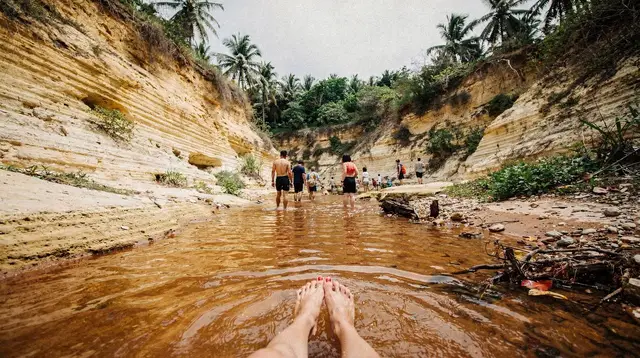
Because the vehicle is already out before dawn, a sunrise visit to the red dunes is rarely the only stop on the itinerary. The most common addition is the nearby Fairy Stream, a shallow, easy walk through a small canyon of sandstone formations that suits the same soft early light and doesn’t require the heat and crowds of a full day to enjoy. Because it sits close to the village and asks for nothing more strenuous than wading through ankle-deep water, it fits naturally into the return leg of a sunrise morning without adding much extra time.
Some visitors instead choose to stay out longer and let the same outing roll into the ATV and buggy activity that defines the dunes later in the morning, once the light has flattened out and the engines have started up. That’s a different kind of visit from the quiet one described above, and it’s covered in full detail on the ATV and buggy guide to the dunes; for anyone specifically comparing the two dune areas’ colours, scale and which suits which time of day, the red and white sand dunes guide is the fuller reference.
Renting a vehicle on arrival, rather than through a pre-booked tour, is possible through a quad bike and ATV rental service at the white sand dunes, though that’s a daytime activity rather than part of the sunrise window itself.
Season and the light
Southern Vietnam’s dry and rainy seasons don’t change the mechanics of a sunrise on the dunes — the sun still rises at roughly the same point on the horizon and the red dunes still work the same way logistically — but they do change the sky overhead. Clearer skies in the dry season tend to produce the sharper pink-and-gold transitions described earlier, while a visit during the wetter months can mean more cloud cover softening or occasionally obscuring the colour change entirely, even though the dunes themselves stay perfectly accessible. Travellers planning a trip around this specific experience may want to check when the dry season runs in southern Vietnam or what the rainy season looks like before locking in dates purely for the sunrise.
None of this should discourage a rainy-season visit outright — the dunes are one of the less weather-dependent stops in the region, since sand drains and dries quickly and a passing shower rarely lingers the way it can elsewhere. It simply means the more dramatic, cloudless sunrises are somewhat more likely outside the wettest months.
A few more ways to book the same morning
Group departures are the most common way to do this, but they aren’t the only option. Travellers who’d rather not share the dune at sunrise with a full jeep can look at a private sand dunes jeep tour timed to sunrise or sunset, which keeps the same early-morning logistics but with a vehicle booked for just one party. For those arriving into the area without their own arrangements yet and wanting the widest window to choose sunrise or sunset depending on how the schedule falls, a jeep tour offered for either the sunrise or the sunset slot covers the same red-dune route with that flexibility built in.
Making the most of it without overplanning
Because the appeal here is atmosphere rather than a checklist of sights, the most common mistake is treating the visit like a photo mission with a rigid schedule. The light changes gradually, not on a fixed cue, and the visitors who seem to enjoy it most are the ones who arrive with time to spare and let the process unfold rather than watching the clock. A light jacket or layer helps for the pre-dawn cool, and footwear that can handle loose, fine sand makes the short walk in easier than sandals with an open back.
For a broader sense of how this moment fits into a visit to the area, the fuller picture of the dunes themselves — their scale, their two distinct colours, and what a full day exploring them looks like — sits on the Mui Ne sand dunes page, while the ATV and buggy rides that dominate the rest of the day are covered under sand dune activities. The nearby Fairy Stream walk is another quiet, low-key stop that pairs naturally with an early start, and travellers building a full day around Mui Ne and Phan Thiet can see how the pieces typically fit together.
Frequently asked questions about sunrise at the Mui Ne dunes
Do sunrise trips go to the white sand dunes or the red sand dunes?
Almost all of them go to the red sand dunes, a short ride from Mui Ne village. The white sand dunes sit much further out, on the way toward Phan Thiet’s inland edge, and are usually visited later in the morning or in the afternoon instead.
Why do the red dunes work better for a sunrise visit than the white dunes?
The red dunes are close enough to reach in the dark without an excessively early wake-up, and their compact size means a short walk from the drop-off point still puts a visitor on open sand facing the horizon in time.
What does the light actually look like at that hour?
The sky lightens gradually from a pale grey to soft pink and gold, and the low sun rakes across the ridgelines of the dunes, throwing long shadows that make the sand’s texture and contours far more visible than they are under the flat light of midday.
Is the atmosphere calm or crowded?
It varies by morning and by season. Some sunrises feel almost private, with only a handful of other visitors scattered across the sand; others draw a steadier stream of jeeps and small groups. Either way, the mood is quieter and more contemplative than the same dunes feel later in the day.
Is this trip about photography, or is it worth doing just to watch the sunrise?
Both. Photographers come for the raking light and long shadows, but plenty of visitors simply come to stand on a dune, watch the colour change, and enjoy a stretch of cool, quiet air before the heat and the crowds of a full day in Mui Ne set in.
Should this be combined with anything else that morning?
It often is, since a vehicle already out before dawn can also swing past the Fairy Stream or back through the village while the light is still soft, before the rest of Mui Ne’s day gets underway.
What should a visitor bring for a pre-dawn dune visit?
A light layer for the cooler pre-dawn air, sturdy sandals or shoes that can handle loose sand, and a camera or phone with the lens or screen wiped clean, since a fine dust tends to settle on any exposed surface out on the dunes.
Mui Ne Sand Dunes and Jeep Tours
Verified deep-linked GetYourGuide tours. Book through these links and we earn a small commission at no cost to you.
GetYourGuide does not provide a product photo for this activity — the image shows the meeting point, photographed by us.