Vung Tau Beaches: The City Coast Near Saigon
What are the beaches in Vung Tau like?
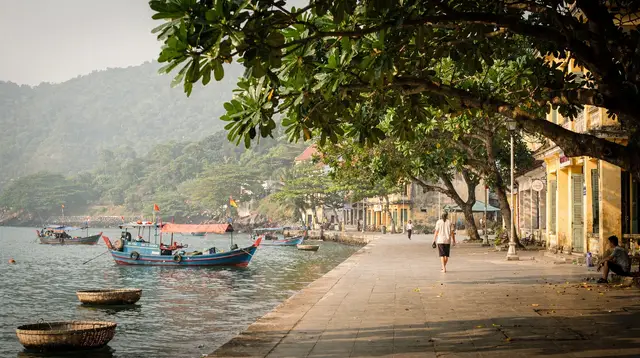
Vung Tau's beaches sit inside the city itself, backed by hotels, seafood restaurants and a seafront promenade. They are convenient and lively rather than secluded, which is exactly why day-trippers from Saigon head there.
Talk to anyone who has spent a weekend in Vung Tau and the beaches come up almost as an afterthought, wedged between the seafood dinner and the walk up to the statue. That says something useful: this is not a destination built around sand. It is a seaside city with beaches running along it, and the two are hard to separate once you are there.
What the city beaches actually offer
Vung Tau sits on a small peninsula jutting into the sea south-east of Saigon, and its beaches trace the shoreline on both sides of that peninsula. What sets them apart from almost every other stretch of coast covered on this site is proximity to a working, fairly dense city. Hotels line the beach roads, seafood restaurants spill onto pavements facing the water, and a steady stream of scooters and pedestrians moves along the promenade at most hours. None of this is a flaw — it is the whole appeal for the crowd that comes here. A city beach means you can swim, then walk five minutes to eat fresh seafood, then walk back to a hotel room with air conditioning, all without a car.
The main stretch, generally called Back Beach, faces open sea and carries most of the hotel development, the beachfront cafés and the crowds on weekends. It is the beach most visitors picture when they picture Vung Tau. Front Beach, on the other side of the peninsula, faces the more sheltered water toward the old town and the harbour; it feels calmer and more residential, with fishing boats often visible offshore rather than the open horizon of Back Beach. A smaller cove known locally as Mulberry Beach sits further round the headland and draws fewer people, though it is still very much part of the same city fabric — no isolation, just less foot traffic.
Vung Tau beaches vs Ho Tram: don’t mix them up
This is the confusion worth clearing up before anything else. Vung Tau’s beaches are urban by nature: hotels, restaurants and a promenade right behind the sand, and a city of several hundred thousand people just up the road. Ho Tram, by contrast, lies further south along the same general coastline and was built around the opposite idea — long open sand, resort compounds spaced apart, and comparatively little around them.
Travellers sometimes assume the two are the same stretch of coast simply described differently, or plan a Vung Tau day trip expecting Ho Tram’s open beaches and quiet. They are separate places with separate characters, and this page covers only the city beaches of Vung Tau itself; if what you actually want is the quieter option, look at Ho Tram instead, not this page.
Getting there and the logistics of a day out
Nearly everyone reaches Vung Tau by road from Saigon, whether in a private car, a shared minibus or on a guided tour, and the return trip works the same way. This page is deliberately about the beaches themselves rather than the mechanics of the journey — for departure options, road conditions and how to structure the hours, the dedicated Vung Tau day trip guide covers that ground in full. It is worth reading first if you are still deciding whether Vung Tau fits into your schedule at all, since the travel time shapes how much beach time is realistic in a single day.
Cruise passengers arriving through Phu My port also list Vung Tau among the reachable shore options, usually as part of a broader city stop that folds in the beaches alongside the statue and the old quarter, rather than a dedicated beach day. If that is your situation, the port-specific guides linked below go into the transfer side of things.
A quick comparison of the three stretches
| Beach | Character | Best suited to |
|---|---|---|
| Back Beach | Main strip, most hotels and restaurants, open sea, busiest | First-time visitors, anyone wanting restaurants within walking distance |
| --- | --- | --- |
| Front Beach | Sheltered side facing the old town and harbour, calmer pace | A quieter walk, views of fishing boats, proximity to the old town |
| --- | --- | --- |
| Mulberry Beach | Small cove further round the headland, least crowded | Visitors who want to step away from the main promenade for a while |
What to pair the beaches with
Because the beaches are part of the city rather than separate from it, most itineraries treat them as one stop among several rather than the entire point of the trip. The Christ of Vung Tau statue on the hill above town is the classic pairing, along with a walk through the old town near Front Beach and a seafood meal that stretches into the evening.
A guided city tour that already bundles the statue, the beaches and the old town in sequence saves the trouble of planning stops yourself, which is useful if you are coming from Saigon for a single day and don’t want to spend it working out logistics. Travellers who prefer to set their own pace, or who want a private vehicle and driver for the day, tend toward a private tour arrangement instead — both options exist and cover the same ground with different levels of structure.
a guided city tour that takes in the beaches and the hilltop statue in one day trip is the straightforward choice for a first visit, especially without your own transport. For a slower pace or a small group wanting flexibility over the stops and the timing, a private tour with a dedicated guide and vehicle covers the same city but on your own schedule.
Cruise passengers coming through the port sometimes weigh Vung Tau against the other shore options in the same window. a shore excursion from Phu My port comparing Ho Chi Minh City, Cu Chi, Mekong Delta or Vung Tau lays those choices out together, which helps if Vung Tau is competing against a city tour or a Mekong run for the same day. For a more active alternative that still starts from the port, a cycling shore excursion from Phu My port covers nearby countryside rather than the beach strip itself.
Practical notes for a beach stop in Vung Tau
Because this is a city coastline, the usual rules of a resort beach don’t fully apply. The shoreline sits alongside a working port and a dense urban area, so expect the water and the sand to reflect that — this is not the setting for postcard turquoise water, and it isn’t trying to be. What it does offer well is convenience: showers, changing areas, food and drink are all within a short walk along any of the three beaches, which is not something quieter coastal spots like Ho Tram or Con Dao can match.
Weekends bring noticeably more people, both from Saigon and from the wider region, since Vung Tau is a popular short break for residents of southern Vietnam generally, not only a stop for foreign visitors. A weekday visit, where your schedule allows it, gives a calmer version of the same beaches without changing anything about what they are.
How Vung Tau’s beaches compare with the rest of the coast
Vung Tau is only one entry on a longer list of coastal options within reach of Saigon, and it helps to know where it sits on that list before booking anything. The choosing a beach near Saigon guide runs through the full set — Vung Tau, Ho Tram, Long Hai and Mui Ne — and is worth reading if you haven’t settled on a destination yet. A more direct side-by-side sits in the Vung Tau vs Mui Ne comparison, which spells out why the two rarely compete for the same traveller: one is a city coast reachable in a single day, the other a dedicated beach and dune destination further along the coast to the north-east.
That distance matters. Mui Ne and its neighbouring town of Phan Thiet sit well beyond Vung Tau along the same general coastline, reached by road on an expressway rather than as a day trip, and built around a completely different draw — the white and red sand dunes and the Fairy Stream rather than a city beachfront. Travellers piecing together a longer coastal run sometimes overnight in Vung Tau before continuing north-east; for that leg, a Mui Ne jeep tour covering the dunes and coast is a way to fill the Mui Ne end of the trip once you arrive.
Continuing on from Vung Tau
Not every visitor doubles back to Saigon the way they came. Some routes run onward along the coast instead, and others cut back to the airport directly rather than through the city centre. For the coastal leg, a private car from Vung Tau or Ho Tram to Ho Chi Minh City’s Tan Son Nhat airport handles that transfer without a stop in Saigon itself, which suits an itinerary that treats Ho Tram as the quieter half of the same coastal stretch. The Ho Tram quiet coast guide and the general getting to the Mekong Delta and coast page both cover how these towns link up by road.
Flying in or out through Saigon rather than driving the whole way is also common, and the Tan Son Nhat airport transfer guide covers that side of the journey. For a more direct airport option that skips the city altogether, a private car from Tan Son Nhat airport to Ho Tram works in the same corridor as the Vung Tau beaches, useful if your onward stop is further down the coast rather than back into central Saigon.
Seeing the coast rather than just the sand
Not every visit to Vung Tau needs to centre on the beach chairs. a sunrise tour following the fisherman’s life along the secret coast takes in the working side of the coastline early in the day, before the beaches fill up, which is a different way to experience the same shoreline. For a slower, guided read on the city’s coastal heritage rather than a checklist of stops, a private Vung Tau coastal heritage escape from Saigon pairs the beaches with the older parts of town at a more deliberate pace than a standard day tour.
Cruise and transfer context
Travellers arriving by ship rather than by road tend to plan differently. The Phu My cruise port overview lays out what the port itself offers and how far Vung Tau sits from the berth, while the Vung Tau coast from Phu My guide focuses specifically on the beach-and-statue combination as a shore excursion. Passengers weighing a city stop in Saigon instead can check the Saigon day trip from Phu My guide, and those arriving by water rather than road may find the river transfer to Vung Tau guide relevant, since it covers a different route into the same city than the standard road journey described above.
When to visit
Vung Tau’s beaches are usable across the year, but conditions along the southern Vietnamese coast shift with the seasons the way they do across the rest of this site’s territory. The best time to visit Ho Chi Minh City article, along with the dedicated dry season and rainy season pages, cover how that plays out for day trips from Saigon generally, Vung Tau included. None of it changes what the beaches are — a city coastline first, a swimming destination second — but it does affect how comfortable a day on the sand is likely to be.
Frequently asked questions about Vung Tau’s beaches
Are Vung Tau’s beaches good for swimming?
They are usable and popular with local families and day-trippers, but this is a working city coast, not a resort island — expect a busy shoreline rather than clear tropical water.
Which Vung Tau beach should I pick?
Back Beach is the main strip with the most restaurants and hotel frontage, Front Beach sits closer to the old town and the harbour, and Mulberry Beach is smaller and quieter than either.
Is Vung Tau the same as Ho Tram?
No. Vung Tau’s beaches are inside the city and animated by design; Ho Tram lies further south along the coast and is deliberately quieter, with none of Vung Tau’s urban backdrop.
Can I combine the beaches with the rest of Vung Tau in a day trip?
Yes, that is how most visitors do it — the beaches sit alongside the Christ statue, the seafront and the old town, all within the same city, on a day trip from Saigon.
Do I need to book a tour to see the beaches?
No, but a guided city tour bundles the beaches with the Christ statue and other sights in one trip, which suits visitors without their own transport.
Is Vung Tau within reach of cruise passengers arriving at Phu My?
Yes, Vung Tau is one of the closer options from the Phu My cruise port, and its beaches are usually seen as part of a broader city stop rather than a beach day on their own.
Vung Tau, Ho Tram and the Con Dao Islands
Verified deep-linked GetYourGuide tours. Book through these links and we earn a small commission at no cost to you.
GetYourGuide does not provide a product photo for this activity — the image shows the meeting point, photographed by us.