A Day Trip to Ho Chi Minh City from Phu My Port
Can I really see Ho Chi Minh City on a day trip from Phu My port?
Yes, but only the central highlights, and only if the shore excursion is built around a direct transfer to District 1. Phu My sits well outside the city, so a meaningful share of the day goes to the road, which is why itineraries from this port focus on a short list of central sights rather than trying to cover the whole city.
Why the port distance changes what a Phu My shore excursion can cover
Cruise ships calling at Ho Chi Minh City do not dock in the city itself. They dock at Phu My port, a deep-water terminal well outside town, and every visit to the centre starts and ends with a road transfer to get there and back. That single fact shapes this whole excursion. It is the reason shore excursions from this port are built around a short, tightly chosen list of central sights rather than an ambitious tour of the whole city, and it is the reason two travellers comparing notes on the same cruise line can come back with slightly different experiences depending on how the traffic behaved on their particular day.
This page is about the version of the day that stays inside Ho Chi Minh City itself — the classic city excursion built around District 1. It is a companion to two other pages on this site covering the other common options from the same port: a trip out to the Cu Chi Tunnels, and a trip to the seaside city of Vung Tau. The three are genuinely different excursions with different trade-offs, and confusing them is one of the more common planning mistakes for a one-day port call here.
The confusion worth clearing up first
The single detail that trips up more planning than anything else is treating the total shore-leave window as if it were all sightseeing time. It is not. A meaningful part of any Phu My excursion is simply the transfer: getting from the port to the edge of the city, then into the centre, and later reversing the whole journey to be back aboard before the ship’s departure. That transfer is not wasted time exactly — some operators run it as a scenic introduction to the countryside around the port — but it does mean the block of time actually available for walking around Ho Chi Minh City is smaller than the shore-leave window suggests.
This is worth internalising before comparing tour listings, because it explains why a city-centre excursion from this particular port looks different from a city-centre excursion offered from a port that sits right next to downtown. It also explains why operators running the Ho Chi Minh City option tend to be disciplined about the stop list: fewer sights, chosen for being close together, rather than a long checklist that assumes unlimited time in the centre.
What a realistic Ho Chi Minh City itinerary from Phu My looks like
Because time in the centre is the constrained resource, excursions built around this route tend to cluster around a compact core of sights in and near District 1, chosen because they sit within walking distance of one another and because they represent the city’s best-known landmarks. A typical shortlist draws from:
- The Reunification Palace, the former Independence Palace, still furnished much as it was in 1975.
- The War Remnants Museum, one of the city’s most visited sites and a strong orientation point for anyone new to the Vietnam War era.
- Notre-Dame Cathedral Basilica of Saigon, currently under a long-running restoration, and the neighbouring Central Post Office, both French colonial-era landmarks.
- Ben Thanh Market, with its landmark clock tower, for a last stop that combines browsing, snacks and souvenirs.
Further-flung parts of the city — Cholon, the historic Chinatown quarter, the riverside towers of Binh Thanh, or the newer Thao Dien district across the Saigon River — are usually left out of a Phu My day excursion, not because they are less interesting, but because reaching them adds a second transfer inside the city on top of the one already spent getting there from the port. If an excursion listing promises all of the above plus an extra outlying neighbourhood in the same day, it is worth reading the itinerary closely rather than assuming it all comfortably fits.
For a fuller sense of how these central sights connect on foot once you are actually in District 1, see the dedicated guides to the Reunification Palace, the War Remnants Museum, and Notre-Dame Cathedral Basilica and the Central Post Office.
Optional add-ons if the transfer runs short
When the road cooperates and the group reaches District 1 with time to spare, a few extra stops sometimes get added to the core itinerary. The Jade Emperor Pagoda, one of the city’s most atmospheric temples, is close enough to the central cluster to fit in if the schedule allows — see the dedicated guide to the pagoda for what to expect inside.
The Bitexco Financial Tower, with its observation deck overlooking the Saigon River and the district’s rooftops, is another option some operators offer as an add-on rather than a core stop, and the Bitexco Skydeck guide covers what the view actually shows. Neither is a given on a Phu My excursion, and both are the first things to drop again if the transfer runs long instead of short — they sit outside the core list precisely because they are not essential to a first look at the city.
A short stretch of walking along Dong Khoi street or the Nguyen Hue walking street sometimes gets folded into the itinerary between the Reunification Palace area and Ben Thanh Market, since both sit within the same compact core and add little extra transfer time. Neither changes the overall shape of the day described above; they are simply ways of filling a gap if the group is ahead of schedule.
Getting a feel for the centre on wheels instead of on foot
Most Phu My city excursions are built around walking between fixed stops, but a small number of operators run the central sights by bicycle instead, weaving through the quieter lanes around District 1 rather than sticking to the main boulevards. a cycling shore excursion departing from Phu My port is one way this gets offered, and it suits travellers who would rather cover the same ground at a different pace than spend the day on a coach and on foot. It does not change the fundamental time budget described above — the transfer to and from the port still takes the same block of the day — but it changes how the time actually in the city gets spent.
For travellers who want the reassurance of a broader sightseeing package rather than a narrow city-highlights list, a Saigon city sightseeing shore excursion from Phu My port covers similar ground to the core itinerary above, packaged slightly differently by the operator.
Group tour, private tour, or independent transfer
Three ways of organising this excursion tend to come up.
A group shore excursion, usually run in a coach, is the most common option and the easiest to book alongside the cruise line’s own excursion desk. It follows a fixed stop list agreed in advance, which is efficient when the transfer runs smoothly but leaves little room to adjust if the road into the city is unusually slow that day.
A private tour or car, arranged either through the cruise line or independently, gives more flexibility to reprioritise sights on the spot. On a route where the transfer itself is the main variable, that flexibility is worth more here than it would be on an excursion from a port sitting right next to a city.
a shore excursion covering the city’s central highlights directly from Phu My port is built specifically around this constraint, and a shore excursion option departing straight from the port follows a similar structure for travellers who prefer the reassurance of a fixed group departure.
Travellers who would rather set their own pace, or who are visiting with a small group, often prefer a private full-day tour departing from Phu My seaport, which allows the itinerary to be trimmed or reordered depending on how the road cooperates that morning.
Going independently — hiring a private driver directly, or using a ride-hailing app once ashore — is possible, but it puts the responsibility for judging the return transfer entirely on the traveller. Missing the ship’s departure is the one risk that outweighs any savings, so anyone going this route should build in a generous safety margin before heading back toward the port, and should have a clear sense of how transport in the city itself works before committing to it.
How this compares to the Cu Chi Tunnels excursion from the same port
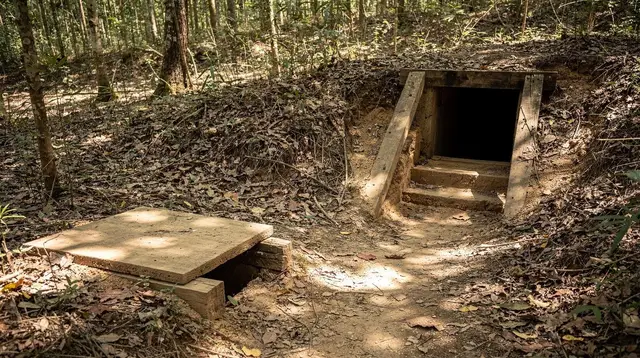
The Cu Chi Tunnels sit north-west of the city, a direction that pulls away from the route into District 1 rather than extending it. Choosing Cu Chi over the city centre swaps colonial-era landmarks and museums for the wartime tunnel network itself, a very different kind of visit, more physical and more focused on a single historical theme. Because Cu Chi and downtown Saigon sit in different directions from the port’s approach road, operators do not usually try to combine both in one Phu My day trip — it is one or the other, and the choice comes down to whether the war history and tunnel experience matters more to a given traveller than seeing the city’s central landmarks.
How this compares to the Vung Tau excursion from the same port
Vung Tau is a seaside city, and the appeal of choosing it over Ho Chi Minh City is that it removes the long inland transfer toward the centre altogether. The excursion trades museums, markets and colonial architecture for a seafront promenade and the hilltop Christ of Vung Tau statue. For travellers who would rather spend more of their limited shore time actually somewhere, rather than travelling to and from a city centre, Vung Tau is often the more relaxed choice — at the cost of missing Ho Chi Minh City’s landmark sights entirely.
Practical notes specific to this excursion
A few things are worth knowing before booking a Ho Chi Minh City day trip from Phu My specifically, as opposed to a city visit arranged from within the city itself:
| Consideration | What matters on this route |
|---|---|
| Transfer | The road journey between the port and the centre is the main time constraint of the day |
| --- | --- |
| Stop list | Shorter and more central than a typical full-day city tour, by design |
| --- | --- |
| Flexibility | A private car or driver can reorder stops if the transfer runs long; a fixed coach tour generally cannot |
| --- | --- |
| Return timing | Build in a comfortable margin before the ship’s stated boarding cut-off |
| --- | --- |
| Alternative excursions from Phu My | Cu Chi Tunnels (war history, opposite direction from the city) and Vung Tau (coastal city, no inland transfer) |
For travellers who want a broader sense of what else is offered from this terminal before deciding between the three options, the Phu My cruise port overview lays out the full set of shore excursions available, and the page on getting around Ho Chi Minh City is useful background for anyone weighing an independent transfer against a booked excursion.
Two related day trips sometimes bundled with a Phu My call
Some cruise lines pair a Ho Chi Minh City call with excursions that reach further afield, most often toward the coast north-east of the city or into the Mekong Delta.
If your itinerary offers a choice beyond the city-versus-Cu Chi-versus-Vung Tau decision, it is worth knowing that a half-day version of the Cu Chi Tunnels visit departing from the city exists for travellers who want a shorter version of that alternative, and that a Vung Tau day trip that includes lunch is a common way that excursion is packaged for cruise passengers. Neither replaces the central Ho Chi Minh City itinerary described above — they are the two most common alternatives to it from the same port.
A note on which port your ship actually uses
Not every cruise calling at Ho Chi Minh City docks at Phu My. Some smaller vessels use Hiep Phuoc port instead, closer to the city but still requiring a road transfer into District 1. The itinerary described on this page — the compact District 1 core, the same trade-offs around transfer time — applies in broadly the same way from either terminal, but the exact drive time and the excursion listings differ, so it is worth checking which port your specific cruise line has booked before assuming the details here match your transfer exactly. The Phu My cruise port overview covers this distinction in more detail.
What to know before heading ashore
A handful of practical points apply specifically to a short, time-pressured visit like this one, as opposed to a multi-day stay in the city. Petty theft and common tourist scams exist in the central districts as they do in most large cities, and a quick read of the guide to common scams in Ho Chi Minh City before going ashore costs little and reduces the odds of losing time to a bad experience during a day that is already tight on time. Crossing the street in the centre also takes some getting used to for first-time visitors, given the volume of motorbike traffic; the guide to crossing the street and traffic in Saigon explains the technique that works, which is simply to walk at a steady, predictable pace rather than stopping or running.
Weather is worth a glance too, since a short excursion leaves no slack for waiting out a downpour. Ho Chi Minh City’s dry and rainy seasons are pronounced enough to affect a single-day plan on the wrong date; the pages on the dry season and rainy season in southern Vietnam cover what to expect and how it typically affects a day like this one. A light rain layer and comfortable walking shoes cover most of what a short shore day in the city calls for; the broader what to pack for Ho Chi Minh City guide goes into more detail for travellers continuing on to the city or elsewhere in the south afterward.
Food is rarely a planned stop on a tightly scheduled shore excursion, but Ben Thanh Market’s food stalls, if the itinerary reaches that stop, are a reasonable way to sample something local in the last slot of the day without needing a separate reservation or a long detour.
Making the decision
If the goal for a single Phu My call is to say you have seen Ho Chi Minh City itself — the Reunification Palace, the War Remnants Museum, Notre-Dame Cathedral Basilica, Ben Thanh Market — this excursion delivers that, provided expectations about pacing stay realistic given the transfer involved. If war history specifically is the draw, the Cu Chi Tunnels excursion serves that better than a rushed add-on to the city tour would.
If the priority is simply making the most of limited shore time without spending a large share of it in transit, Vung Tau removes that particular trade-off entirely. All three are legitimate ways to use a Phu My port call; the right one depends on what matters more between seeing the city itself and minimising time on the road to reach it.
Phu My Port Shore Excursions
Verified deep-linked GetYourGuide tours. Book through these links and we earn a small commission at no cost to you.
GetYourGuide does not provide a product photo for this activity — the image shows the meeting point, photographed by us.