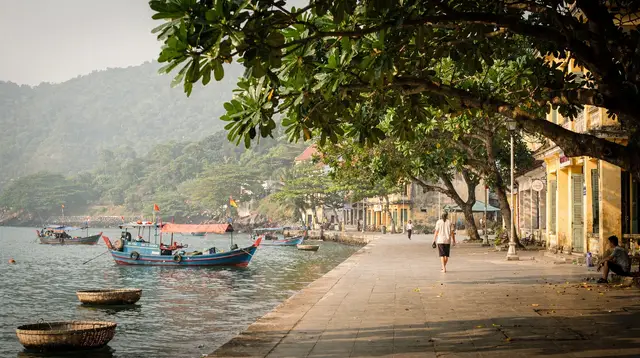
Ho Tram: Vietnam's Quiet Coast Beyond Vung Tau
What is Ho Tram and how is it different from Vung Tau?
Ho Tram is a quiet stretch of coastline on the mainland, in the same coastal province as Vung Tau but further south along the shore. It has far fewer visitors than Vung Tau's city beaches, long open sand, and a scattering of isolated resorts rather than a dense seafront strip.
A Quieter Coast South of Vung Tau
Most visitors from Ho Chi Minh City who want sea air head to Vung Tau, the closest seaside city, with its hilltop Christ statue and a compact seafront that fills up on weekends. Ho Tram is a different kind of coastal stop. It lies further south along the same stretch of coastline, on the mainland, and it has never developed the dense seafront of Vung Tau. Instead of a promenade lined with cafes, Ho Tram is a long run of open beach broken up by a handful of large, spaced-out resorts, with stretches of empty sand between them.
This page covers Ho Tram on its own terms: what the beach is actually like, what there is to do beyond lying on it, and how it fits into a wider trip along the south-east coast. It does not redescribe the beaches of Vung Tau, which have their own dedicated page, and it does not cover Con Dao, the offshore archipelago that is a completely separate destination reached by air or ferry rather than by road.
Clearing Up the Geography
The confusion around Ho Tram is almost always the same one: people assume that because it sits near Vung Tau on the map, it must be an island, or a suburb of Vung Tau itself, or somehow bundled into the same visit. None of that is right. Ho Tram is on the mainland. It sits in the same general coastal stretch as Vung Tau, but further south along the shore, and it is reached by continuing along the coast road rather than by any kind of crossing.
There is no ferry involved in getting there, no channel to cross, nothing that would make it an island in the way Con Dao is. Where Vung Tau is a city with a working port, a fishing fleet, restaurants and a seafront built up over decades, Ho Tram has stayed comparatively undeveloped, with far fewer permanent residents catering to visitors and far more open coastline left as it is. Travellers planning a route down this coast should think of Ho Tram and Vung Tau as two separate stops along one road, not as one place with two names.
The Beach Itself
What sets Ho Tram apart is the sheer amount of open sand. Instead of a single defined town beach, the coastline here runs for a considerable distance with resorts set back from the shore and long unbroken stretches of beach in between them. It is the kind of coast where a walk along the sand can go on for a long stretch without passing another building, which is precisely the opposite experience to the busier central beaches around Vung Tau on a weekend. The sand is broadly in the same style as the rest of this section of coast: pale, gently sloping, backed by casuarina trees and low dunes in places rather than a hard seafront wall.
Because the area has fewer facilities scattered along the sand itself, most food, drink and shade tend to be organised around whichever resort a visitor is staying at, rather than from a strip of independent beachside stalls. This guide will not give water temperatures, visitor numbers or specific pricing for beach access, since these details shift with the season and with which resort or stretch of sand is involved; travellers should check current conditions and any resort’s own information before arriving.
Resorts and an Isolated Feel
The defining feature of Ho Tram as a destination is its resorts. Rather than a town centre with independent guesthouses and restaurants packed close together, the area’s accommodation tends to be large-scale and self-contained, spaced out along the coast with private stretches of beach in front of each property. This isolation is part of the appeal for travellers who want a beach stay rather than a beach day trip: a few nights here means settling into one property and drawing on what it offers, from pools to restaurants to organised activities, rather than moving between independent businesses the way one might in a denser beach town.
It also means Ho Tram works less well as a base for exploring on foot or by scooter between multiple points of interest, since the distances between resorts and any nearby town services can be longer than in a compact seafront destination. Anyone comparing the two coastal options along this stretch should weigh this trade-off directly on the comparison page for Vung Tau versus Mui Ne for the beach, and more generally on the page dedicated to choosing a beach near Saigon, which sets out how Ho Tram, Vung Tau and other coastal options along the south-east differ in character.
Tropicana Park and a Family Day Out
Ho Tram is also home to a themed attraction built around a Polynesian concept, giving families and groups a reason to leave the resort grounds for a few hours without heading all the way back toward Vung Tau or the city. It sits alongside the beach-and-resort model that defines the area, offering pools, slides and a broader family-park layout rather than a cultural or historical site. For a visit built around this kind of day out:
an entry ticket for the Polynesian-themed park at Ho Tramcovers admission for a day spent away from the beach itself, which pairs naturally with a longer resort stay in the area. It is worth treating as an add-on to a Ho Tram stay rather than a reason to visit on its own, since the drive from Ho Chi Minh City is long enough that combining it with at least an overnight makes more sense than a single-day round trip.
Getting to Ho Tram
There is no rail line and no direct boat service to Ho Tram; every practical route runs by road, generally continuing further along the coast than the turn-off for central Vung Tau. Travellers coming straight from the airport or the city centre typically arrange a private car or a resort transfer rather than piecing together public transport, given the distance and the extra time involved compared with a Vung Tau day trip.
| Starting point | How | Roughly how long |
|---|---|---|
| Ho Chi Minh City centre | Private car or resort shuttle | A half-day’s drive, longer than the run to Vung Tau |
| --- | --- | --- |
| Tan Son Nhat Airport | Private car direct to the coast | Longest of the coastal transfer options on this coast |
| --- | --- | --- |
| Vung Tau | Continuing by road further south | An additional stretch beyond the Vung Tau seafront |
For the airport-to-resort leg specifically:
a private car transfer from Tan Son Nhat Airport straight to Ho Tramavoids a change of vehicle in the city and suits travellers arriving with luggage who would rather not manage a multi-stage journey. General background on getting around the wider area, including getting around Saigon and Grab and taxis in Ho Chi Minh City, is useful for the city leg of any journey that starts before the coastal transfer.
Combining Ho Tram with Nearby Stops
Because Ho Tram sits further down the same coast as Vung Tau, a longer trip can treat the two as sequential stops rather than a single visit. A traveller heading down from the city might stop briefly around Vung Tau, described on its own destination and beaches pages, before continuing on to Ho Tram for the resort stay itself. The itinerary built around this pattern, two days along the Saigon and Vung Tau coast, sketches out that kind of route, and a standard Vung Tau day trip remains the better option for anyone who only has a single day rather than an overnight to spend on this section of coast:
a day trip from Ho Chi Minh City to Vung Taucovers that shorter version for travellers who want a taste of the coast without committing to a resort stay further south. For those instead approaching this coast by sea, arriving through the deep-water port used by cruise calls, the overview of Phu My cruise port and the linked Phu My Port shore excursion options set out how that arrival point connects to the rest of the region, separate from the road route most resort guests use.
Hot Springs a Short Drive Inland
A short drive inland from this stretch of coast are the Binh Chau hot springs, a natural hot-spring site that gives visitors staying at Ho Tram an option beyond the beach and the resort pool. It is commonly built into a Ho Tram stay as a half-day addition rather than a separate trip from the city, since the drive from Ho Chi Minh City on its own would be long for a same-day round trip. An entry ticket:
an entry ticket for the Minera hot springs at Binh Chaucovers access to the site for a half-day out from a Ho Tram base. Broader background on this kind of stop sits on the pages for hot springs near Saigon and, for a slower combined day, wellness and sightseeing combined.
When to Visit
Ho Tram follows the same two-season pattern as the rest of the far south: a drier period running roughly from December to April, and a wetter period from around May to November where rain typically arrives as a short, heavy downpour in the late afternoon rather than settling in for the whole day. Neither season rules out a beach stay here, and the choice tends to come down to personal preference for drier, more consistent days versus the greener countryside and fewer crowds of the wet months.
Full seasonal detail, month by month, is covered on the pages for the dry season in southern Vietnam and the rainy season in southern Vietnam, both of which apply equally to this stretch of coast. This page does not give sea-water temperatures or seasonal visitor numbers, since both vary by year and by exactly which part of the coast is being described; travellers wanting current figures should check directly with a resort before booking.
Practical Notes for a Ho Tram Stay
Because Ho Tram is built around isolated resorts rather than an independent town centre, a few practical points are worth planning around rather than assuming they will sort themselves out on arrival. Cash is still useful for anything outside a resort’s own restaurants and shops, in line with the wider pattern across southern Vietnam. Transport once at the resort tends to be arranged through the property itself, since there is little in the way of independent taxi or ride-hailing density along this stretch compared with the city or with Vung Tau.
Families travelling with children may find the combination of a calm beach, a resort pool and the Tropicana Park option covers a full stay without much need to leave the immediate area; broader family-focused planning across the region sits on the southern Vietnam with kids and family-friendly day trips from Saigon pages.
For anyone still deciding whether this coast or another part of the itinerary suits their trip better, the general planning pages how many days in southern Vietnam and planning a trip across city, delta and coast set Ho Tram in the context of a full southern Vietnam route.
Frequently Asked Questions About Ho Tram’s Coast
Is Ho Tram an island?
No. Ho Tram is on the mainland coast of southern Vietnam, further south along the same stretch of shoreline as Vung Tau, not offshore. The nearest true island destination reachable from this coast is Con Dao, covered separately.
Is Ho Tram part of Vung Tau?
They sit in the same general coastal area, but Ho Tram lies further south along the shore and is treated as its own stop rather than a district of Vung Tau.
What is Ho Tram known for?
A long, relatively undeveloped beach, a low density of large, spaced-out resorts rather than a dense seafront, and a generally quieter atmosphere than the beaches around Vung Tau.
Can I visit Ho Tram as a day trip from Ho Chi Minh City?
It can be done, but the drive is longer than the run to Vung Tau, so most visits are structured as an overnight or multi-night resort stay rather than a single day out.
Does Ho Tram have its own attractions besides the beach?
Yes. A Polynesian-themed park operates in the area, and the Binh Chau hot springs sit a short drive inland, giving visitors a reason to leave the beach for part of a day.
How do I get to Ho Tram from Ho Chi Minh City?
By road only, using a private car, a resort shuttle, or a coach connection that continues along the coast past or beyond Vung Tau. There is no rail or boat route to this stretch.
Should I choose Ho Tram or Vung Tau for a beach stay?
Vung Tau suits a shorter visit with more restaurants and an easy transfer time, while Ho Tram suits a longer, quieter, resort-based stay; the two are compared directly on their own comparison page.
Is Con Dao part of a trip to Ho Tram?
No. Con Dao is a separate offshore archipelago reached only by air or fast ferry, never combined with a Ho Tram stay in a single overland trip.
Vung Tau, Ho Tram and the Con Dao Islands
Verified deep-linked GetYourGuide tours. Book through these links and we earn a small commission at no cost to you.
GetYourGuide does not provide a product photo for this activity — the image shows the meeting point, photographed by us.