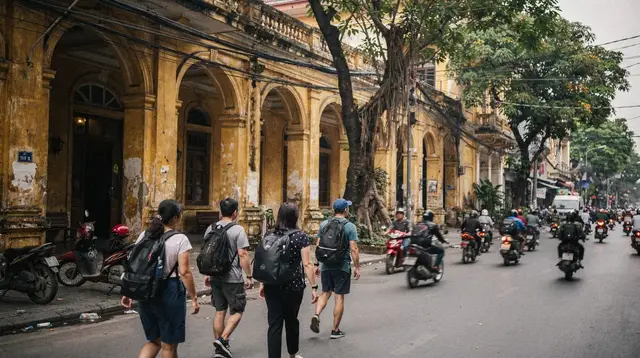
Common Scams in Ho Chi Minh City (And How I Avoid Them)
What are the most common scams travelers face in Ho Chi Minh City?
Rigged taxi meters, deliberately short change from street vendors, and pushy sellers who overcharge for goods or services are the recurring complaints. They cluster around a handful of tourist-heavy spots and come from a small, identifiable minority of operators, not the trade as a whole.
What I’ve Actually Run Into Here
I’ve spent enough time walking around District 1 and the streets near Ben Thanh Market to have collected a small, repeating list of tricks. None of them are dangerous. None of them happened to me more than a handful of times across many visits to Ho Chi Minh City. But they’re common enough that I think it’s worth writing down plainly, without turning it into a warning about the whole city or the whole country.
This page is only about commercial tricks: the taxi, the change, the insistent seller. It has nothing to do with food safety, which I cover separately, and nothing to do with the traffic itself, which has its own page and its own logic. What follows is what I’ve seen, what a few other long-term visitors have told me, and what I now do automatically before I’ve even thought about it.
The Taxi Meter Trick
This is the one I hear about most, and the one I’ve had happen to me exactly once, years ago, before I knew better. A handful of unlicensed or informally branded cars park near tourist clusters, especially outside Ben Thanh Market and along the backpacker strip, and run meters that click over far faster than a normal fare should.
The fix is almost embarrassingly simple: stick to the two big licensed fleets whose cars and meters are standardized, or just use a ride-hailing app, where the price is fixed before you get in and there’s no meter to tamper with. I now default to the app every time I’m moving around, partly for this reason and partly because it removes the need to negotiate anything at all. For getting around day to day, that single habit solved the problem for me completely.
Change That’s a Little Short
Vietnamese dong comes in large numbers, and the notes look similar enough to each other, especially at night or when you’re distracted, that a quick short-change becomes easy to miss. I’ve had it happen with street food and with a couple of small souvenir stalls, never for a huge amount, but often enough that I now count change before I walk away, every time, without exception. It sounds tedious. It takes about four seconds once it’s a habit. I also try to have smaller notes on hand rather than only large ones, since paying for something cheap with a big note gives more room for the difference to go missing in the shuffle.
The Insistent Street Vendor
Around the busiest tourist blocks, a small number of sellers — sometimes offering shoeshines, cheap sunglasses, or fruit sold by weight — will quote a price, then claim a different one once the item is already in your hands or already cut open. I’ve watched this happen to other travelers more than I’ve experienced it myself, and the pattern is consistent enough that I now agree on a price out loud before anything changes hands, and I’m comfortable just walking away if the seller won’t confirm it. Persistence is part of the sales style here in general, most of it perfectly ordinary and not remotely a scam, so I try not to read hostility into every approach. It’s really only the ones who dodge a direct price question that I treat differently.
It’s a Minority, Not the Rule
I want to be direct about this, because I think guides sometimes overcorrect into paranoia: the overwhelming majority of taxi drivers, market sellers, and street vendors in Ho Chi Minh City are straightforward, and most of my transactions here, across dozens of visits, have been completely uneventful. The handful of bad actors are concentrated in a few predictable places — right around Ben Thanh Market, along the Bui Vien nightlife strip, and wherever crowds move fast and don’t linger.
Outside those pockets, in District 3, in Cholon, in Thao Dien, I’ve simply never had an issue. Treating every interaction as suspect isn’t just unpleasant for you, it’s unfair to the people doing honest work.
What Actually Works for Me
None of my habits are elaborate. I use ride-hailing apps for anything on wheels, which sidesteps the meter question entirely — a good excuse, honestly, to build a day around getting properly out of the center, whether that’s a trip to the tunnels or out onto the river. I count change on the spot, every single time, without apologizing for it. I confirm a price before I commit to buying anything, especially food sold by weight or items without a visible tag. And when a price offered feels off, I just walk, which almost always resolves things faster than arguing does.
a guided day trip out to the Cu Chi Tunnels is one of the easiest ways to spend a day away from the busiest tourist blocks entirely, with transport and pricing already settled before you leave. The same goes for a day on the water: a dinner cruise on the Saigon River removes the taxi-and-change question for an entire evening.
And a day out toward the delta, on a small-group Mekong Delta day trip, is a good reminder that most of the country runs at a much gentler, more relaxed pace than the couple of blocks where these tricks cluster.
If you’re staying more than a couple of days, it’s worth reading up on getting around Saigon generally, and on where to stay by neighborhood — some areas simply see far less of this than others. If shopping is on your list, the guide to Ben Thanh and Saigon’s markets covers the haggling side of things in more detail than I go into here, and if you’re also heading out to Tay Ninh or up to the Black Virgin Mountain, you’ll find the same rule applies there: quieter, further from the center, fewer of these habits to worry about.
None of this should overshadow the trip. I still think Ho Chi Minh City is one of the easiest big Asian cities to visit independently, and these few habits are all it’s ever taken for me to avoid the handful of tricks that do exist.
FAQ: Avoiding Scams and Overcharging in Ho Chi Minh City
Are taxi scams common in Ho Chi Minh City?
They’re a known issue with a small number of unlicensed or informally branded cars, concentrated around tourist-heavy spots like Ben Thanh Market. Sticking to recognized licensed fleets or using a ride-hailing app avoids the issue almost entirely.
How do I avoid a rigged taxi meter?
Use a ride-hailing app, where the fare is fixed before you get in, or choose one of the well-known licensed taxi fleets rather than an unmarked or informally branded car waiting outside a tourist site.
Is short-changing really that common?
It happens occasionally, mostly with cash purchases at busy stalls or street food carts, and it’s rarely a large amount. Counting change on the spot before walking away removes the problem completely.
Do all street vendors overcharge tourists?
No — the large majority quote fair prices, and persistent selling is a normal part of the culture here, not a sign of dishonesty. The exception is a smaller group who avoid confirming a price upfront, which is the actual warning sign to watch for.
Where do these problems happen most?
They cluster around a few predictable, crowded tourist spots, particularly near Ben Thanh Market and along the Bui Vien nightlife strip. Away from those pockets, in residential districts or on organized day trips, this simply hasn’t been an issue in my experience.
What’s the single best habit to avoid overcharging?
Agreeing on a price out loud before any money or goods change hands. It sounds obvious, but it resolves almost every one of these situations before they start.
Does this mean I should distrust every transaction in Saigon?
No. The vast majority of drivers, vendors, and sellers are completely straightforward, and treating everyone with suspicion is both unpleasant for you and unfair to the people doing honest business.
tours.Practical
Verified deep-linked GetYourGuide tours. Book through these links and we earn a small commission at no cost to you.
GetYourGuide does not provide a product photo for this activity — the image shows the meeting point, photographed by us.