Mekong Delta Accessible Travel: A Wheelchair and Mobility Guide
Is the Mekong Delta accessible for wheelchair users?
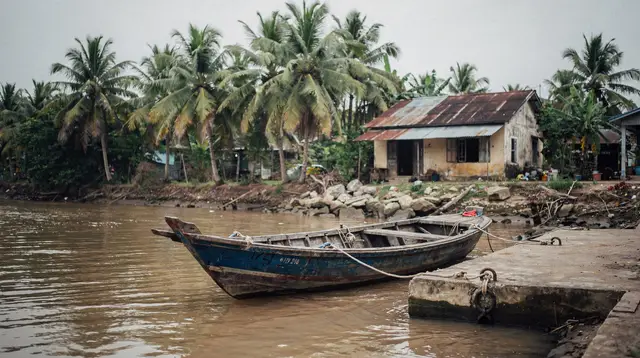
Parts of it can work with planning, but the delta is harder than central Ho Chi Minh City: boats are narrow, jetties are often unstable pontoons or bamboo ramps, and orchard paths between stops are frequently dirt or brick with no smooth surface. A private car and a small, chartered boat with an assisted transfer generally work far better than a standard group cruise.
Why the delta is a different challenge than the city
Ho Chi Minh City has kerbs, motorbike traffic and patchy sidewalks, but it also has paved roads, lifts in modern hotels, and cars that can pull up close to a door. The Mekong Delta works on a different logic. It is a landscape of water: rivers, canals and irrigation channels that visitors cross by boat, on narrow footbridges, or along raised paths between orchards. None of that was built with wheelchairs, walkers or limited mobility in mind, and very little of it has been retrofitted since.
This guide does not repeat the street-by-street detail already covered in the wheelchair accessibility guide for Ho Chi Minh City. It focuses on what changes once a trip leaves the city for My Tho, Ben Tre, Cai Be, Vinh Long, Can Tho or further into Chau Doc and Soc Trang. It also does not cover the coast or the Con Dao islands, which sit outside the delta and have their own set of transfer and terrain issues.
The single most useful thing to understand before booking anything is this: a river cruise being marketed as relaxing and scenic says nothing about how you get from dry land onto the boat. That step, often just a few seconds long, is where most delta trips succeed or fail for a mobility-reduced traveler.
The boarding problem: why river cruises are not automatically accessible
It is easy to assume that a boat trip is inherently restful and therefore easy on the body. The reality is closer to the opposite. Boats on the Saigon River near the city sometimes have proper piers with fixed gangways, but once you are on delta waterways, the norm is a floating pontoon that rises and falls with the current, connected to the bank by a narrow plank or a short flight of steps with no handrail.
For a walking traveler, this is a minor inconvenience. For someone using a wheelchair, a cane for balance, or who cannot manage an unstable surface, it is the actual barrier, more than anything that happens once you are seated on the boat. A few points to plan around:
- Pontoons move. They are usually tied loosely to the shore and shift with wakes from passing traffic, which makes them unsuitable for a wheelchair to roll across unassisted.
- Gangplanks are narrow, sometimes a single board, and rarely wide enough for a wheelchair’s wheelbase even before considering the lack of a rail.
- Water levels change through the day, particularly on tidal stretches near Can Tho, so the height and angle of the boarding point at a morning departure can differ from the same jetty at midday.
- Staff are boat crew, not trained caregivers. They will often help lift a wheelchair or a passenger aboard as a matter of hospitality, but this is an improvised, unofficial transfer between two or three people, not a certified accessible boarding procedure.
None of this means the delta is closed to mobility-reduced travelers. It means the standard, unmodified group-tour boat is not designed for an easy transfer, and anyone planning a trip needs to ask specific questions before assuming otherwise.
Questions to ask before booking any boat
Whether you are booking a scheduled group departure or a private charter, the same handful of questions separate a workable day from a difficult one. Ask directly, in writing if possible, rather than relying on a general assurance that “it’s fine”:
- Is boarding from a fixed pier, a floating pontoon, or a beach-style entry where the boat noses onto the bank?
- Is there a step, a plank, or a short ladder involved, and roughly how many centimeters is the height change?
- Will staff physically assist a transfer, and how many people are available to help at the boarding point?
- Is there a rail or fixed structure to hold onto during boarding, even if there is no ramp?
- Does the boat have a flat, open deck area, or only bench seating reached by stepping down into a hull?
- If the itinerary involves switching from a larger boat to a smaller sampan partway through (common near the Cai Rang floating market), is that switch avoidable while still seeing the market from the water?
A private operator or a specialist can usually answer all six in advance; a large scheduled group cruise sold mainly on price often cannot, because the crew may vary day to day.
Where the delta works better, and where it does not
a two-day HCMC to Mekong Delta trip with a deep local homestay illustrates the trade-off well: the homestay element is the most rewarding part culturally, and also the part least likely to have step-free access, since most stilt houses and family homes were not built with ramps.
Can Tho and Vinh Long are the most workable bases. Both have paved central streets, a wider choice of modern hotels with lifts, and boat departure points close to town that tend to be more established (and better maintained) than smaller village jetties. My Tho, being the closest delta town to Ho Chi Minh City, is a reasonable choice for a shorter outing with a paved riverfront promenade, even if the boat-boarding issue described above still applies once you actually go on the water.
Cai Be, the smaller channels around Sa Dec, and the orchard circuits near Vinh Long are the hardest terrain. Visits to fruit orchards, coconut-candy workshops and brick kilns generally involve walking on packed dirt, loose brick, or narrow raised paths between irrigation channels, none of which is graded or paved. A standard wheelchair cannot manage these paths without being carried or without skipping that stop.
Chau Doc, near the Cambodian border, adds distance and the additional terrain of Sam Mountain, which is a hill visit rather than flat ground. The nearby Tra Su cajuput forest is toured by small boat through flooded forest, which has the same narrow-craft boarding issue as the rest of the delta, on an even smaller and lower boat.
Soc Trang, Rach Gia and Ca Mau lie further from Ho Chi Minh City and are visited far less by mobility-reduced travelers simply because of the added road distance; if you are set on going, the same boarding and path questions apply, and a private car reduces the number of unknowns compared with joining a scheduled multi-stop coach tour.
Cai Rang floating market: viewing versus close-up access
The Cai Rang floating market, at Can Tho, is one of the delta’s signature experiences, and it is also a good example of where expectations need adjusting. The market itself is a working river scene: wholesale boats hung with sample produce, moving through open water at dawn. Viewing it from a stable, appropriately sized boat with a level boarding point, arranged directly with the operator, is realistic for most mobility levels.
What is not realistic in a standard wheelchair is transferring, mid-visit, onto one of the small sampans that paddle in close between the market boats to sell coffee or fruit. Those craft are low, narrow and boarded by stepping down at water level between two moving boats. If getting close to individual vendor boats matters to you, say so when booking, since some private operators can position a larger boat closer than a standard group tour would, without requiring a transfer onto a sampan at all.
Homestays and orchard stops: what to expect, not what is promised
Homestays are often the emotional high point of a Mekong Delta itinerary, and marketing material tends to show them as charming rather than describing their physical layout. In practice, most are traditional stilt houses or single-story family homes reached by one or two unramped steps, with shared or basic bathrooms that are not adapted for limited mobility. This is true whether the listing is a simple guesthouse or a more polished operation aimed at international visitors.
Orchard stops, brick-kiln visits and coconut-candy workshops near Cai Be and Vinh Long share a common physical pattern: a short walk from where the boat or car stops, along a dirt or brick path, sometimes crossing a narrow plank bridge over a canal, to reach the actual stop. There is generally no vehicle or wheeled access directly to these stops.
None of this rules out a homestay or an orchard visit. It means the honest way to plan is to contact the specific homestay or the tour operator directly, describe your mobility needs precisely, and ask what the last hundred meters of the journey actually looks like, rather than trusting a general description of the itinerary.
Building a workable itinerary
For most mobility-reduced travelers, three adjustments make the difference between a frustrating day and a good one:
- Charter privately rather than joining a large scheduled group. A private car and a small chartered boat, such as those arranged through a small-group Mekong Delta experience combining a boat, cycling and a cooking session, allow the pace, the boarding point and the number of stops to be adjusted on the day, which a fixed multi-boat group schedule cannot.
- Choose a base with paved streets and hotel lifts. Can Tho and Vinh Long both work better as an overnight base than a smaller river town for exactly this reason.
- Ask before you go, not when you arrive. The boarding-point questions above take five minutes to send in an email or a message and can save an entire day of improvisation at the water’s edge.
A shorter, single-destination day trip is often more manageable than a two-day loop through several towns, simply because it limits the number of different boats, jetties and paths involved. a two-day Mekong Delta tour covering Can Tho and the floating market can still work well if the boarding arrangements are confirmed in advance at each stop, rather than assumed to be uniform across the whole trip.
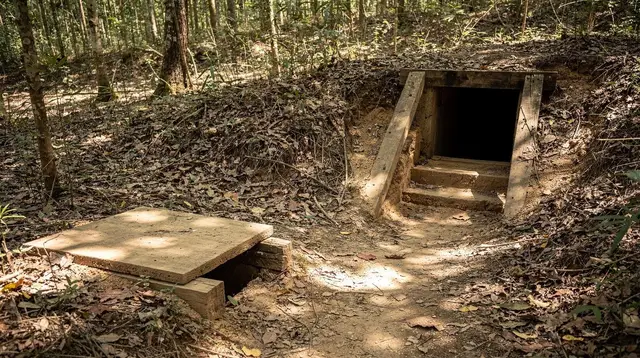
For travelers combining the delta with the Cu Chi Tunnels in a single long day, it is worth noting that the tunnels themselves involve narrow, low passageways that are not wheelchair accessible at all, even though the visitor centers and walking paths around them are flatter than most delta orchard paths; a combined Cu Chi Tunnels and Mekong Delta day trip is best treated as two separate accessibility questions rather than one.
Farm and craft-based stops such as those on a small-group fisherman and farmer eco tour from Ho Chi Minh City are worth asking about individually, since eco-tour itineraries often mix a short boat ride with walking sections along raised field paths that can be narrower and less even than a standard orchard visit.
A realistic checklist before departure
| Question | Why it matters |
|---|---|
| Fixed pier, floating pontoon, or beach landing? | Determines boarding stability and step height |
| --- | --- |
| How many staff assist at boarding? | An improvised lift needs two to three people |
| --- | --- |
| Any transfer to a smaller sampan mid-trip? | Small craft are harder to board than the main boat |
| --- | --- |
| Paved, dirt, or brick paths at orchard stops? | Standard wheelchairs cannot manage loose or uneven ground |
| --- | --- |
| Homestay step count and bathroom layout? | Most traditional homes have unramped steps |
| --- | --- |
| Private car or scheduled coach? | A private vehicle can stop closer to entry points |
None of these questions have a single right answer across the whole Mekong Delta; conditions vary jetty by jetty and homestay by homestay. Asking them directly of whichever operator you book, and being specific about the type and degree of mobility support needed, remains the most reliable way to plan a delta visit that actually works.
Mekong Delta accessibility: frequently asked questions
Are Mekong Delta river cruises wheelchair accessible?
Not automatically. Most standard boats board from low, moving pontoons or narrow gangplanks with no rail, and staff are not trained lifters. A wheelchair user can often be carried aboard with two or three helpers, but this is an assisted transfer, not a ramp, and it should be arranged in advance rather than assumed on the day.
Which Mekong Delta towns are easiest for a mobility-reduced traveler?
Can Tho and Vinh Long have the most paved central streets and hotels with lifts, so they work better as a base than smaller river towns. My Tho is close to Ho Chi Minh City and has a paved riverfront, which helps for a shorter outing.
Can a wheelchair user visit the Cai Rang floating market?
Viewing is realistic from a stable, larger boat with level boarding arranged directly with the operator; transferring onto one of the small sampans that weave between the market boats is not, since those craft are unstable and boarded by stepping down at water level.
Are orchard and garden visits in Cai Be or Vinh Long accessible?
Rarely in a standard wheelchair. The paths between fruit orchards, coconut-candy workshops and brick kilns are usually packed dirt, uneven brick or narrow raised paths between water channels, and they are not paved or graded.
Is a homestay in the Mekong Delta accessible?
Most homestays are traditional stilt or ground-level houses reached by a step or two with no ramp, and bathrooms are rarely adapted. Confirm room and bathroom layout directly with the homestay before booking rather than assuming standard hotel norms apply.
Should a wheelchair user book a private tour or a group tour in the Mekong Delta?
A private car and boat charter gives control over pace, transfer help and which stops to skip, which matters far more here than in the city. A standard group itinerary is built around walking between several boats and market stalls, with little room to adapt on the day.
Does this guide cover accessibility in Ho Chi Minh City itself?
No. City-specific detail on district streets, sidewalks and the metro is covered in the wheelchair accessibility guide for Ho Chi Minh City; this guide is only about conditions once you leave the city for the delta.
Accessibility Guide
Verified deep-linked GetYourGuide tours. Book through these links and we earn a small commission at no cost to you.
GetYourGuide does not provide a product photo for this activity — the image shows the meeting point, photographed by us.