2 Days: Saigon, Can Gio Mangrove and the Vung Tau Coast
Can you do Saigon, Can Gio and Vung Tau in two days without a car?
Yes. Can Gio is reached from central Ho Chi Minh City by public bus and a short car-ferry crossing, and Vung Tau is reached from the city by hydrofoil along the Saigon River or by public coach. Neither leg requires a rented vehicle, which makes this a two-day loop that works entirely on public transport.
Why pair Can Gio and Vung Tau
Most visitors staying in Ho Chi Minh City never look south-east of the centre, yet the coast is closer than the Mekong Delta and needs no rented vehicle to reach. This itinerary strings together two very different stops that both sit on the same stretch of coastline south-east of the city: Can Gio, a replanted mangrove biosphere reserve, and Vung Tau, a long-standing seaside city with a hilltop statue and a working beachfront.
One correction worth making before setting out: Vung Tau belongs to Ba Ria-Vung Tau province, on the south-east coast, and it is not a town of the Mekong Delta — the two are frequently mixed up because both lie south of the city, but the delta is a river-and-canal landscape to the south-west, while this coastline is a different geography entirely.
This plan also deliberately leaves out two places that get mentioned in the same breath: Mui Ne and its sand dunes sit further north along the coast in Binh Thuan, a different province with a different travel profile, and it deserves its own dedicated plan — see the three-day Saigon to Mui Ne desert escape for that route. And the Con Dao archipelago, despite sitting off this same coast, is reached only by air or by boat from the mainland, never by road, so it sits outside a short overland loop like this one.
The route below moves from the mangrove to the beach and treats each as a full day rather than rushing both into one.
Day 1: Ho Chi Minh City to Can Gio mangrove reserve
Start the day in central District 1 and head south-east out of the city towards Can Gio. The road runs through Nha Be district and crosses the water on a car ferry before reaching the reserve itself — a stretch that already signals the shift from city traffic to open estuary. Can Gio was replanted after being stripped bare during the war, and UNESCO recognised the recovered mangrove forest as a Biosphere Reserve in 2000. It is worth reading a little about that history before arriving; the Can Gio mangrove biosphere reserve guide covers what makes the site ecologically distinct from anywhere else near the city.
Once inside the reserve, a boat threads through mangrove channels lined with dense green canopy, and guides point out fiddler crabs, mudskippers and the birdlife that has returned to the wetland. A stop at Monkey Island is a near-guaranteed feature of any visit — a resident troop of long-tailed macaques that has grown thoroughly used to visitors, sometimes too used to them, so keep bags zipped and food out of sight. The monkey island wildlife guide has practical notes on how to behave around the troop.
Can Gio is quieter than the delta circuits that leave the city in the other direction, and a full Can Gio day trip covers the mangrove boat ride, the monkey encounter, and usually a seafood lunch at one of the stilt restaurants overlooking the water. Because this is day one of a two-day loop rather than a there-and-back trip, plan the return leg to bring you back into the city by early evening, ready for an onward departure the next morning rather than a same-day round trip.
Spend the night back in central Saigon. This keeps the logistics simple: hotels, restaurants and the departure point for tomorrow’s coastal leg are all concentrated in District 1, and neither Can Gio nor Vung Tau has the same density of accommodation choice as the city centre.
Getting to Can Gio and back
| Option | Notes |
|---|---|
| Public bus + ferry | Cheapest option, requires a transfer and the car-ferry crossing |
| --- | --- |
| Organised day tour | Boat, guide and lunch bundled together, no transfers to manage |
| --- | --- |
| Private car | Door to door, useful with luggage or a tight morning start |
For a broader sense of how this fits with the rest of the city’s transport options, the getting around Saigon guide is a useful companion for the whole two days.
Day 2: Ho Chi Minh City to Vung Tau
The second day heads the other way along the coast to Vung Tau, reached from the city either by hydrofoil down the Saigon River and out to the sea, or by public coach along the highway. The hydrofoil route is the more memorable of the two — it leaves from a pier near the centre and follows the river out past the port before opening onto the sea — and the river transfer to Vung Tau guide walks through how that crossing works in practice, without pinning down departure times that change with the operator and the season.
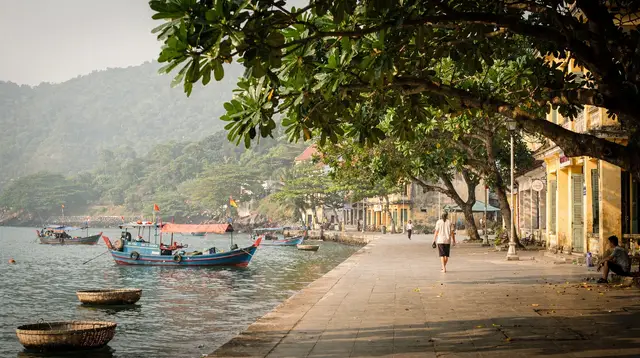
Vung Tau itself is an easy city to spend a day in on foot or by rented bicycle. The hilltop Christ statue is the most photographed landmark, reached by a stepped climb that rewards the effort with a wide view over the town and the sea. Below it, the city’s beaches run along both the front and back shore — busier and more built-up than the delta’s riverbanks, closer in feel to a domestic seaside resort than to a remote getaway. The Vung Tau beaches guide breaks down which stretch of sand suits a short visit versus a longer stay.
Beyond the beachfront, Vung Tau carries a layer of wartime and colonial history that is easy to miss on a quick visit — French-era villas, old lighthouses, and sites connected to the war years inland from the centre. Travellers curious about that layer can look at the Nui Dat, Long Tan and Long Phuoc tunnel tour, which covers ground most beach-only visitors never see.
a half-day tour out to Nui Dat, Long Tan and the Long Phuoc tunnels is the option to book if the historical side of Vung Tau interests you more than another hour on the sand — it runs from the town itself rather than from Saigon, so it fits neatly into a day already spent there.
Round out the afternoon with fresh seafood at one of the seafront restaurants before heading back to the city by the same hydrofoil or coach route, arriving back in central Saigon in the evening.
Two very different days
| Can Gio (Day 1) | Vung Tau (Day 2) | |
|---|---|---|
| Landscape | Mangrove wetland and estuary | Coastal city and beachfront |
| --- | --- | --- |
| Main activity | Boat ride, wildlife | Walking, beach, hilltop statue |
| --- | --- | --- |
| Pace | Slow, nature-focused | More built-up, resort-like |
| --- | --- | --- |
| Province | Ho Chi Minh City itself | Ba Ria-Vung Tau |
Making the most of the rest of your Saigon time
Because this itinerary only occupies two days, it pairs naturally with time spent exploring the city itself before or after. A Ho Chi Minh City walking tour or an evening out on a canal tour through the city fills a spare afternoon well, and travellers wanting a taste of the city’s food scene before or after the coast should look at a private street food walking tour with a local guide.
If two days on the coast turns out to be the easier half of a longer trip, and the Mekong Delta is also on the list, a combined route such as a private multi-day tour covering Ho Chi Minh City, Cu Chi, the Mekong Delta and Vung Tau ties several of these threads together in one booking rather than arranging each leg separately.
Frequently asked questions about the Saigon to Vung Tau coastal itinerary
Is Vung Tau part of the Mekong Delta?
No. Vung Tau sits on the south-east coast in Ba Ria-Vung Tau province, a different geography from the river-and-canal landscape of the Mekong Delta to the south-west of the city. The two get confused because both are described as “south of Saigon,” but they are separate regions with separate travel routes.
Can this two-day loop be done without a rented car or motorbike?
Yes. Can Gio is reachable by public bus with a car-ferry crossing, or by an organised day tour, and Vung Tau is reachable by hydrofoil along the Saigon River or by public coach. Neither destination requires a private vehicle, which is why this plan is built around public transport and organised transfers rather than self-driving.
Should I visit Can Gio or Vung Tau first?
Either order works, but starting with Can Gio and finishing in Vung Tau lets the trip build from a quiet, nature-focused morning towards a more built-up beach city, which suits most travellers’ rhythm better than the reverse. There is no logistical reason it could not run the other way.
Is Mui Ne part of this itinerary?
No. Mui Ne and its sand dunes lie further north along the coast in Binh Thuan province, a separate destination with a different travel profile from this two-day Can Gio and Vung Tau loop. Travellers wanting Mui Ne should look at a dedicated route such as the three-day Saigon to Mui Ne desert escape instead.
Can I extend this trip to Con Dao?
Not directly from Vung Tau by road — Con Dao is an offshore archipelago reached only by air or by boat from the mainland, never by road, so it needs to be planned as its own leg rather than tacked onto a coastal drive. Travellers interested in combining the two should treat Con Dao as a separate extension with its own transport arrangements.
What is the best way to get to Vung Tau from Saigon?
The two common options are a hydrofoil departing from a pier near the city centre and travelling down the Saigon River out to the sea, or a public coach along the highway. Both are viable for a day trip or an overnight stay; the hydrofoil is the more scenic of the two, while the coach is generally the more flexible in terms of departure points.
Is one day enough for both Can Gio and Vung Tau?
Not comfortably. Each destination sits in a different direction from the city and has enough to fill a full day on its own — the mangrove boat ride and wildlife at Can Gio, and the beachfront, hilltop statue and old town at Vung Tau. Splitting them across two separate days, as this itinerary does, avoids a rushed, transfer-heavy single day.
Do I need to book accommodation in Can Gio or Vung Tau?
Not necessarily. Both destinations can be visited as day trips from central Ho Chi Minh City, with the overnight stay kept in the city between the two legs, which is the structure this itinerary follows. Travellers who prefer a slower pace can instead stay overnight in Vung Tau itself, since it has a wider choice of seafront hotels than Can Gio.
Vung Tau, Ho Tram and the Con Dao Islands
Verified deep-linked GetYourGuide tours. Book through these links and we earn a small commission at no cost to you.
GetYourGuide does not provide a product photo for this activity — the image shows the meeting point, photographed by us.