Southern Vietnam with Kids: A Practical Family Travel Guide
Is Ho Chi Minh City suitable for a family trip with young children?
Yes. The traffic is dense and needs a steady, confident approach rather than avoidance, and the heat and humidity call for a slower daily rhythm. With shorter outings, a fixed base and attention to food and water, young children generally manage the south of Vietnam well.
Rethinking What “Family-Friendly” Means Here
Ho Chi Minh City has a reputation, deserved on first impression, as a wall of motorbikes moving in every direction at once. Parents planning a trip to Ho Chi Minh City and the wider south of Vietnam often ask whether that makes the destination unsuitable for young children. It does not. The traffic is genuinely dense — more so here than anywhere else in the country — but it is also remarkably orderly in its own way, and it rewards a specific technique rather than avoidance.
The real planning questions for a family trip are less dramatic and more practical: how fast to move each day, how to manage heat and naps, what to eat and where to stay. This guide covers those questions for travel with young children specifically. It does not walk through individual attractions or day trips — a companion guide on activities for young children handles that — and it is not aimed at teenagers, who travel with different expectations and a different tolerance for pace and independence.
Crossing Streets and Getting Around with a Young Child
The single biggest adjustment for most families is street crossing, and it is worth practising deliberately rather than treating it as a hazard to route around. Vietnamese traffic drives on the right, and in the densest parts of District 1 and Cholon, motorbikes fill every available gap on the road. The technique that works is a steady, unhurried, visible pace: step out when there is a reasonable opening, keep walking at a constant speed, and let the traffic flow around you rather than stopping to wait for a gap that will not come, or breaking into a run, which is what actually confuses drivers.
With a young child, this means holding a hand firmly, narrating the crossing calmly, and choosing slightly quieter side streets to build confidence before tackling the busiest junctions. A dedicated guide on crossing the street and traffic in Saigon goes into more detail on the technique itself.
Day to day movement is easier than the crossing question suggests. Ride-hailing apps for cars are the most practical option with small children, since they allow a proper car seat or at least a securely seated child, unlike the motorbike-taxi option many locals use. Metered taxis work the same way. A guide to Grab, ride-hailing and taxis in Ho Chi Minh City and a broader overview of getting around Saigon cover the practical booking details.
Pavements themselves are a separate challenge: they are frequently narrow, used for parked motorbikes, market stalls or café seating, and interrupted without warning. A lightweight, foldable stroller can work on the wider, flatter stretches, such as the Nguyen Hue walking street, but a soft carrier or sling is far more practical for most of the city centre, where you may need to step onto the road briefly to get around an obstruction.
Setting a Pace That Suits Small Children
Adult sightseeing itineraries in Ho Chi Minh City tend to pack in a market, a museum, a temple and a walking tour into a single day. That pace does not translate well to travel with toddlers or preschoolers, and trying to force it is the most common reason families report a rough trip. The more workable approach is to treat each day as one, or at most two, anchor activities, with generous unstructured time around them. A morning at a single museum or a walk through one neighbourhood, followed by a long lunch and a break, leaves room for the inevitable slow moments — a nap that runs long, a meltdown over the heat, an unplanned stop for a fruit shake — without derailing the whole day.
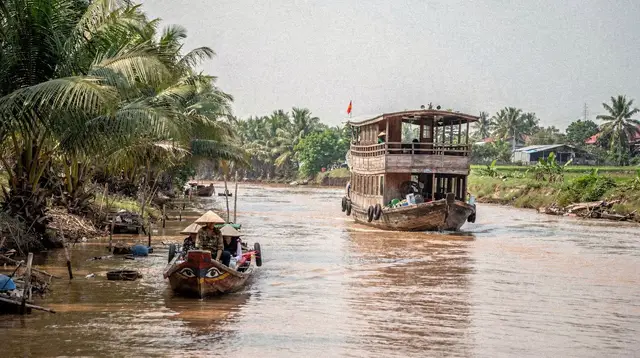
This slower pace also changes how you should think about excursions outside the city. Trips to the Mekong Delta, the coast or the countryside around Tay Ninh are often sold as single long days covering several stops by boat, minibus and on foot. That structure suits adults and older children reasonably well but can be exhausting for a toddler strapped into a car seat or carried through humid heat for most of the day.
Families with young children often do better choosing fewer stops, spreading a similar itinerary over two days instead of one, or choosing operators and activities specifically designed around younger children — a subject the companion guide to family-friendly day trips from Saigon covers directly, since it goes into which specific excursions work well rather than the general planning principles covered here.
Naps, Heat and the Shape of the Day
The south of Vietnam runs on two seasons, not four, and it stays hot and humid across both of them — there is no cool season here to plan around, unlike travel further north. That heat, more than the traffic or the food, tends to be what actually wears a young child down over a multi-day trip, and it is worth building the daily schedule around it deliberately rather than discovering the problem on day one.
A rhythm that tends to work well starts early, while the morning is still relatively cool, for the day’s main outdoor activity. Late morning through mid-afternoon — which is also usually when a toddler’s nap window falls — is the point to retreat indoors, to an air-conditioned room, restaurant or hotel pool, rather than pushing on with more sightseeing.
The late afternoon, once the worst of the heat has eased, works well for a second, lighter activity: a walk, a rooftop view, or simply time in a park. In the wetter months, this rhythm needs one more adjustment, since afternoons often bring a short, heavy downpour rather than steady all-day rain — treating that window as nap or indoor time solves two problems with one pause in the schedule, rather than fighting the season.
Food and Water: What Actually Matters for Young Children
Food is one of the more anxiety-inducing subjects for parents traveling with small children, and also one of the more manageable once a few rules are in place. Tap water is not drinkable anywhere in the city or the wider south, so bottled or filtered water is the default for children exactly as it is for adults, and it is worth carrying more than seems necessary given how quickly small bodies dehydrate in the heat. Ice served in established restaurants and cafés is machine-made from treated water and is generally considered safe; ice from an informal street stall is a judgement call in the same way the food itself is.
On food, the general rule that serves adults well — freshly cooked, still hot, from a stall with high turnover — applies just as well to children, and a lot of the southern repertoire, from plain rice dishes to grilled meats to fresh fruit, is naturally gentle and easy for a young palate.
That said, many families choose to be more conservative with the youngest children in the first few days of a trip, favouring hotel breakfasts and well-reviewed sit-down restaurants over stalls until everyone’s system has adjusted, and loosening up as the trip goes on. A broader look at street food safety in Ho Chi Minh City and at water and general health precautions covers the adult-facing version of the same guidance, most of which carries over directly.
Families who want a gentler, hands-on introduction to southern food sometimes prefer a structured session over improvised stall-hopping with a young child in tow. A half-day cooking class with lunch in Can Tho gives children a chance to see ingredients prepared from scratch, in a calmer, seated setting, before eating the results — a format that tends to suit younger children better than a moving food tour.
Where Families Base Themselves
Choice of neighbourhood affects family life in Ho Chi Minh City more than it might for a childless traveller, mostly because of how much time ends up spent simply walking between the hotel and nearby food and activities. Central District 1, particularly the riverside stretch and the area around Dong Khoi, offers the widest choice of family-suitable restaurants and the shortest distances to major sights, though it also means navigating the busiest traffic on foot.
District 3, just next door, tends to be quieter and more residential while staying an easy ride from the centre. Across the river, Thao Dien in Thu Duc City offers a genuinely different pace: wider, quieter streets, a large expatriate family community, and international schools and cafés built around family life, at the cost of a longer trip into the city centre for sightseeing. A fuller comparison of options lives in the guide to where to stay in Saigon by neighbourhood.
For an evening that does not require much walking or crossing streets after dark, a seated show such as the Sound of Vietnam show with dinner can work well as a low-effort family evening, combining music and food in one fixed location rather than an itinerary of separate stops.
Health, Safety and the Practical Precautions Worth Taking
Beyond traffic and food, the everyday safety concerns in Ho Chi Minh City are unremarkable rather than exotic, and mostly the same ones that apply to adult travellers, adjusted for a child’s slower reactions and smaller size. Bag- and phone-snatching from passing motorbikes in busy central streets is worth being alert to, and it is sensible to keep a stroller’s storage basket, a nappy bag or a child’s own bag away from the road-facing side when walking.
Overcharging around busy markets and tourist areas is common and worth being aware of but rarely poses any actual risk. Heat and humidity, covered above, are the more constant everyday concern, and it is worth carrying water, sun protection and a change of light clothing on any outing longer than an hour or two, since a young child’s tolerance for heat drops faster than an adult’s without much warning.
Vietnam’s general emergency numbers — 113 for police, 114 for fire, and 115 for ambulance — apply throughout the south, and English is commonly spoken in hotels and larger restaurants in central areas, though considerably less so once you move into the Mekong Delta or smaller towns, which is worth factoring in for a family with a child who might need to communicate a specific need.
Extending the Trip Beyond the City
Families who plan to spend several days combining the city with the Mekong Delta or the coast benefit from thinking about the whole trip’s pace before booking, rather than day by day. A gentler, more spread-out version of the classic delta route — for instance a countryside biking tour with local stops around Can Tho rather than a packed multi-stop boat itinerary — tends to suit a family traveling with young children better than the version built for a full coach of adults.
A general framework for how many days to allow across the city, the delta and the coast, and a separate look at how many days to allow in southern Vietnam, are useful starting points before adapting either one to a slower family pace. Ready-made shorter itineraries built with an easier pace in mind, such as a three-day family-friendly Saigon and Cu Chi itinerary or a five-day family route across the city, Mekong Delta and coast, give a concrete sense of how these principles translate into an actual schedule.
Families traveling with teenagers rather than young children face a different set of trade-offs around independence and pace, covered separately in the guide to Ho Chi Minh City with teenagers, and it is worth reading that version instead if your children fall into that older age range, since the advice above — built around naps, strollers and short outings — will not fit as well.
Frequently Asked Questions about Family Travel with Young Children in Southern Vietnam
Is the traffic in Ho Chi Minh City too dangerous for young children?
The volume of motorbikes looks alarming at first, but drivers expect pedestrians and flow around anyone crossing at a steady, predictable pace. With an adult holding a child’s hand and no sudden stops or sprints, crossing becomes routine within a day or two, and quieter side streets make it easier to practise.
Can toddlers and young children eat street food safely?
Freshly cooked, still-hot food from a busy stall with a lot of local turnover is usually a safer bet than food that has been sitting out, and this applies for children as much as adults. Many families still prefer to stick to well-reviewed restaurants and hotel kitchens for the youngest children, especially in the first days.
How should we plan naps around sightseeing?
Building the day around an early start, a midday break back at the accommodation or in air-conditioned shade, and a lighter late afternoon works better than trying to sightsee through the hottest and most humid hours, which is also when a toddler’s nap window usually falls.
Which neighbourhood is easiest for families to stay in?
Central areas with wide pavements, parks and easy access to restaurants, such as District 1 around the riverside or District 3, tend to suit families better than the backpacker strip, while Thao Dien across the river offers a quieter, more spread-out alternative with a large expatriate family community.
Is tap water or ice a problem for children?
Tap water is not drinkable anywhere in the city, so bottled or filtered water is the standard choice for children as for adults. Ice served in established restaurants and cafés is machine-made from treated water and is generally considered fine.
Do we need a stroller, or is a baby carrier more practical?
Pavements are frequently narrow, uneven, blocked by parked motorbikes or used as informal shop space, which makes a carrier or sling more practical than a stroller for most walking in the city centre. A lightweight stroller can still work for the flatter, wider stretches such as Nguyen Hue walking street.
How hot is it for a young child, and does that change by season?
The south stays hot and humid year round, without the cold winter found further north, so heat and humidity are a constant planning factor whichever months you travel in rather than a risk limited to one season. The wetter months add short, heavy afternoon downpours, which usually just move the day’s rest indoors a little earlier.
Should very young children go on Mekong Delta or coastal day trips?
Long single-day itineraries covering multiple stops can be tiring for toddlers and preschoolers, and families often prefer to slow the pace, choose fewer stops, or pick activities designed with young children in mind rather than an itinerary built for adults. A separate guide covers which activities suit young children specifically.
Family Trip Guide
Verified deep-linked GetYourGuide tours. Book through these links and we earn a small commission at no cost to you.
GetYourGuide does not provide a product photo for this activity — the image shows the meeting point, photographed by us.