The Classic Ho Chi Minh City Tour, Explained
What does the classic Ho Chi Minh City tour actually cover?
It links the best-known sights of central District 1 into one route, moving on foot, by coach or by cyclo between stops such as the Reunification Palace, Notre-Dame Cathedral Basilica, the Central Post Office and Ben Thanh Market. It is a District 1 tour, not a whole-city tour, and it does not go into detail on any single war site or neighbourhood.
Ask ten travellers what “the Ho Chi Minh City tour” covers and most will describe the same short list of buildings within a few blocks of each other: a palace, a cathedral, a post office, a market. That is not a coincidence, and it is not the whole city either. It is District 1, the historic and administrative core, and the classic city tour is built to move through it efficiently, on foot or by coach, linking landmarks that on their own would each take a separate trip to find.
This guide explains what that classic route is, what it deliberately leaves out, and how to tell it apart from the half-dozen other tours that cover overlapping ground under different names.
A tour of the centre, not a tour of the city
Ho Chi Minh City is Vietnam’s largest city and its economic centre, spread across districts that sit far enough apart that no single walking route could join them. The classic tour does not try. It works inside a compact stretch of District 1, where the colonial-era buildings and the newer landmarks happen to sit within a short distance of one another, and it treats that stretch as a representative slice of the city rather than a survey of all of it.
That focus is the point. A guide who tried to fold in Cholon’s pagodas, the villas of District 3 and the towers of Binh Thanh into one outing would end up rushing all of them. Instead, each of those areas has its own dedicated coverage: District 3, Cholon, Thao Dien across the river in Thu Duc City, and the food-first lanes of District 4. Understanding that the classic tour is one district’s worth of sightseeing, not the city’s, is what stops travellers from later feeling shortchanged when they realise how much of Ho Chi Minh City they never saw on it.
What actually shows up on the route
The sequence varies slightly between operators, but the shortlist repeats often enough to call it the backbone of the tour: the Reunification Palace, still recognisable as the former Independence Palace and a fixture of any centre itinerary; the twin-spired Notre-Dame Cathedral Basilica of Saigon, currently under a long-running restoration, so do not expect the exterior to be fully visible or scaffold-free; the ornate Central Post Office next door, still a working post office and a favourite stop for its interior alone; and Ben Thanh Market, with its landmark clock tower, usually treated as the tour’s commercial and photographic finale.
Around those four anchors, operators build in variable extras depending on the format: a pass along Dong Khoi and the Nguyen Hue walking street, a look at the Jade Emperor Pagoda for tours that run a little longer, or a stop near the Bitexco Financial Tower for a skyline view. None of these extras is guaranteed on every version, which is exactly why it is worth checking a specific tour’s stop list rather than assuming every “classic city tour” is identical.
What the route generally treats lightly, rather than in depth, is the city’s wartime history. The War Remnants Museum may appear as a brief stop or may be left off entirely, because a museum of that weight rewards unhurried, guided attention that a multi-stop sightseeing route cannot give it. Travellers who want that depth are better served booking it, or a dedicated war history walking tour, on its own.
How the classic tour differs from its near-namesakes
The naming around Ho Chi Minh City tours is genuinely confusing, because several distinct products cover almost the same ground under similar titles. It helps to separate them by what changes: length, pace, or mode of transport, rather than by destination.
| Tour type | What changes | Typical scope |
|---|---|---|
| Classic city tour | Full stop list, standard pace | Reunification Palace, cathedral, post office, Ben Thanh Market, plus extras |
| --- | --- | --- |
| 4-hour sightseeing tour | Shorter time window | Same anchors, fewer extras, brisker pace |
| --- | --- | --- |
| Half-day morning tour | Fixed time of day | Same core stops, timed to avoid the afternoon heat |
| --- | --- | --- |
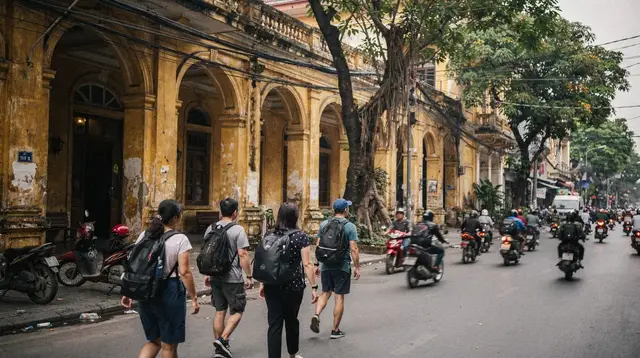
| Walking tour | Mode of movement | On foot only, so the radius is tighter |
| --- | --- | --- |
| Vintage jeep tour | Mode of movement | Wider radius covered faster, open-air vehicle |
| --- | --- | --- |
| Cyclo tour | Mode of movement | Slow, traditional pace through the same core streets |
| --- | --- | --- |
| Motorbike-based tours | Mode and often time of day | Can range further, sometimes into the evening |
| --- | --- | --- |
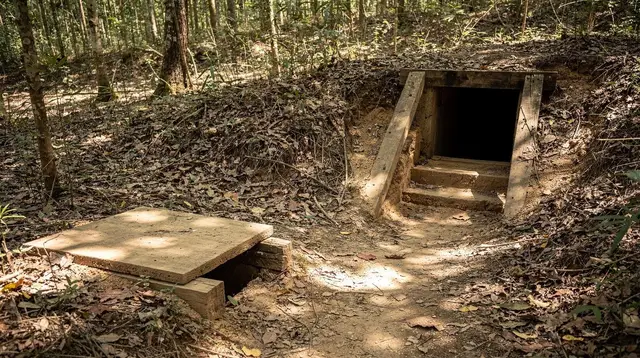
| Cu Chi Tunnels tour | Destination, not the city | Leaves the city entirely for the tunnel network north-west of town |
The pattern across nearly every row is that the destination barely changes; what changes is the vehicle, the time window, or the pace. Once that is clear, choosing between them becomes a question of preference rather than research: walk if the heat and crowds do not bother you, ride if they do, and pick a private option over a group one if you would rather set your own pace than follow someone else’s timetable.
Formats worth knowing about
Beyond the standard coach-and-guide format, a handful of variants are popular enough to mention by name. A private tour covers the same anchors with a guide and vehicle reserved for one travelling party, useful for anyone travelling with young children, older relatives, or simply a preference for flexibility.
A night tour reshuffles the same idea into an evening version, trading market stalls and museum queues for lit-up landmarks and rooftop views. And travellers arriving on a short stopover, whether from a flight connection or a cruise call at Phu My port, often look specifically for a layover-friendly half-day version built around the same District 1 core but timed against a return flight or ship departure.
book the standard version of this Ho Chi Minh City sightseeing route if the classic mix of palace, cathedral, post office and market matches what you are after, or choose the shorter four-hour sightseeing option when time is the constraint rather than interest.
Travellers who would rather spread the same central sights over a slower morning can go with the half-day highlights format instead, and anyone who wants the open-air, photo-friendly version can cover the same route in a vintage army jeep.
Getting the timing right
Because the classic route depends on moving between stops in the open air — crossing the plaza outside the Reunification Palace, walking the short block between Notre-Dame Cathedral Basilica and the Central Post Office, then finishing amid the covered aisles of Ben Thanh Market — the time of day matters almost as much as the stop list itself. Morning departures are the default choice for a reason: the light is softer for photos, the plazas around the cathedral and the palace carry fewer other tour groups, and the market’s stalls are at their freshest before midday trade picks up.
Afternoon and evening versions exist as well, and they are not worse, only different: they trade a cooler start for a market that has already sold through some of its produce, and for warmer light on the walk between stops. Neither version changes which buildings appear on the route. What changes is how comfortable the walking feels and how crowded each plaza is when the group arrives, which is worth weighing against personal tolerance for heat and crowds rather than treating one departure time as objectively correct.
What to bring, and what the tour does not try to do
The classic tour is a looking-and-walking format rather than a hands-on one. Most of its anchor sights — the Reunification Palace, the cathedral, the post office — are viewed from outside or toured briefly rather than explored in depth, and Ben Thanh Market is generally the one stop where the pace slows enough to browse. Comfortable shoes matter more than anything else packed for the day, since even the compact District 1 core involves several blocks of pavement strung between stops, often without much shade.
What the format does not include, by design, is unhurried time at any single site. Its stops are chosen because they are recognisable and photogenic within a fixed window, not because the itinerary allows for lingering. Travellers who want more than a quick pass — a proper look at the Reunification Palace’s history, or an unrushed browse through Ben Thanh’s stalls — are better served treating the classic tour as an orientation lap and coming back independently afterwards. That is easy to arrange, since every stop on the route sits within walking distance of the others once a first pass has shown where they are.
Combining the tour with a river outing
Because the classic route already runs close to the Saigon River without actually going on it, some travellers extend rather than end the day at Ben Thanh Market. An afternoon or evening boat trip on the Saigon River, paired with a double-decker bus loop reaches a waterborne view of the city that the walking-based classic tour cannot, and it complements the palace-cathedral-market sequence rather than repeating it. It works well as an add-on precisely because nothing about the river outing covers the same ground: it neither shortens the classic tour nor makes any of its stops redundant.
A route built to be a starting point, not the whole trip
It is worth restating what the classic tour is actually for, because the name invites a misunderstanding. Calling it “the Ho Chi Minh City tour” makes it sound comprehensive, and it is not: it is a fixed, efficient pass through a handful of District 1 landmarks that happen to sit close enough together to link in a few hours. Everything the format leaves out — the wartime detail, the neighbourhood texture of Cholon or District 4, the river itself, the day trips north-west and south-west of the city — is left out on purpose, not by oversight, because trying to fit all of it into one route would rush every part of it equally.
Seen that way, the classic tour earns its popularity less by being the single best thing to do in Ho Chi Minh City and more by being the fastest way to see the landmarks everyone already recognises from photographs, so that the rest of a stay can be spent on whichever neighbourhood, museum or day trip actually matches what a traveller came for.
Where the classic tour fits in a longer stay
For a first visit, the classic city tour is a reasonable way to spend part of a single day, usually paired with independent exploration of Dong Khoi or an evening in the Bui Vien area afterwards. It is not, on its own, a substitute for a full day of sightseeing, and it should not be confused with a broader one-day Ho Chi Minh City highlights itinerary, which typically adds a meal stop, a market browse and unstructured time that a fixed-route tour does not include.
Travellers building a longer stay around the city, rather than just a single day, tend to treat the classic tour as the orientation piece: it establishes where the main landmarks sit relative to each other, after which independent walks, a separate Cholon pagoda tour, or a day trip out to Cu Chi or the Mekong Delta make far more sense with that mental map already in place. Used that way, a few hours inside District 1 pay off well beyond the tour itself, since nearly every later outing from the city, whether north-west toward the tunnels or south-west toward the delta, starts from the same central streets this tour covers first.
FAQ: the classic Ho Chi Minh City tour
Does the classic city tour cover the whole of Ho Chi Minh City?
No. It covers a walkable core of District 1, the historic centre. Districts 3, 4 and 5, Binh Thanh and Thao Dien across the river are each their own outing, not stops on this route.
Is the War Remnants Museum part of the classic tour?
Some versions pass it or stop briefly, but a proper visit needs its own unhurried time and its own guide, which is why the museum has a separate guide on this site rather than being folded into the classic route.
Is this the same as the Cu Chi Tunnels tour?
No. Cu Chi lies well outside the city and is sold as its own half-day or full-day trip, often paired with the Mekong Delta or the Cao Dai Holy See. The classic tour stays inside the centre.
What is the difference between the classic tour and a half-day highlights tour?
They overlap heavily. A half-day highlights tour usually trims the route to fewer stops and a tighter pace; the classic tour is the fuller version of the same idea, built around the same central landmarks.
Can I do a version of this tour by motorbike or cyclo instead of walking?
Yes. The same central sights are covered by scooter-based tours and by traditional cyclo rides, which change the pace and the experience without changing which part of the city is shown.
Should I book a private or a group version?
Both exist for this route. A private option lets you set the pace and skip stops that do not interest you; a group option is usually cheaper and follows a fixed sequence.
Does the classic tour include Cholon or the Jade Emperor Pagoda?
Not usually. Cholon, the historic Chinatown, sits across Districts 5 and 6 and is far enough from the core sights that it is normally offered as its own pagoda-focused tour rather than tacked onto the District 1 route.
Ho Chi Minh City and District 1 Tours
Verified deep-linked GetYourGuide tours. Book through these links and we earn a small commission at no cost to you.
GetYourGuide does not provide a product photo for this activity — the image shows the meeting point, photographed by us.