Thao Dien and District 2: A Neighborhood Guide
Is Thao Dien part of District 1 or the historic center of Ho Chi Minh City?
No. Thao Dien sits on the far bank of the Saigon River, inside what used to be District 2 and is now part of Thu Duc City, a separate administrative area created in 2021. It is a newer, leafier, largely residential quarter, distinct in look and rhythm from District 1's colonial-era streets.
A Neighborhood on the Other Bank
Ask a first-time visitor to point to Thao Dien on a mental map of Ho Chi Minh City and many will guess it sits somewhere near Ben Thanh Market or the Reunification Palace, tucked into the same grid as the rest of the historic center. It doesn’t.
Thao Dien is on the far side of the Saigon River from District 1, a genuinely separate piece of the city that only reads as “close” because a bridge or a short ride makes the crossing painless. Geographically and administratively, it belongs to a different, much newer story than the one told by District 1’s colonial villas, market halls, and reunification-era monuments.
This is worth stating plainly because the confusion is common and it shapes expectations badly. Someone expecting Thao Dien to feel like an extension of the historic downtown — more of the same century-old streetscape, just quieter — will find something else entirely: a low-rise, leafy, unmistakably contemporary quarter that looks and functions like a different city altogether. Understanding why requires a quick detour into how the map itself has changed.
From District 2 to Thu Duc City
Until 2021, the area containing Thao Dien was officially District 2, one of several outer districts ringing the older core of Ho Chi Minh City. That year, District 2 was merged with District 9 and Thu Duc District to form a single new administrative unit, Thu Duc City. The old district numbers disappeared from the map, but the neighborhood names inside them didn’t — Thao Dien, An Phu, and the other wards people already used in conversation kept their identities, because that’s how residents, taxi drivers, and delivery apps actually navigate the city. In everyday speech, “Thao Dien” and “District 2” are still used almost interchangeably, even though District 2 hasn’t existed as a formal unit for several years.
That administrative history matters for one practical reason: it explains why Thao Dien reads as unrelated to the historic center rather than as one of its neighborhoods. District 1, District 3, and the old Cholon core across District 5 and District 6 were built up over the nineteenth and twentieth centuries as the functional heart of the city — administration, trade, religious life, and later the reunification-era government buildings.
Thao Dien, by contrast, developed much later, largely as the city expanded outward and as foreign residents, international schools, and newer housing developments concentrated on that side of the river. The two areas share a city but not a timeline.
What the Neighborhood Actually Looks Like
Where District 1 is dense, mid-rise, and increasingly vertical around towers like Bitexco, Thao Dien is spread out and green. Streets are narrower and quieter, lined with trees, walled villas, and a steady mix of newer apartment blocks and low houses converted into cafes, yoga studios, design shops, and restaurants.
There’s no single dominant landmark the way Ben Thanh Market’s clock tower anchors the center, and that’s part of the point — Thao Dien wasn’t built around a market square or a colonial administrative core, so it doesn’t organize itself the same way. Instead it reads as a patchwork of pockets: a cluster of restaurants along one lane, a run of boutique studios along another, riverside paths that open onto the water in a few specific spots.
The neighborhood is closely associated with Ho Chi Minh City’s foreign resident community, and that association is visible rather than incidental. International schools sit among the residential streets, menus lean toward brunch spots and specialty coffee alongside Vietnamese kitchens, and a noticeable share of the shopfronts are aimed at long-term residents rather than day-tripping visitors — a dry cleaner, a pet groomer, a furniture showroom, next to a wine bar or an art gallery. It’s a texture closer to a suburban expat enclave in another Southeast Asian capital than to anything in the old French Quarter streets around Notre-Dame Cathedral.
None of this makes Thao Dien “less Saigon” — the food carts, motorbikes, and roadside plastic stools are still very much present between the villas — but it does mean the neighborhood’s character comes from residential life rather than from monuments, museums, or ticketed sights. Visitors arriving with a checklist mentality, expecting a district-scale version of a single attraction, tend to be disappointed; visitors arriving to simply spend a slow afternoon wandering, eating, and people-watching generally aren’t.
The Riverside Setting
One thing Thao Dien does share with the far bank is the river itself. The Saigon River curves around the ward, and several of its most pleasant stretches — walking paths, waterside restaurants, a scattering of outdoor bars — sit directly on the water, facing back toward the District 1 skyline and, further along, toward Binh Thanh and its cluster of newer towers.
This river-facing position is a large part of Thao Dien’s appeal: rather than looking inward at itself, the neighborhood looks across at the city it’s technically part of but visually separate from, which produces some of the more striking skyline views available anywhere in Ho Chi Minh City, especially toward evening.
That river frontage is also why boat traffic and waterside development have become such a visible feature of the area over the past several years, with newer restaurants and social spaces built specifically to take advantage of the outlook. It’s a different relationship with the water than the working, transit-oriented feel of the river closer to central District 1 — here the river is scenery and lifestyle first, transport second.
Evenings on the Water
The river view described above works in both directions. A number of dinner cruises operate on the Saigon River after dark, and from the deck of one of these boats, Thao Dien’s lit-up waterfront restaurants and low-rise skyline become part of the scenery rather than the vantage point — a reversal of the outlook most visitors get used to from the ward’s own riverside bars.
For anyone staying in or near Thao Dien who wants a different angle on the river at night, a Saigon River dinner cruise is an easy add to an evening that might otherwise stay entirely on land, and a smaller-format boutique cruise on the same river suits travelers who’d rather skip a larger group setting. Either option pairs naturally with a Thao Dien evening: dinner or drinks in the ward first, then a short ride to the departure point in District 1 for the cruise itself, or the reverse order for those coming from the center.
Food, Coffee, and a Different Pace
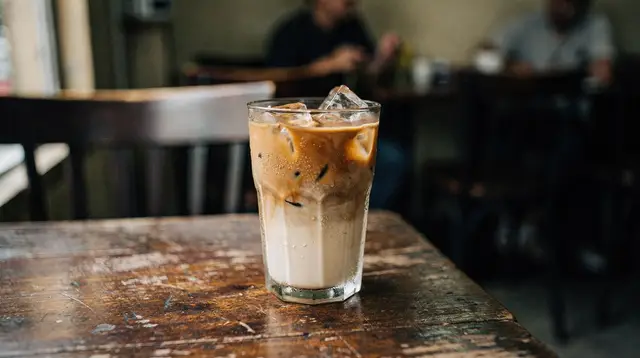
If there’s a single activity most associated with a visit to Thao Dien, it’s eating and drinking rather than sightseeing. The neighborhood has built a reputation as one of the city’s most concentrated pockets of specialty coffee shops, brunch cafes, and international restaurants, sitting alongside long-running Vietnamese kitchens that predate the area’s more recent transformation. It’s a natural complement to the more classic Vietnamese coffee culture found elsewhere in the city, but with a noticeably different atmosphere — more sit-down, more design-conscious, more oriented toward a lingering visit than a quick stop on a motorbike.
For a structured introduction to that scene, a guided walk through the neighborhood’s food spots removes the guesswork of which lane hides which kitchen. The Thao Dien food tour that pairs a walk through the ward with a ride on the city’s newer metro line is built around exactly that contrast — moving between the transit infrastructure connecting Thao Dien to the rest of the city and the food culture that has grown up inside it.
For visitors who’d rather combine the neighborhood’s look and feel with a bit of photography guidance, a walking tour through Thao Dien built around its more photogenic corners covers similar ground at a slower, more visual pace, useful for anyone who wants a clear sense of the neighborhood’s layout before wandering it independently afterward.
Shopping, Studios, and Slower Attractions
Beyond food, Thao Dien has become a recognized center for small, independent design and lifestyle shopping — homeware studios, local fashion labels, art galleries, and wellness spaces such as yoga and pilates studios, many run out of converted villas rather than purpose-built retail units. This is a different shopping experience from the market-stall bargaining of Ben Thanh Market or the tailoring shops of central District 1; it tends to be fixed-format, boutique, and aimed at browsing rather than negotiating.
The pace of a visit here is generally slower and less itinerary-driven than a morning spent moving between the War Remnants Museum and the Reunification Palace in the center. There’s no equivalent must-see monument pulling visitors through on a schedule, so a Thao Dien visit tends to unfold more organically: a coffee, a wander through a few shopfronts, lunch, a walk along the river, maybe a stop at a gallery, in whatever order feels right on the day.
How Thao Dien Fits Into a Wider Visit
The practical question most visitors eventually ask is how to fit Thao Dien around everything else the city has to offer, given how different it feels from the center. The honest answer is that it works best as a deliberate contrast rather than an add-on squeezed between other sights. A morning spent among the density and history of District 1 or the market lanes of Cholon, followed by an afternoon or evening in Thao Dien, gives a much fuller sense of how varied Ho Chi Minh City actually is than staying on one side of the river the whole time.
For anyone deciding where to stay in the city, Thao Dien is also a real option, not just a place to visit — its quieter streets and villa-style guesthouses appeal to travelers who want distance from the noise of Bui Vien or the density of central hotels, at the cost of being a short ride from most of the city’s headline sights.
Getting between the two sides is straightforward using the same ride-hailing apps and taxis that cover the rest of the city, and general orientation on getting around Ho Chi Minh City applies here as much as anywhere else — Thao Dien’s internal layout is simply more spread out and less grid-like than the center’s.
Evenings are a particular strength of the area, especially for anyone who has already covered the rooftop bar scene closer to District 1 and wants a change of setting: Thao Dien’s riverside restaurants and bars offer a different, more low-rise view back across the water, trading the vertical skyline panorama for a closer, quieter waterfront outlook.
Visitors building a one-day highlights itinerary around the center’s classic sights won’t usually have room for a proper Thao Dien detour, and that’s fine — it’s better treated as its own half-day or evening than squeezed into a single packed day of monuments. Travelers with a second or third day in the city, or those simply looking for a slower counterpoint to the pace of the historic core, are the ones who tend to get the most out of crossing the river to see it.
Using Thao Dien as a Base for Day Trips
Because Thao Dien attracts a share of visitors staying longer in Ho Chi Minh City rather than passing through for a couple of nights, it also works well as a starting point for trips beyond the city itself, not only for sights inside it. The coast to the south-east and the desert landscape to the north-east are both reachable as full-day or overnight excursions, and neither requires backtracking through the center first, since transport typically collects guests directly from their accommodation.
Vung Tau, the seaside city with its hilltop Christ statue, is a common choice for visitors who want a beach and sea air without committing to an overnight stay elsewhere, and a private guided tour to Vung Tau keeps the day flexible rather than tied to a fixed group schedule. Further along the coast, Mui Ne and its white and red sand dunes make for a longer but still manageable trip, and a private car and driver to Mui Ne is the more comfortable option for a route that covers real distance along the coastal road. Both trips are detailed further in the dedicated guides to Vung Tau and to choosing a beach near Saigon, which cover timing and what to expect in more depth than fits here.
None of this requires giving up a Thao Dien base — most transport for these excursions can pick up from hotels and serviced apartments on either side of the river, so the choice of where to stay in the city doesn’t have to be weighed against the choice of where to go outside it.
The Core Distinction, Restated
The single most useful thing to carry away from any description of Thao Dien is the geography, because it’s the detail most often garbled in casual conversation and even in some travel writing: this is not a neighborhood inside the historic center, not a sibling of District 1 or District 3, and not a leftover pocket of old Saigon.
It’s a newer, residential, river-facing quarter on the opposite bank, shaped by decades of more recent development and by the international community that has settled there, now folded administratively into Thu Duc City rather than standing as its own district. Keeping that distinction straight makes the rest of a visit easier to plan — Thao Dien as a deliberate, separate stop, rather than a confusing extension of the center that never quite matches what the map promised.
Ho Chi Minh City by Neighborhood
Verified deep-linked GetYourGuide tours. Book through these links and we earn a small commission at no cost to you.
GetYourGuide does not provide a product photo for this activity — the image shows the meeting point, photographed by us.