Evening Motorbike Street Food Tour in Ho Chi Minh City
What is the evening motorbike street food tour in Ho Chi Minh City?
It is an after-dark food outing where a local guide drives a motorbike and the visitor rides as a passenger, moving between a series of local eating spots across the city. The focus is on the food and the ride together, not on driving, and not on a single neighborhood covered on foot.
Once the heat of the day breaks and the street kitchens light their gas rings, Ho Chi Minh City turns into a different place to eat in. The evening motorbike street food tour is built for exactly that shift: a local guide drives, the visitor rides behind as a passenger, and the pair moves from one working eatery to the next across the city rather than staying put in a single block. It is one of the most direct ways to eat like the city actually eats, without trying to decode a menu, a location, or a queue on your own.
What actually happens on the tour
The format is simple and it stays simple on purpose. A guide, usually on a scooter built for two, picks up the visitor in the early evening and rides through a sequence of eating spots picked for how they are used by locals rather than for how they photograph. The visitor does not drive. Being a passenger is the entire point of the format: it removes the single hardest part of exploring Ho Chi Minh City after dark for a first-time visitor, which is navigating dense, fast-moving traffic while also trying to find a specific noodle stall down an unmarked alley.
Between stops, the ride itself becomes part of the experience. Riding through neon-lit streets, past pavement kitchens and folding plastic stools, gives a sense of the city’s rhythm that a taxi window or a walking route rarely delivers. Guides tend to keep a measured pace, stopping often, since the aim is comfort and conversation rather than speed. A helmet is standard equipment and should be worn at every stage of the ride, day or night.
At each stop the pattern repeats: park, sit, taste, talk, move on. Guides usually explain what is being eaten, how it is made, and why a particular stall has kept its regulars for years, filling in the kind of local context that a solo visitor would otherwise miss entirely. This is where the tour earns its value over eating the same dishes alone — not just the food itself, but the explanation of it.
How this differs from other food and motorbike experiences
It helps to place this tour against two things it often gets confused with, because the confusion is common and it changes what a visitor should book.
The first is the District 1 walking food tour. That tour covers a compact, central patch of the city on foot, which suits a shorter window of time and a visitor who prefers not to get on a motorbike at all. The motorbike tour, by contrast, ranges more widely — stringing together stops in District 1, further-out residential streets, and sometimes across the river, in a way a walking route simply cannot manage in one evening.
The second is the motorbike tour built around the ride rather than the food — an evening Vespa tour or a night-focused sightseeing route where the point is seeing the city lit up from the back of a scooter, with food, if it appears at all, treated as a minor stop rather than the reason for the outing.
This page is the opposite arrangement: food is the spine of the evening, and the motorbike exists purely to connect one eating spot to the next. If what a visitor actually wants is the thrill of the ride itself, a dedicated motorbike-focused tour, not this one, is the better match — see the comparison in self-drive versus chauffeured motorbike for how those options differ.
It is also worth separating this from any tour where the visitor drives. Vietnam’s rules on motorbike licensing for foreign visitors are strict, and renting a bike to drive yourself is a genuinely different undertaking with its own insurance and legal considerations — covered in renting a scooter and motorbike license. On the tour described here, none of that applies: the visitor never touches the handlebars.
What to expect from the food
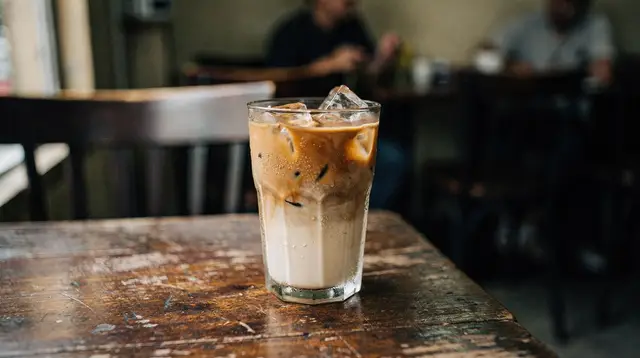
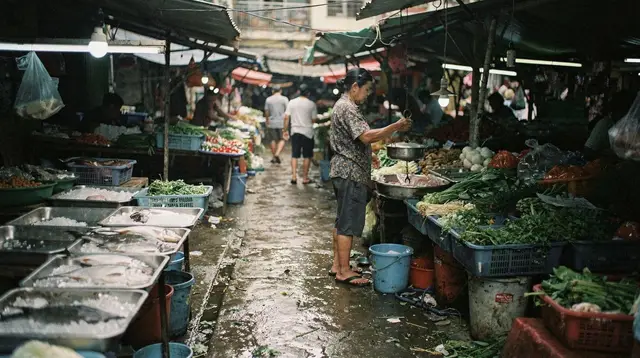
Southern Vietnamese street food is built around small, fast, cheap dishes eaten standing or perched on a low stool, and an evening tour is a good way to sample several of those dishes back to back rather than committing to one restaurant and one meal. Expect a working cross-section of the repertoire rather than a fixed printed menu: rice and noodle dishes, grilled meats, savoury pancakes, and the sweet iced drinks the city is known for. Guides tend to vary the exact stops from night to night depending on what is fresh, what is busy, and what they personally trust that evening — a flexible sequence rather than a script.
For background on the dishes likely to turn up, iconic southern Vietnamese dishes is a useful primer, and Vietnamese coffee culture covers the sweet, strong, condensed-milk coffee that often closes out an evening like this. If bread and pork are more your interest than a moving feast, the banh mi sandwich tour is a narrower, foot-based alternative.
Street food in Ho Chi Minh City has an excellent reputation for freshness because turnover is fast and ingredients are cooked to order in full view, but a first-time visitor with a sensitive stomach may still want to read street food safety in Ho Chi Minh City before diving in on their own later in the trip. On a guided tour, the guide’s job includes steering the group toward stalls they already trust, which is one of the quieter benefits of going with a local rather than wandering solo.
Choosing between the food-focused motorbike tours
Several operators run a version of this format, and they differ mainly in tone rather than in structure. Some lean toward a straightforward, high-volume tasting circuit; others build in a Michelin-guide angle, following stalls that have been recognised in that guide’s Bib Gourmand or selected lists; a few add live music at one of the stops for a more social evening. None of these variations change the basic shape of the experience — guide drives, visitor rides, food is eaten along the way.
| Style of evening tour | What sets it apart |
|---|---|
| Classic street food tour by motorbike | Broad, guide-picked circuit of everyday local eateries |
| --- | --- |
| Multi-tasting motorbike food tour | Structured around a longer sequence of smaller tastings |
| --- | --- |
| Michelin-guide-linked motorbike tour | Stops chosen from stalls with Michelin guide recognition |
| --- | --- |
| Michelin food tour with live music | Adds a live-music stop to the same Michelin-linked format |
| --- | --- |
| Vespa food tour with live music | Vespa-specific version of the same idea, same passenger format |
For a broad first-timer’s version of the format, an evening street food tour by motorbike covers the essentials without extra framing. Visitors who want a longer, more structured tasting sequence tend to prefer a multi-stop motorbike tasting tour built around a running series of small dishes. Those drawn to stalls with outside recognition can look at a motorbike tour built around Michelin-listed street food stalls, which follows the same passenger format but curates its stops differently.
More versions worth comparing
Beyond the classic circuit and the Michelin-linked route already covered above, operators have built several other spins on the same passenger-and-guide format, and it is worth knowing they exist before settling on a booking.
Some tours lean into the after-dark mood more deliberately, billing themselves as a hunt through the city’s quieter, less-signposted corners rather than a straightforward crawl of well-known stalls. An after-dark secret food hunt by motorbike is built around that idea — the destination stalls matter less than the sense of discovery along the way. A close cousin is a hidden-gems motorbike food tour, which frames the same evening around stalls a first-time visitor would be unlikely to find alone.
Others push the timing later still. A midnight street food tour by motorbike starts once the standard evening tours have already wrapped up, useful for a visitor whose schedule only opens up late or who simply wants to see the city at its quietest and most nocturnal. On the other end, a nighttime street food tour by motorbike covers broadly the same early-evening window as the classic version, with its own guide roster and stop list.
Dietary needs get their own variant too. Rather than asking a general guide to improvise around meat, fish sauce, and seafood on the spot, a vegan-focused street food and local beer tour by motorbike builds the whole route around plant-based stops from the start — a more reliable option for a strict vegan than flagging restrictions to a standard tour and hoping the route can bend around them.
Finally, for a visitor who is undecided between two wheels and four, a street food tour offered by motorbike or by car keeps the same guide-led, multi-stop structure but lets the visitor choose the vehicle — useful for anyone travelling with someone who would rather not ride pillion at all, without giving up the guided, multi-stop format that makes this kind of evening work.
None of these variations changes the underlying shape described earlier in this guide. They differ in timing, in how the stops are framed, or in how strictly they cater to diet — not in the basic idea of a guide who drives, a passenger who eats, and a city that keeps moving past in the dark between stops.
Timing the tour into a full day in the city
An evening food tour slots naturally onto the back of a day spent sightseeing rather than competing with it, since it starts once the day’s heat has broken and runs into the night. A common pattern is a morning or early-afternoon visit to central sights — Reunification Palace, Ben Thanh Market, or the Jade Emperor Pagoda — followed by a break back at the hotel before the evening pickup, so the visitor is not trying to sightsee and eat on the same tired legs.
Visitors staying near Thao Dien, across the river from the historic center, or planning a sunset stop at the Bitexco Skydeck or one of the city’s rooftop bars before the tour begins, should factor in Ho Chi Minh City traffic when timing the pickup — a guide arriving by motorbike can usually thread through congestion faster than a car, but a pickup window with some buffer is safer than one booked back-to-back against another activity. Getting around the city in general, including how most visitors move between neighborhoods before an evening tour even starts, is covered in getting around Saigon.
Practical notes before booking
A few things are worth knowing going in, all of them about the format rather than the fine print of any single listing.
First, this is a passenger experience from start to finish. Anyone hoping to drive should look elsewhere; anyone nervous about riding pillion in Ho Chi Minh City’s traffic should know that professional guides on these routes ride at a deliberately careful, stop-and-go pace rather than weaving at speed, and that riding with an experienced local is generally considered safer than trying to walk the same distance alongside the same traffic after dark.
Second, this is an evening activity built around darkness itself — the city’s night market energy, the lit-up stalls, the cooler air. It does not overlap with a daytime sightseeing itinerary and works well slotted in after an afternoon spent at sights such as the War Remnants Museum or a stroll through Cholon, leaving the evening free for eating.
Third, dietary needs matter more here than on a sit-down restaurant meal, since the route often depends on what a handful of specific stalls are serving that night. A visitor who avoids pork, seafood, or fish sauce — all central to southern Vietnamese cooking — should raise this with the operator ahead of time rather than assume the guide can improvise a full alternative circuit on the spot.
Fourth, this tour is not a replacement for exploring on foot. Pairing it with a walking-based outing such as a Cholon street food tour or the District 1 walking route gives a fuller picture: the motorbike evening for range and variety, the walking tour for a slower, closer look at one neighborhood.
For those who want a bit more atmosphere layered onto the same basic format, a Vespa-based food tour with live music pairs the same passenger-and-guide structure with a stop built around music rather than food alone. Whichever version is chosen, the underlying shape does not change: someone else drives, the city moves past in the dark, and the meal keeps arriving one small plate at a time.
Frequently asked questions about the evening motorbike street food tour
Do I drive the motorbike myself?
No. A local guide drives for the entire tour, and the visitor rides as a passenger. Tours where the visitor drives, whether self-guided or rented separately, are a different kind of activity and are not what this format offers.
Is this the same as the District 1 walking food tour?
No. The walking version stays on foot within a compact central area and suits a shorter, closer-focus outing. The motorbike tour ranges further across the city in a single evening, reaching eateries a walking route would not fit in.
Is this the same as a motorbike tour built around the ride itself?
No. Some evening motorbike tours in Ho Chi Minh City are framed around the driving experience or the night views, with food as a minor add-on. This tour is the reverse: the motorbike is transport between food stops, and the eating is the main event.
Is it safe to ride as a passenger at night?
Riding pillion with an experienced local guide is a normal and generally safe way to move through Ho Chi Minh City’s traffic after dark, and guides on food-focused tours tend to ride at a deliberate, stop-heavy pace rather than for speed. A helmet is provided and should be worn throughout.
What kind of food is included?
Expect a working sample of southern Vietnamese street food — rice and noodle dishes, grilled or fried snacks, and sweet drinks — chosen by the guide rather than fixed to a printed menu, and varying somewhat from night to night.
Is this tour suitable for vegetarians?
Southern Vietnamese street food relies heavily on meat, seafood, and fish sauce, so vegetarians should mention dietary needs to the operator before booking rather than expect the standard circuit to adapt on its own.
Which part of the city does the tour cover?
Routes generally link stops across several central and inner districts rather than staying confined to one neighborhood, which is what distinguishes it from a single-area walking food tour.
Street Food Tours and Vietnamese Cuisine Tastings
Verified deep-linked GetYourGuide tours. Book through these links and we earn a small commission at no cost to you.
GetYourGuide does not provide a product photo for this activity — the image shows the meeting point, photographed by us.