Cat Tien National Park: Jungle, Wildlife and Trails Inland from Saigon
What is Cat Tien National Park and how is it different from Can Gio?
Cat Tien is a lowland tropical forest park inland to the north of Ho Chi Minh City, known for rainforest trails, primates, birdlife and night walks. It is a UNESCO Biosphere Reserve, but it is a different landscape from Can Gio's coastal mangrove and from the Mekong Delta's waterways, and the three are not combined in a single outing.
A different kind of green, inland from the city
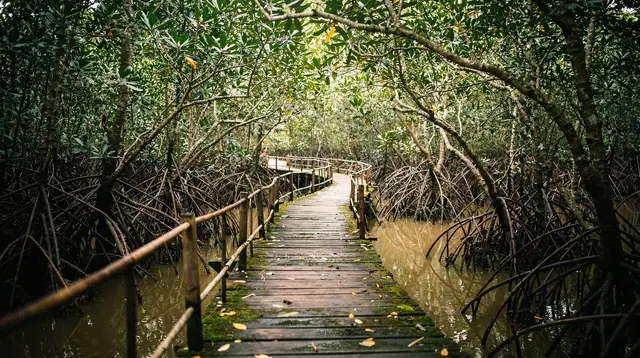
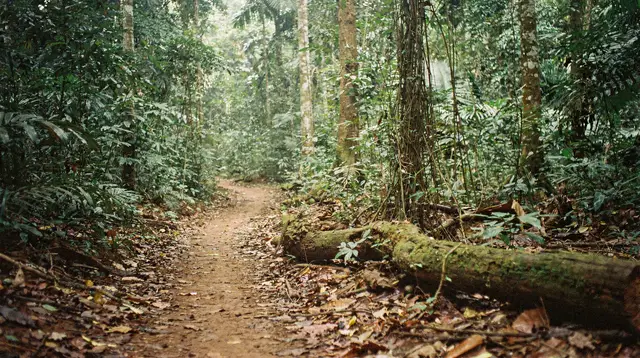
Most day trips out of Ho Chi Minh City head for water: the canals of Can Gio, the rivers and orchards of the Mekong Delta, or the coast beyond Vung Tau. Cat Tien pulls in the opposite direction. It sits inland to the north of the city, on rising ground that has never been drained, farmed flat or turned over to rice, and what survives there is genuine lowland tropical forest — tall canopy, tangled understorey, a soundscape of insects and birds that has nothing in common with the open sky of a river cruise or the wind-bent mangrove of the coast.
That difference in terrain is the whole reason to come. Where Can Gio is a Biosphere Reserve built on replanted mangrove and brackish tidal creeks, and the delta is defined by its rivers and floating markets, Cat Tien is a forested massif with walking trails, wildlife encounters and a slower, quieter rhythm. It happens to share Can Gio’s international recognition — both are UNESCO Biosphere Reserves — but the resemblance stops there. Nobody visits both in the same outing, and this guide does not try to make them sound alike.
Why Cat Tien is not Can Gio, and not the delta either
It is an easy confusion for a first-time visitor scanning a list of day trips from Ho Chi Minh City: three green destinations, two of them with “nature reserve” somewhere in the description. Untangling them matters, because each is reached by its own road, in its own direction, and each rewards a different kind of day.
Can Gio is coastal. It is mangrove, mudflats and mangrove-lined creeks, reached in under an hour and a half from the city centre, and its wildlife highlight is a resident troop of macaques rather than deep forest species. The Mekong Delta is river country: a flat, intensely cultivated web of channels, orchards and floating markets stretching south-west toward Can Tho and the Cambodian border. Cat Tien belongs to neither category. It is upland, forested, and structured around trails rather than boats or boardwalks. Its wildlife — primates, forest birds and other lowland species encountered on guided walks — is glimpsed among trees, not spotted from a sampan.
The distance reinforces the point. Cat Tien lies roughly 150 km from central Ho Chi Minh City, further than Can Gio and on an entirely different route, one that runs inland rather than toward the coast or the delta. Trying to fold a Cat Tien visit into a Can Gio afternoon or a delta day trip simply does not work logistically, and it would waste the part of Cat Tien that makes it worth the drive: the unhurried walking, the dawn and dusk activity, and the night walks that reveal a side of the forest daytime visitors miss entirely.
What there is to do inside the park
Cat Tien’s appeal is built around movement through the forest rather than a single headline sight. Guided walking trails of varying length wind through the lowland canopy, most departing from the park headquarters area, and a knowledgeable local guide makes a real difference here — spotting movement in the canopy or identifying a call in the understorey is a skill, not luck.
The park’s best-known feature is Bau Sau, or Crocodile Lake, reached along a trail through the forest on foot or by bicycle before a final stretch by boardwalk or small boat over the wetland itself. It is the classic half-day or full-day objective for a first visit, valued for its birdlife along the water’s edge and its resident crocodile population, and it gives a visitor a genuine cross-section of the park’s habitats in one outing — dry forest, then wetland, then open water.
Night walks are the other signature activity, and arguably the more distinctive one. Cat Tien’s forest changes character after dark: nocturnal mammals become active, insects and amphibians take over the soundscape, and a guide with a spotlight can pick out eyeshine and movement invisible in daylight. It is a slower, quieter kind of wildlife-watching than a coastal boat trip, built on patience rather than a guaranteed sighting.
Cycling is a further way to cover ground inside the park, particularly along the flatter tracks near the headquarters, and it suits visitors who want to explore more of the forest edge without committing to a long trek. Some operators combine a Cat Tien visit with a countryside cycling route on the approach to the park, which is a pleasant way to see the transition from farmland to forest before the wildlife-watching itself begins.
A trip that rewards more than a rushed day
Because Cat Tien’s best wildlife activity clusters around dawn, dusk and after dark, and because the drive out is itself a real commitment, many visitors weigh an overnight stay near or inside the park against a single long day trip from the city. Neither is wrong — it depends on how much of the park you want to see and how much time you have in southern Vietnam overall — but it is worth deciding in advance which format you want, since the two lead to different itineraries and different guided programmes once you arrive. Anyone still weighing that decision might find it useful to read how many days to plan for southern Vietnam before locking in dates.
Overnight visitors get access to both an early trail before the heat builds and a night walk the same evening, plus a second morning for Bau Sau or another trail, without the day being bookended by hours on the road. A single day trip still covers the park’s core, typically a walking trail and Bau Sau, but leaves less room for the after-dark activity that many visitors rate as the highlight.
Getting there and what the approach looks like
The road to Cat Tien runs north from Ho Chi Minh City, a route entirely separate from the roads used for Cu Chi, Vung Tau or the Mekong Delta towns. Most visitors travel by private car, a shared minibus, or as part of an organised tour that handles the transfer, the park permits and the guiding in one package — independent access to trails and guides inside the park is far more straightforward with a local operator than arranged alone.
The drive itself passes through a stretch of Dong Nai province countryside before the road climbs gently and the forest closes in, and the change in scenery — from open farmland to unbroken canopy — is itself part of what marks Cat Tien as a different kind of destination from the coastal or delta trips that dominate this site’s other day trips. It is genuinely a different region of southern Vietnam, not simply a further-flung version of Can Gio.
Cat Tien versus Can Gio and the Mekong Delta at a glance
| Cat Tien National Park | Can Gio | Mekong Delta | |
|---|---|---|---|
| Landscape | Lowland tropical forest, inland | Coastal mangrove, tidal creeks | Rivers, canals, orchards |
| --- | --- | --- | --- |
| Direction from Saigon | North, inland | South-east, coastal | South-west |
| --- | --- | --- | --- |
| Signature activity | Forest trails, Bau Sau, night walks | Mangrove boat trips, monkey encounters | Floating markets, river cruises |
| --- | --- | --- | --- |
| UNESCO status | Biosphere Reserve (2001) | Biosphere Reserve (2000) | Not a Biosphere Reserve or World Heritage Site |
| --- | --- | --- | --- |
| Typical trip length | Full day or overnight | Half day or full day | Full day, two days, or longer |
Booking a Cat Tien trip from Ho Chi Minh City
A handful of operators run Cat Tien as a dedicated departure from Ho Chi Minh City, in day-trip and overnight formats, with or without extras like cycling or a Crocodile Lake extension. For a first visit that covers the essentials without an overnight stay, the Nam Cat Tien National Park day trip from Ho Chi Minh City is built around exactly that scope.
Visitors who want the fuller experience — an evening in the forest, a night walk, and a proper morning at Bau Sau — are better served by an overnight format such as the two-day Cat Tien National Park tour from Ho Chi Minh City, which builds in the after-dark activity that a single day trip has to skip.
For visitors who want a private vehicle and their own pace rather than a fixed group departure, the private car and driver option for Nam Cat Tien National Park covers the transfer while leaving the on-the-ground programme flexible.
Those keen to see Bau Sau specifically, rather than treat it as one stop among several, can look at the Cat Tien National Park tour built around Crocodile Lake, which puts that wetland trail at the centre of the day.
Where Cat Tien fits in a wider southern Vietnam trip
Cat Tien sits comfortably as one component of a longer itinerary rather than the sole reason to extend a stay in the south. Visitors building a broader loop through the region often pair it with time in Ho Chi Minh City itself, a separate excursion to Cu Chi and Tay Ninh, and a multi-day swing through the Mekong Delta toward Can Tho — three distinct regions that, taken together, give a much fuller picture of the south than any single day trip could.
Anyone mapping out that kind of loop may find the grand tour of south Vietnam guide or the broader planning guide for city, delta and coast useful starting points, alongside a look at multi-day tours combining Saigon and the Mekong Delta.
Season is worth a thought too. Southern Vietnam’s rainfall pattern — short, heavy afternoon downpours in the wet season rather than all-day rain — applies just as much to Cat Tien’s forest trails as to the city, and both the wet season and dry season guides are worth checking before booking, since trail conditions and birdlife activity shift with the rains.
Birdwatchers in particular should note that this page deliberately leaves detailed birding coverage of the delta’s wetlands to its own Mekong Delta bird-watching guide; Cat Tien’s birdlife is a forest assemblage, distinct from the delta species that guide covers.
For visitors curious about the coastal Biosphere Reserve that Cat Tien is most often confused with, the dedicated Can Gio mangrove biosphere reserve guide and the Can Gio monkey island wildlife guide lay out that very different landscape in full, and are the right place to go if mangrove, tidal creeks and monkey encounters — rather than lowland forest and night walks — are what you are actually after.
Those weighing up transport logistics for the whole region can also check getting to the Mekong Delta and coast by bus, van or boat, and travellers arranging entry to the country ahead of any of these trips should confirm current requirements on the Vietnam visa and e-visa guide.
Cat Tien National Park: frequently asked questions
Is Cat Tien National Park the same as Can Gio?
No. Can Gio is a replanted mangrove biosphere reserve on the coast near Ho Chi Minh City, reached through low, brackish wetland. Cat Tien is inland lowland tropical forest, further from the city, with a completely different terrain, canopy and wildlife. The two are separate destinations and separate trips.
Is Cat Tien part of the Mekong Delta?
No. The Mekong Delta lies to the south-west of Ho Chi Minh City and is defined by its rivers, canals and floating markets. Cat Tien sits inland to the north, on higher, forested ground with no delta waterways, and its wildlife and scenery have little in common with the delta.
Can I combine Cat Tien with a Can Gio or Mekong Delta trip in one day?
It is not practical. The three areas lie in different directions from Ho Chi Minh City, each involving its own stretch of road, and Cat Tien’s appeal is its forest trails and early or late wildlife activity, which reward unhurried time rather than being squeezed alongside a coastal or river excursion.
What kind of wildlife can be seen at Cat Tien?
The park is known for primates, a wide range of forest birdlife, and other lowland rainforest species typically encountered on guided walks, especially around dawn, dusk and on organised night walks. Sightings vary by season, time of day and luck, so it is best to treat any specific animal as a possibility rather than a guarantee.
Is Cat Tien a UNESCO World Heritage Site?
No. Cat Tien is recognised as a UNESCO Biosphere Reserve, a different designation that recognises the balance between conservation and sustainable use of the landscape. No site covered on this guide, including Cat Tien and Can Gio, is inscribed on the UNESCO World Heritage List; Vietnam’s World Heritage Sites lie further north, outside this region.
What is Bau Sau at Cat Tien?
Bau Sau, meaning Crocodile Lake, is a wetland area inside the park reached by a walking or cycling trail through the forest. It is one of the park’s signature outings, valued for its birdlife and its resident crocodile population, and is usually built into a half-day or full-day itinerary from the park headquarters.
Do I need to stay overnight to visit Cat Tien?
Cat Tien is far enough from Ho Chi Minh City, and its best wildlife activity concentrated enough around dawn, dusk and night walks, that many visitors choose an overnight stay near or inside the park rather than a single long day from the city. Tour operators offer both formats; which suits you depends on how much time you have and how much of the park you want to see.
How do I get to Cat Tien from Ho Chi Minh City?
Cat Tien is reached by road, typically by private car, minibus or an organised tour departing from central Ho Chi Minh City. It sits roughly 150 km from the city, on a different route from the roads used for Can Gio, the Mekong Delta or the south-eastern coast, and is usually visited as a dedicated trip rather than folded into another itinerary.
Can Gio Mangrove and Cat Tien National Park
Verified deep-linked GetYourGuide tours. Book through these links and we earn a small commission at no cost to you.
GetYourGuide does not provide a product photo for this activity — the image shows the meeting point, photographed by us.