Festivals and Public Holidays in Southern Vietnam (Beyond Tet)
Which festivals matter in southern Vietnam besides Tet?
The Mid-Autumn Festival, Reunification Day, the Hung Kings Commemoration, National Day and a handful of religious observances tied to Cao Dai and Buddhist calendars all shape the year around Ho Chi Minh City. Unlike Tet, most of them barely touch daily life for a visitor: shops stay open, tours run as scheduled, and the changes are more visible in decorations and street life than in closures.
I didn’t plan my first September in Ho Chi Minh City around a festival at all. I just happened to be walking down a side street off Nguyen Hue one evening and ran into a wall of paper lanterns, drums, and kids in cardboard lion costumes chasing each other down the pavement. Someone handed me a mooncake before I’d even asked what was going on. That was the Mid-Autumn Festival, and it taught me something I now tell every visitor who asks about the Vietnamese calendar: Tet is not the only festival here, and it is nowhere near the only one worth knowing about.
Tet, the lunar new year, gets its own page on this site, and for good reason — it is the one date that actually reshapes the city, closing family restaurants for days and filling every bus and train seat for weeks. Everything below is different. These are the festivals and holidays that give the year its rhythm in the south without derailing anyone’s itinerary the way Tet does.
The Mid-Autumn Festival
This is the one I’d point to first, because it’s genuinely fun to stumble into as a traveler. It follows the lunar calendar, so the actual date drifts between years, but it always lands in autumn. In the weeks before it, whole streets in Cholon and around Ben Thanh Market fill with lantern stalls — paper stars, tin fish, the works. On the night itself, lion dance troupes work their way through neighborhoods, drumming outside shops for tips, and mooncakes appear everywhere, from bakery counters to hotel lobby gift boxes.
Nothing about the Mid-Autumn Festival closes the city down. Restaurants stay open, tour departures run on schedule, and if you’re doing a river cruise around that time, you’ll likely see lantern displays on the water as a bonus rather than a disruption. If you want a way to see the city lit up for it, a Saigon River dinner cruise around that period pairs well with the mood, though the lantern displays themselves are a street-level, walk-around experience more than a boat one.
Two options that run on the water regardless of the date on the calendar are the Saigon River Premium Buffet Dinner Cruise and the Romantic Saigon River Dinner Cruise, both of which simply happen to look better than usual when the banks are lit up for the festival.
Reunification Day
Reunification Day is a national public holiday, and it means something different in Ho Chi Minh City than it does almost anywhere else in the country, since this is where the events it commemorates actually happened. Flags go up along the main boulevards, and there’s a noticeably festive, patriotic energy downtown, especially around the Reunification Palace itself.
I’d say this is one of the better days to actually visit the War Remnants Museum and the Palace, not because they’re doing anything special, but because the atmosphere in the surrounding streets adds context you don’t get on an ordinary Tuesday. It’s a public holiday, so some government offices close, but shops, markets, and tourist-facing businesses carry on as usual.
The Hung Kings Commemoration
This one surprises a lot of visitors because it’s a national public holiday, yet in the south it often passes almost unnoticed compared to how it’s marked further north. The Hung Kings are treated as the legendary founders of the Vietnamese nation, and the day is really about ancestry and national identity rather than a street celebration. In Ho Chi Minh City, expect a quiet public holiday: some offices closed, no particular disruption to tourism, and nothing like the buildup you’d see for Tet or even the Mid-Autumn Festival.
National Day
National Day is the other major patriotic date on the calendar, and in the city it shows up mainly as flags, banners, and sometimes an evening fireworks display over the Saigon River. It’s a public holiday, so a handful of businesses close for the day, but hotels, restaurants aimed at travelers, and tour operators keep running. If your visit happens to land on it, it’s worth being downtown in the evening rather than planning around it.
Religious and community festivals specific to the south
A few observances here are tied to particular communities rather than the national calendar. The Cao Dai Holy See in Tay Ninh runs its own ceremonial dates through the year, on top of the midday ceremony held daily, and visiting during one of the larger ones means a much bigger crowd of adherents in the white, blue, and yellow robes than on a routine day.
In Cholon, temples like the Jade Emperor Pagoda and the pagodas of the Chinese community mark their own festival dates tied to the lunar calendar, distinct from what’s celebrated in the rest of the country. The Khmer community in the Mekong Delta observes its own festival calendar too, most visible around temples in areas with larger Khmer populations, which is part of what makes the Khmer temples of the delta worth a slower look rather than a drive-by stop.
A day trip like the Mekong Delta Day Trip in a Small Group or the Classic Mekong Delta Day Tour runs on its usual schedule whether or not a community festival happens to fall on that date, so there’s no need to plan around one.
Visiting Cu Chi and Tay Ninh around a Cao Dai ceremony
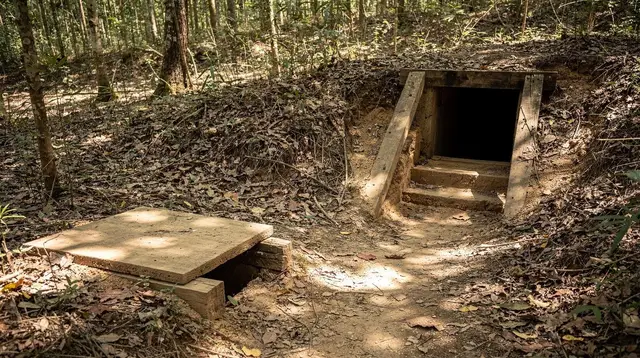
The Cao Dai Holy See holds a ceremony around midday every day of the year, so seeing one doesn’t require timing a visit to a special festival date at all — it’s simply part of a normal day trip out to Tay Ninh. A larger ceremonial date on the Cao Dai calendar just means a bigger crowd of adherents than the midday service draws on an ordinary day. Because Cu Chi sits inside Ho Chi Minh City while the Cao Dai Holy See is out in Tay Ninh, the two are usually combined into a single long day, such as the Cu Chi Tunnels Half Day Tour for travelers who only want the tunnels, or a combined Cu Chi and Cao Dai day trip for those who want to see both sites and a ceremony on the same outing.
The confusion worth clearing up
Nearly every visitor who’s read about Tet assumes every Vietnamese festival works the same way — shops shuttered, family restaurants closed, transport booked solid. It’s an understandable assumption, and it’s wrong for almost everything on this list. Tet is unique in scale precisely because it’s the one holiday when the entire country effectively pauses for family time.
The Mid-Autumn Festival, Reunification Day, the Hung Kings Commemoration, and National Day are all real dates on the calendar with real cultural weight, but none of them meaningfully changes what’s open for a traveler in Ho Chi Minh City. If you’re planning around a Mekong Delta day trip or a Cu Chi Tunnels visit, you generally don’t need to check the festival calendar first — you only need to check it for Tet itself, which is covered on its own page.
A few practical notes
Public holidays here don’t come with published closing hours the way they might elsewhere, and I’d resist looking for a precise schedule — it varies business by business, and the honest answer is “check with the specific place.” What I can say with confidence is the pattern: government offices close on official public holidays (Reunification Day, National Day, the Hung Kings Commemoration), while the tourism economy — hotels, restaurants aimed at visitors, tour operators, ride-hailing apps — keeps running.
If you’re building a trip around southern Vietnamese etiquette and customs more broadly, these festivals are a good entry point: they show a side of the city’s colonial and cultural layering that the museums and markets only hint at. And if food is part of what draws you here, several of these dates come with their own seasonal dishes worth tracking down, which is a good complement to reading up on southern versus northern Vietnamese cuisine before you go.
None of this requires rearranging a trip. Southern Vietnam’s festival calendar, outside of Tet, is something you notice and enjoy if your dates happen to line up — not something you need to plan defensively around.
The one thing worth double-checking
The single date that does matter for planning is Tet itself, which is covered on its own page because it works so differently from everything above. If your trip falls anywhere near it, that’s the page to read before booking a Mekong Delta tour or a Cu Chi Tunnels day trip — for every other date on this list, the honest advice is to book the same way you would on any other week of the year, whether that’s a longer loop like the 3 Day Southern Vietnam Tour covering Saigon, Mui Ne, and the Mekong Delta or a single-day outing, and simply enjoy the extra decorations and street life if your visit happens to land on one of them.
tours.Culture
Verified deep-linked GetYourGuide tours. Book through these links and we earn a small commission at no cost to you.
GetYourGuide does not provide a product photo for this activity — the image shows the meeting point, photographed by us.