A Province of Its Own, Beyond Cu Chi
Tay Ninh is one of the most persistently misunderstood entries on any south Vietnam itinerary. Travelers planning a day trip out of Ho Chi Minh City often assume that everything north-west of the city — the Cu Chi Tunnels, the Cao Dai Holy See, Black Virgin Mountain — belongs to a single place called Cu Chi. It does not.
Cu Chi is a district of Ho Chi Minh City itself, one of the districts that make up the sprawling metropolitan area alongside central areas like District 1. Tay Ninh, by contrast, is an entirely separate province and city, further along the same road, bordering Cambodia. The two are neighbors on the map and neighbors on a typical itinerary, but they are not the same destination, and Tay Ninh has an identity of its own well beyond the two landmarks that draw most visitors there.
This page exists to sort out that geography and to introduce the province on its own terms — its setting, its character, how it connects to the rest of the region, and how it fits into a trip out of the city. For the two sites people actually come to see, the Cao Dai Holy See and Black Virgin Mountain, this page points onward to dedicated guides rather than repeating their detail here.
Where Tay Ninh Sits
Tay Ninh province occupies the north-western corner of the area covered by this site, wedged between the outer districts of Ho Chi Minh City and the Cambodian border. The provincial capital, also called Tay Ninh, is a modest, low-rise city that feels distinctly rural after the density of central Saigon — wide streets, markets built around agriculture rather than tourism, and a pace shaped by farming and cross-border trade rather than by visitors.
Getting there means continuing further along the same north-westerly road corridor used to reach Cu Chi, simply travelling considerably further before arriving. This is why the two are so often folded into a single long day trip: rather than making two separate journeys out of the city in the same direction, most itineraries treat Cu Chi as a stop along the way to Tay Ninh, or vice versa. A trip built purely around Tay Ninh, skipping Cu Chi entirely, is also possible for travelers whose main interest is the Holy See or the mountain rather than wartime history.
Because the province sits on the border, its character carries a slightly different flavor from the rest of the region covered by this site. Trade with Cambodia has long shaped local markets and a handful of border-crossing routes, and the landscape itself shifts as the road heads out of the city — dense urban sprawl giving way to open farmland, rubber plantations, and eventually the single dramatic landform that breaks up an otherwise flat horizon: Black Virgin Mountain, visible from a considerable distance before the road actually reaches it.
Two Landmarks, Two Separate Pages
Tay Ninh is known almost entirely for two things, and both deserve fuller treatment than a general destination page can offer.
The first is the Cao Dai Holy See, the central temple of Caodaism, a religion that originated in this part of Vietnam in the twentieth century and combines elements of several spiritual traditions into a single, distinctly Vietnamese faith. Its main sanctuary is one of the most visually striking religious buildings in the country, and a midday ceremony draws visitors who want to observe the ritual itself rather than simply photograph the architecture.
The building’s layout, the meaning behind its symbolism, and practical guidance on visiting respectfully all belong on the dedicated Cao Dai Temple page, with a companion guide to visiting the Holy See covering the experience in more depth.
The second is Black Virgin Mountain, known locally as Ba Den, the highest point anywhere in the south of the country. It rises abruptly from the flat farmland surrounding Tay Ninh city, visible for a long stretch of the approach road, and can be climbed on foot along pilgrim trails or reached more easily by cable car. Its dedicated page, Black Virgin Mountain, covers the routes to the summit, what the mountain means to local pilgrims, and the views from the top, with a further day-trip guide to the mountain laying out how the visit typically unfolds.
Both sites sit within reach of Tay Ninh city itself, which functions as the practical base and starting point for either visit, and both are commonly seen on the same outing since they lie close enough together to combine without adding a separate trip out of Saigon.
Why the Confusion With Cu Chi Persists
The mix-up between Cu Chi and Tay Ninh is common enough that it is worth addressing directly, because it shapes how people plan — and sometimes misplan — their day trips. The confusion tends to arise for a few understandable reasons.
First, both places sit in the same general direction from the city center, along the same corridor of road heading north-west. A traveler glancing at a map casually, without zooming in, can easily see one cluster of markers in that direction and assume they all belong to the same place.
Second, many day-trip itineraries genuinely do combine the two, precisely because they lie along the same route. A single tour that visits the tunnels in the morning and the Holy See around midday, timed to the Cao Dai ceremony, creates the impression in hindsight that the whole day happened “in Cu Chi,” when in fact the group traveled a meaningful further distance to reach Tay Ninh in between.
Third, the tunnels themselves are so widely known internationally — through decades of films, documentaries, and war history writing — that “Cu Chi” has become something of a shorthand for the entire north-western day-trip region in casual conversation, even among people who have visited both places and understand the distinction perfectly well once it is pointed out.
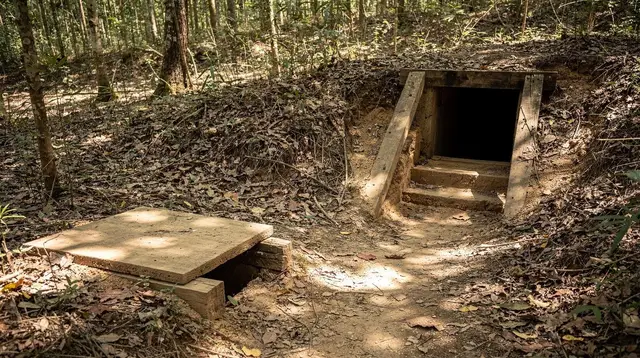
The clearest way to keep the two apart: Cu Chi is a district within Ho Chi Minh City’s own boundaries, home to the tunnel network and its wartime history, covered in full on the Cu Chi Tunnels page along with a comparison of its two separate tunnel sites. Tay Ninh is a different province entirely, further along the same road, home to the Cao Dai Holy See and Black Virgin Mountain, with no tunnel network of its own.
Combining Tay Ninh With the Rest of a Trip
Because Tay Ninh sits further from the city than Cu Chi, it rarely works as a destination squeezed onto the end of an already busy day. Most travelers treat the province as the anchor of a single, dedicated long day trip, built around either the Holy See, the mountain, or both, with Cu Chi folded in en route if wartime history is also of interest. A combined itinerary covering Cu Chi and the Cao Dai Holy See lays out how that pairing typically works, including how the order of stops is usually arranged around the timing of the midday ceremony at the Holy See.
Travelers with more flexible schedules sometimes choose to treat Tay Ninh as a full day on its own, spending unhurried time at both the temple and the mountain without also trying to fit in the tunnels. This suits anyone whose interest leans more toward religion, architecture, or hiking than toward war history, and it avoids the compressed pacing that a triple-stop day inevitably brings. Broader questions about how to divide time between the city, Cu Chi and Tay ninh, the Mekong Delta, and the coast are addressed on the site’s general planning guide for southern Vietnam and its companion piece on how many days to allow.
For travelers who prefer not to arrange transport and route-timing themselves, several tours run directly from the city to Tay Ninh’s two landmarks. One covers both the mountain and the Holy See in a single organized outing:
a day trip from Ho Chi Minh City combining Black Virgin Mountain and the Cao Dai Holy SeeOthers take a more scenic route, pairing the mountain with a stretch of the province’s canals:
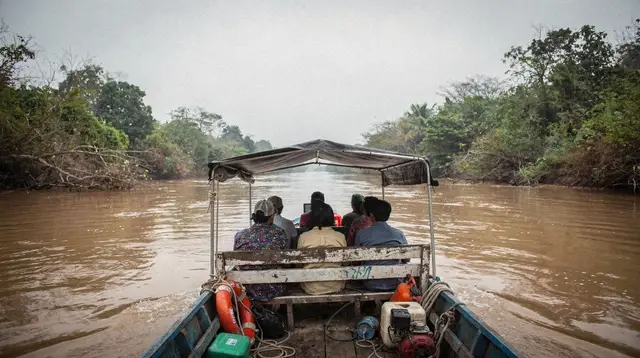
a Black Virgin Mountain excursion that also takes in Tay Ninh’s canal countryBeyond the Landmarks: What Else Is in Tay Ninh
It is easy to reduce Tay Ninh to its two headline sites, but the province has a broader rural identity that rewards a slower look, even within the span of a single day trip. Salt production, rice-paper making, and other small-scale crafts have deep roots here, tied to the province’s agricultural economy and its border trade with Cambodia. Travelers with an interest in how everyday food and household goods are actually made, rather than only in temples and mountains, can add a stop at a local craft village:
a visit to a Tay Ninh craft village to see rice paper and local salt production firsthandThis kind of stop works well folded into a longer day that already includes the mountain or the Holy See, adding a texture of everyday rural life to a day trip that might otherwise focus entirely on two fixed landmarks.
The province’s border position also means a certain amount of cross-border trade passes through its towns, and local markets sometimes carry goods and produce not commonly seen closer to central Saigon. This is not a heavily developed tourist trail — Tay Ninh’s infrastructure for visitors is built almost entirely around the Holy See and the mountain — but travelers who arrive with time to spare and an interest in rural southern Vietnam beyond its two famous sites will find the province has more going on than a quick pass-through itinerary suggests.
Getting There and Getting Around
Nearly every visit to Tay Ninh from Ho Chi Minh City happens by road, whether in a private car, a group coach, or as part of an organized tour. There is no rail or river route into the province from the city, and the journey is noticeably longer than the run out to Cu Chi, since Tay Ninh lies considerably further along the same corridor. Self-driving is possible for confident travelers, but the length of the journey and the logistics of covering both the Holy See and the mountain in one day make an organized tour the far more common choice, and often the more relaxed one.
Within Tay Ninh itself, movement centers on the short stretch connecting the provincial city to the mountain’s base and to the Holy See’s grounds; both sites lie close enough to each other that a single vehicle and driver can comfortably cover both without a separate transfer. Travelers arriving independently, without a pre-booked tour, will generally need to arrange local transport in advance, since the province does not have the same density of ride-hailing coverage found in central Saigon.
For travelers already planning to see the tunnels, a broader day tour that folds in the historical district before continuing on can streamline the whole route:
a full-day tour from the city covering Cu Chi’s tunnel districtA Distinct Stop, Not a Duplicate of Cu Chi
The most useful thing to carry away from this page is simple: Tay Ninh is not Cu Chi, does not contain the tunnels, and is not part of the Mekong Delta either, despite lying in a roughly comparable distance bracket from the city. It is its own province, with its own city, its own rural character, and its own pair of landmarks — the Cao Dai Holy See and Black Virgin Mountain — that draw travelers on a long day trip out of Ho Chi Minh City.
Whether visited alongside Cu Chi as part of one packed day, or treated as a dedicated outing in its own right, Tay Ninh rewards travelers who understand it as a distinct destination rather than an extension of the tunnel district next door. For the detail on what to actually see once there, the dedicated pages for the Cao Dai Holy See and Black Virgin Mountain pick up where this overview leaves off.
Frequently Asked Questions About Visiting Tay Ninh
Is Tay Ninh the same place as the Cu Chi Tunnels?
No. Cu Chi is a district of Ho Chi Minh City, while Tay Ninh is a separate province and city further north-west. The Cao Dai Holy See and Black Virgin Mountain are in Tay Ninh, not at Cu Chi, even though the two are frequently combined into one long day trip.
What is the Cao Dai Holy See, and is it in Tay Ninh?
The Cao Dai Holy See is the central temple of the Cao Dai religion, a home-grown Vietnamese faith that blends elements of several traditions. It stands in Tay Ninh, and a full description of the building and its midday ceremony lives on the dedicated Cao Dai Temple page.
What is Black Virgin Mountain, and where is it?
Black Virgin Mountain, known locally as Ba Den, is the highest point in southern Vietnam and rises just outside Tay Ninh city. It can be reached on foot or by cable car; details of the routes and the summit are covered on the dedicated Black Virgin Mountain page.
Can Tay Ninh be visited without going to Cu Chi first?
Yes, though most travelers combine the two because both lie in the same north-westerly direction from Ho Chi Minh City. A direct route to Tay Ninh without stopping at Cu Chi is entirely possible for travelers focused only on the Holy See or the mountain.
Is Tay Ninh part of the Mekong Delta?
No. Tay Ninh lies north-west of Ho Chi Minh City, bordering Cambodia, while the Mekong Delta lies to the south-west. They are different regions of southern Vietnam with different landscapes, and neither substitutes for the other on an itinerary.
What is Tay Ninh known for besides the Holy See and the mountain?
Tay Ninh has a distinct rural character, with craft villages, salt and pepper production, and a border-province feel shaped by its proximity to Cambodia. Its identity extends well beyond the two landmarks most visitors come to see.
Do I need a guide to visit Tay Ninh?
A guide is not required, but the distance from Ho Chi Minh City and the two separate sites involved make an organized day trip the practical choice for most travelers, especially when combining Tay Ninh with Cu Chi in a single day.