Tra Su Cajeput Forest: The Green Canopy Near Chau Doc
What is Tra Su cajeput forest and how is it different from Can Gio?
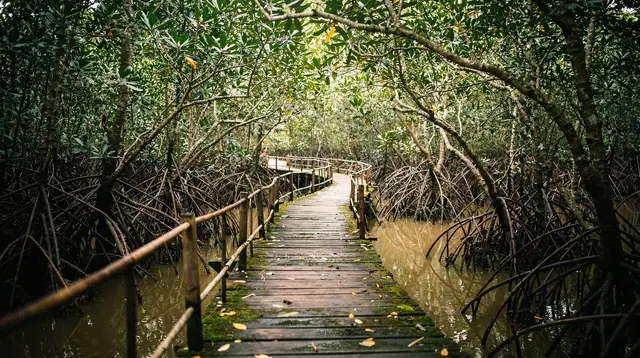
Tra Su is a freshwater cajeput (melaleuca) forest in the Mekong Delta near Chau Doc, close to the Cambodian border, explored by small boat under a dense green canopy. It is an inland, flooded-forest ecosystem, unlike the coastal mangrove biosphere reserve at Can Gio near Ho Chi Minh City, and the two should never be confused.
A Different Kind of Green in the Delta
Most visitors picture the Mekong Delta as a network of wide brown rivers lined with fruit orchards and floating markets. Tra Su is the delta’s other face: a flooded forest of cajeput trees, also called melaleuca, where narrow waterways disappear under a solid green ceiling of leaves. It sits inland in An Giang province, close to Chau Doc and not far from the Cambodian border, and it has almost nothing in common with the coastal wetlands most people associate with the word “mangrove.”
This page is about the forest itself, and about what makes a visit there worthwhile: the water, the canopy, the birds, and the particular experience of moving through it by small boat. For the town of Chau Doc — its markets, its temples on Sam Mountain, its role as a gateway toward Cambodia — see the dedicated Chau Doc destination page rather than this one.
Cajeput Forest, Not Coastal Mangrove
It is worth being precise about this, because the confusion is common. Tra Su is a freshwater ecosystem built around cajeput trees, a hardy species that thrives with its roots standing in fresh, still or slow-moving water. It is inland, part of the Mekong Delta’s own hydrology, fed by the river system rather than by the tide.
Can Gio, closer to Ho Chi Minh City and covered on its own guide, is a coastal mangrove biosphere reserve shaped by brackish, tidal saltwater where the delta meets the sea. The plants, the water chemistry, the wildlife and the whole feel of moving through the two places are different.
A cajeput forest is not a mangrove forest, even though both get lumped together in casual conversation as “the green forest near Saigon” or “the green forest in the delta.” If you have already visited Can Gio and are wondering whether Tra Su will feel repetitive, it will not — the two experiences barely overlap. Those planning a longer loop through the south can reasonably fit both into one itinerary, just not into the same day, given how far apart they sit.
Where It Sits in the Delta
Tra Su belongs to An Giang province, in the far western reaches of the Mekong Delta, within easy striking distance of Chau Doc and the Cambodian frontier. This puts it well beyond the delta towns that most day-trippers from Ho Chi Minh City visit, such as My Tho or Ben Tre, and even beyond Can Tho, the delta’s main city. In practice, Tra Su is a stop woven into itineraries that already include an overnight, or several nights, out toward Chau Doc — it is not something bolted onto a single day out of the city.
Travellers deciding how to structure a Mekong Delta trip, and whether a stop this far west is worth the extra distance, may find it useful to read how to choose a Mekong Delta departure point before settling on a route.
Moving Through the Canopy by Boat
There are no roads through a flooded forest, so boats are the only way in. The typical pattern combines two stages: a motorised sampan carries visitors along the wider channels, and for the narrower, denser stretches under the thickest canopy, a quieter rowed boat takes over. That switch matters — the motor goes silent, the birds are less disturbed, and the forest closes in overhead in a way that photographs rarely capture.
The water itself is part of the experience. Decomposing cajeput leaves and algae tint it in shades of green and amber that shift with the light, and the density of the tree cover overhead varies from channel to channel, from a loose lattice of branches to a near-solid roof. Because the delta’s water levels rise and fall with the wet and dry seasons, the exact routes and how much of the forest floor sits underwater will differ depending on when a visit falls.
For travellers who enjoy being on the water more broadly, it is worth comparing this style of quiet, narrow-channel boating with the wider river excursions covered in the Mekong Delta bird-watching guide, which goes into more detail on what to look and listen for.
What Lives in the Forest
Cajeput forests like Tra Su function as an important roosting and feeding habitat for waterbirds, and that wildlife is a large part of the draw for visitors with even a casual interest in nature. Storks and herons are among the most commonly spotted species, often seen perched in the upper branches or wading at the water’s edge, and the forest as a whole supports a wider community of birds that use the flooded canopy as shelter.
Anyone with a serious interest in birding should treat this as a complement, not a substitute, to Dong Thap’s wetlands further into the delta; the Tram Chim National Park private day trip covers a comparable but distinct wetland habitat worth knowing about when planning a nature-focused delta itinerary.
How Tra Su Fits Into a Mekong Delta Trip
Because of where it sits, Tra Su rarely stands alone. It usually appears as one stop within a longer route through An Giang and the western delta, often paired with Chau Doc’s own sights, with river crossings toward the Cambodian border, or with other rural stops along the way. A private, multi-stop route through this part of the delta, built around Chau Doc, is exactly what the private heritage and nature tour covering Can Tho, An Giang and Chau Doc is designed for, taking in the cajeput forest alongside the region’s other landmarks at a private pace.
Travellers who prefer a set two-day structure that already threads Chau Doc into a wider delta loop can look at the two-day Mekong Delta itinerary linking Can Tho, Chau Doc and Sa Dec, which gives enough time to fit in the forest without rushing between stops. For those with even more time to give the delta, the three-day Mekong Delta tour with meals included allows a slower pace across several provinces, with Chau Doc and its surrounding nature sites forming a natural stretch of the route.
Visitors who want a more active, hands-on angle on the delta’s waterways — rather than a purely scenic boat ride — might also enjoy the kayak, bike and cooking experience available elsewhere in the region, which pairs well conceptually with the slow-boat style of a Tra Su visit even when the two are not booked as a single package.
Practical Notes Without the Numbers
A few things are worth knowing going in, without pinning down details that shift from season to season and operator to operator. Water levels change with the wet and dry seasons, which affects how flooded the forest floor is and how the boats route through it. Light and bird activity both tend to be better earlier in the day, before the heat builds and the water traffic on the busier channels picks up. Comfortable, breathable clothing and sun protection matter more than anything else you might pack, since most of the visit happens exposed on open or lightly shaded water.
Because this is a working conservation and tourism site rather than a museum with a fixed layout, conditions can vary noticeably between one visit and the next. Checking with a guide or driver on the day, rather than relying purely on what was true on a previous trip, is the sensible approach.
Pairing Tra Su With the Rest of An Giang
Chau Doc itself, with Sam Mountain and its temples, its border-town character and its role as a jumping-off point toward Cambodia, deserves its own attention and is covered in full on the Chau Doc destination page. Tra Su works well as a half-outing alongside a Chau Doc stay rather than as a destination travellers would make the long trip out just to see in isolation.
For those weighing whether An Giang and Chau Doc fit into their overall delta plan, it can help to compare this region against the more commonly visited stretch around My Tho and Can Tho, since the western delta demands more travel time and rewards travellers who have already decided to go deep rather than skim the surface. A broader sense of how much time to allow across the whole southern Vietnam region is covered in how many days to spend in southern Vietnam.
Farms and rural crafts are another natural companion to a forest visit in this part of the delta; the Dong Thap cacao farm tour and tasting sits in a neighbouring province and suits travellers building a wider loop through the delta’s inland provinces rather than sticking to the river towns closest to Ho Chi Minh City.
Getting There From Ho Chi Minh City
Given the distance involved, independent travel to Tra Su from Ho Chi Minh City on public transport is a long undertaking better suited to travellers with plenty of time and a taste for slow overland journeys. Most visitors instead join a tour that already handles the transfers, river crossings and boat bookings as part of a wider Mekong Delta itinerary. Anyone still deciding between a fully organised tour and arranging transport independently should read group tour versus private tour in southern Vietnam before committing to a route this far from the city.
Tra Su Cajeput Forest: Frequently Asked Questions
Is Tra Su a mangrove forest like Can Gio?
No. Tra Su is a cajeput (melaleuca) forest, a freshwater flooded ecosystem inland in the Mekong Delta near the Cambodian border. Can Gio, near Ho Chi Minh City, is a coastal mangrove biosphere reserve shaped by tidal saltwater. The trees, the water and the setting are different, even though both are sometimes loosely described as green forests.
Where is Tra Su cajeput forest located?
It sits in An Giang province, in the Mekong Delta, a short distance from the town of Chau Doc and not far from the Cambodian border. It belongs firmly to the delta’s inland waterways, not to the coast.
How do visitors explore the forest?
By small boat, usually a motorised sampan for the main channels and, in the denser sections, a rowed boat that glides quietly beneath the canopy. The narrow waterways are the whole point: there are no roads or paths through the flooded forest itself.
What will I actually see on the water?
A dense green canopy overhead, water dyed a distinctive colour by fallen leaves and algae, and birdlife using the forest as a roosting and feeding ground. Storks, herons and other waterbirds are common sights, especially away from the busiest channels.
Is Tra Su part of a day trip from Ho Chi Minh City, or is it too far?
It is well outside a single easy day trip from Ho Chi Minh City given the distance to Chau Doc and An Giang. Most visitors see it as part of a multi-day Mekong Delta itinerary that already includes Chau Doc, rather than as a standalone outing from the city.
Should I visit Tra Su instead of Can Gio, or can I do both?
They are not substitutes for each other. Can Gio is reachable from Ho Chi Minh City in a single day and shows a coastal mangrove biosphere reserve; Tra Su requires a trip into the delta toward Chau Doc and shows an entirely different inland forest. Travellers with time for a longer Mekong Delta loop can reasonably see both on the same trip, just not the same day.
What is the best time of day to visit?
Early in the day tends to bring calmer water, softer light for photographs and more active birdlife, since the forest quiets down as the heat builds. A guide or boatman on site can advise on conditions for that particular day.
Does the forest flood seasonally?
Yes, water levels in the flooded forest rise and fall with the Mekong Delta’s wet and dry seasons, which changes how much of the forest floor is submerged and how the boat routes feel from one visit to the next.
Can Gio Mangrove and Cat Tien National Park
Verified deep-linked GetYourGuide tours. Book through these links and we earn a small commission at no cost to you.
GetYourGuide does not provide a product photo for this activity — the image shows the meeting point, photographed by us.