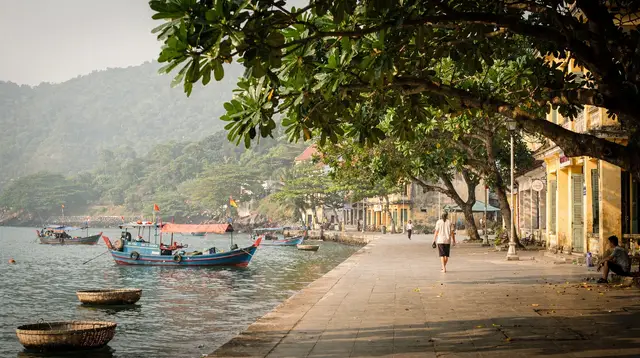
Diving and Snorkeling Around Con Dao
Is Con Dao a good place to dive or snorkel?
Yes — Con Dao has southern Vietnam's most developed coral reefs and a marine protected area inside Con Dao National Park, conditions that Vung Tau and Ho Tram, closer to the mainland and the Saigon River outflow, do not share. The islands support hard and soft coral, reef fish, and seasonal sea turtle nesting beaches.
Why Con Dao Stands Apart for Reefs and Marine Life
Ask about diving or snorkeling anywhere along the southern Vietnamese coast and the answer usually points to the same place: Con Dao, not the mainland beaches closer to Ho Chi Minh City. That distinction matters, because it is easy to assume any stretch of coast in the south offers similar water. It does not. Vung Tau and Ho Tram sit near the mouth of the Saigon River system, where sediment carried downstream clouds the water and gives coral little chance to establish itself.
Con Dao is a different kind of place altogether: an archipelago roughly 230 km offshore, encircled by clearer water and protected, in part, as a marine park. This page assumes you already know how to reach the islands and what else they offer on land — that ground is covered in the Con Dao archipelago guide — and stays focused on what happens once you get in the water.
Con Dao National Park is unusual among the protected areas mentioned elsewhere on this site because its boundary does not stop at the shoreline. The park extends into the surrounding sea, covering reef areas, seagrass meadows, and the nesting beaches used by sea turtles on some of the outlying islets. That marine component is what separates Con Dao from every other coastal spot in this territory, including the Mekong Delta’s river mouths, the mangroves at Can Gio, and the beaches around Mui Ne. None of those places has a comparable reef system, and none is managed with the same underwater protections.
The Reef and Marine Habitat Around the Islands
The reefs around Con Dao are built up from hard and soft coral growing on rocky substrate in the shallower water surrounding the main island and its satellite islets. Coral cover varies from site to site — some patches are dense and colourful, others thinner and more scattered — and conditions shift with the season and with recent weather, so no single description holds for the whole archipelago at every time of year. What is consistent is the presence of reef fish moving through these formations: small schooling species, reef-associated fish sheltering in coral heads, and occasional larger visitors passing along the drop-offs between islets.
Away from the coral itself, seagrass beds spread across parts of the shallower seabed near some of the islands. These meadows matter beyond their own quiet scenery: they are a feeding ground for green sea turtles, and their presence close to nesting beaches is part of why Con Dao supports turtle populations that the rest of southern Vietnam’s coast does not. A snorkeling or diving trip here often moves between coral patches and these grassy shallows rather than sticking to one type of terrain.
Sea Turtles: A Con Dao Specialty
Few things distinguish Con Dao as sharply as its sea turtles. Several of the archipelago’s more remote beaches are used as nesting sites, and this has made turtle-watching one of the signature activities organized on the islands, generally paired with time in the water rather than treated as a stand-alone land excursion. It is worth being clear about the geography here: this is specific to Con Dao’s outlying islets, not to the main beach in front of Con Dao Town, and it has no equivalent at Vung Tau or Ho Tram, where the coastal environment does not support nesting turtles at all.
A guided turtle-watching and snorkeling trip that combines nesting-beach visits with time over the reef is the most direct way to see this side of the archipelago, and it typically runs as an overnight arrangement given how spread out the relevant sites are.
Where the Trips Actually Go
Boat-based snorkeling and diving around Con Dao tends to radiate outward from the main island toward a scattering of smaller islets, each with its own character. Hon Trung is one of the more frequently visited, known for calmer, sheltered water that suits snorkeling and birdwatching in the same outing — a combination that reflects how closely the marine park and its bird colonies sit alongside each other. A trip built around this area, such as a birdwatching and snorkeling outing to Hon Trung, moves between reef-viewing in the water and time observing seabirds on the surrounding rock.
Hon Ba, on the other side of the archipelago, pairs a boat crossing with a walk up to a viewpoint locally associated with a wartime love story, giving it a mixed appeal that goes beyond the water alone. A boat trip to Ba Island combined with the Love Peak trek suits visitors who want both a hike and a stop over reef or shallow water along the way, rather than a dedicated diving itinerary.
For anyone whose main goal is simply to get underwater and see the coral and reef fish directly, a general scuba and snorkeling outing covers the archipelago’s core sites without the added land component. A half-day scuba diving and snorkeling experience around the islands is built for exactly that: introductory or guided diving alongside snorkeling for those who prefer to stay on the surface, moving between reef patches as conditions allow.
Diving Versus Snorkeling: Choosing an Approach
| Approach | What you experience | Who it suits |
|---|---|---|
| Snorkeling | Surface views of shallow reef, seagrass beds, and reef fish | Non-swimmers to confident swimmers, families, anyone without dive certification |
| --- | --- | --- |
| Introductory / guided scuba | Closer, extended time at coral formations and along drop-offs | First-time divers wanting a guided introduction, no certification required |
| --- | --- | --- |
| Certified diving | Full access to deeper reef sites and drop-offs at the diver’s own pace | Already-certified divers wanting more independence underwater |
| --- | --- | --- |
| Combined turtle and reef trips | Nesting-beach visits alongside snorkeling or shallow diving | Visitors prioritising wildlife over reef depth or variety |
None of these options requires prior diving experience to take part at some level — the distinction is really about how much of the underwater environment you want to see and how independently you want to move through it. Anyone with a specific certification plan or multi-dive itinerary in mind should confirm requirements directly with a dive operator on the islands rather than assume a single rule applies across all outfits.
What Makes This Different From the Rest of the Coast
It is worth repeating the geography plainly, because the confusion comes up often: Con Dao’s dive and snorkel sites are unique to the archipelago. They do not extend to Vung Tau, a mainland city about 100 km from Ho Chi Minh City with a very different, river-influenced coastline, and they do not extend to the quieter beaches at Ho Tram either.
Both of those spots have their own appeal — Vung Tau’s beaches suit an easy day trip from the city, and Ho Tram’s quieter coast suits a relaxed stay without the archipelago crossing — but neither offers coral reef diving or the kind of marine biodiversity found around Con Dao. If reef access is the priority rather than proximity to Ho Chi Minh City, Con Dao is the only choice within this site’s coverage area.
The same point applies inland, in a different way. Cat Tien National Park is the other protected natural area covered on this site, and it is worth noting the contrast: Cat Tien protects lowland forest and is visited for birds, primates, and night walks, while Con Dao’s marine park protects reef and open water. They are both conservation areas, but they have nothing else in common, and neither substitutes for the other.
Planning a Visit Around the Water
Because diving and snorkeling trips depend on boat access to outlying islets, they are almost always organized as guided outings rather than independent excursions, and they are usually planned as part of a longer stay on the islands rather than a rushed add-on. Visitors building a longer Con Dao stay around this kind of activity may find it useful to look at the five-day Con Dao island extension itinerary, which allows enough time on the islands to fit in both a reef-focused outing and the archipelago’s land-based sites without feeling squeezed.
Underwater photography is part of the appeal for many visitors, and Con Dao’s clearer water gives it an edge over the rest of the southern coast for this purpose too — a theme picked up more broadly in the site’s guide to photography in southern Vietnam, which covers conditions beyond just the water. For a wider view of how Con Dao’s beaches and marine activities fit into a broader look at things to do around Con Dao, or to compare it against other coastal options within the beaches and islands category, those pages give more context than this one attempts to.
For those still weighing whether the archipelago crossing is worth it against a simpler mainland trip, the general comparison lives in the guide to choosing a beach near Saigon, which lays out Con Dao, Vung Tau, and Ho Tram side by side. What that comparison makes clear, and what this page has tried to reinforce, is that the choice for diving and snorkeling specifically is not really a close call: the reefs, the marine park, and the sea turtles all belong to Con Dao, and a visit built around things to do at Vung Tau will not include any of them.
Con Dao Diving and Snorkeling FAQ
Can I dive or snorkel at Vung Tau or Ho Tram instead of Con Dao?
Not really. Vung Tau and Ho Tram sit close to the mainland coast and to the Saigon River’s outflow, so the water carries more sediment and supports little coral. Con Dao’s reefs form around an offshore archipelago with clearer, more sheltered water, which is why divers and snorkelers head there specifically rather than to the closer coast.
What makes Con Dao’s marine environment different from the rest of southern Vietnam?
Con Dao National Park protects both a forested archipelago and the surrounding sea, one of the few places in the country where a national park extends underwater. That combination gives the islands hard and soft coral formations, seagrass beds, and beaches used by nesting sea turtles, none of which exist along the mainland coast covered elsewhere on this site.
Do I need diving certification to see the reefs at Con Dao?
No. Guided snorkeling trips reach shallow reef areas without certification, while scuba outings are typically run as introductory or guided dives suited to beginners as well as certified divers. Anyone planning a serious multi-dive itinerary should still check certification requirements directly with a dive operator on the islands.
Can I see sea turtles while diving or snorkeling at Con Dao?
Sea turtles are one of the reasons Con Dao is singled out within southern Vietnam: several of its outlying beaches are nesting sites, and boat and snorkeling trips are organized specifically around turtle-watching in season. This is a Con Dao specialty, not something offered around Vung Tau or Ho Tram.
Is Con Dao’s coral reef comparable to central Vietnam’s diving spots?
This guide does not make that comparison, since the two regions differ and central Vietnam is outside this site’s scope. What can be said for southern Vietnam specifically is that Con Dao’s reefs are the most developed in the area this site covers, well ahead of the mainland coast at Vung Tau or Ho Tram.
Which islands around Con Dao are best for snorkeling?
Trips commonly visit outlying islets within the archipelago, including areas around Hon Trung and Hon Ba, where boat operators anchor near reef patches and seagrass beds. Exact routes depend on sea conditions and the operator, so this guide describes the type of terrain rather than naming a fixed itinerary.
Does diving or snorkeling at Con Dao replace the general Con Dao guide?
No — this page focuses only on the reefs, marine protected area, and species around the islands. Getting to Con Dao, its national park on land, its wartime history, and where to stay are covered in the main Con Dao archipelago guide.
Vung Tau, Ho Tram and the Con Dao Islands
Verified deep-linked GetYourGuide tours. Book through these links and we earn a small commission at no cost to you.
GetYourGuide does not provide a product photo for this activity — the image shows the meeting point, photographed by us.