Ho Chi Minh City in September: What It's Really Like
Is September a good time to visit Ho Chi Minh City?
September sits deep in the wet season, so afternoon downpours are heavier and more frequent than in earlier months. Mornings are usually still workable, hotel rates are softer, and it is also when the Mekong Delta's seasonal flood season begins, which is worth folding into any delta plans made this month.
Why September Feels Different in Saigon
I’ve come back to Ho Chi Minh City in enough different months now to notice how much September changes the rhythm of a day. This isn’t the gentle, occasional shower you might get in June. By September, the wet season has properly settled in, and the city organizes itself around it in ways I didn’t expect the first time I was here at this time of year.
Mornings, in my experience, are still generally fine — humid, warm, often overcast, but walkable. It’s the afternoon that you plan around. Somewhere between early and mid-afternoon, the sky tends to darken fast, and when the rain comes it comes hard: a short, intense downpour rather than a soggy all-day affair. Locals barely react. Motorbike drivers pull ponchos out of their under-seat storage without breaking stride, café awnings fill up, and within an hour or two it’s often passed and the streets are steaming dry again. I’ve learned to just build a coffee stop into that window rather than fight it.
What I Actually Do Differently This Month
I front-load my outdoor time. If I want to walk around District 1, see Ben Thanh Market, or wander toward the Reunification Palace and the War Remnants Museum, I do it before midday. Afternoons I shift toward things that don’t mind rain: a museum I haven’t finished, a long lunch in Cholon, or ducking into a rooftop bar to watch the storm roll over the skyline near Landmark 81 instead of getting caught under it.
Day trips need a bit more thought in September. A trip out to the Cu Chi Tunnels still runs rain or shine — the tunnels themselves are covered, and the surrounding forest handles a downpour well — but I keep expectations flexible on timing. If you’re weighing whether to combine it with the Cao Dai Holy See at Tay Ninh, I’d still say go for it; a wet afternoon there is still worth it, and I’ve found the crowds noticeably thinner than in the dry season. If Cu Chi is on your list, going with a guide who already knows how the tunnels and the surrounding sites work is worth it, and this half-day tour out to the tunnels is the version I’d book for a straightforward first visit.
The Mekong Starts to Change Underfoot
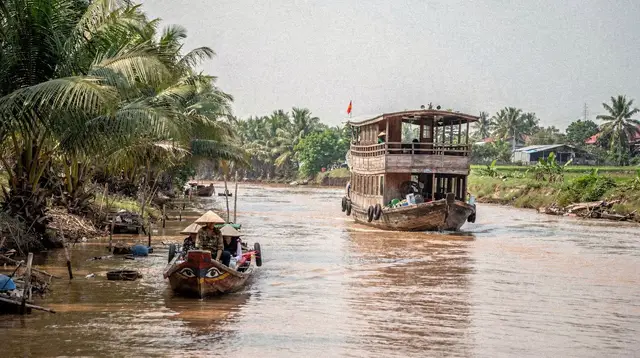
The other thing I notice every September, once I get outside the city, is that the Mekong Delta itself starts to look different. This is when the region’s seasonal flood season, known locally as mua nuoc noi, begins to take hold. Water levels in low-lying fields and canals rise, and some of the agricultural landscape you’d see dry in the spring turns into something closer to a flooded plain, criss-crossed by boats instead of paths. I won’t get into the details of how that cycle works here — the destination pages for the Mekong Delta cover that properly — but it’s worth knowing before you go, mostly because of what it isn’t.
What trips me up talking to other travelers is the assumption that this is some kind of dangerous, unpredictable flood. It really isn’t. It’s an expected, seasonal rhythm that the delta has run on for generations, and daily life there is built around it rather than disrupted by it — farmers, markets, and ferry routes all adjust on schedule. I’ve found it’s actually one of the more interesting times to see the region, precisely because the water changes how everything moves.
A day trip into the delta in September, on a smaller boat with a group that isn’t enormous, felt like a genuinely different experience from the drier months. If you want to see it firsthand, I’d point you toward this small-group Mekong Delta day trip, which keeps numbers low enough that you’re not just one of fifty people filing onto the same boat.
Evenings Are Where September Wins
If there’s one thing I’d say September does better than the dry-season months, it’s evenings on the water. The heat breaks a little once the sun goes down, the humidity that built up all afternoon eases, and the Saigon River picks up a breeze that makes sitting outside genuinely pleasant. I’ve done a dinner cruise on the river in both March and September, and September was the more comfortable of the two by a clear margin.
If you want an easy, low-effort evening after a day of dodging rain, a river dinner cruise with a buffet is hard to beat, and watching Landmark 81 and the Bitexco Tower light up from the water is a different view of the city than you get from the street.
Practical Notes for the Month
| Consideration | September in Ho Chi Minh City |
|---|---|
| Rain pattern | Heavier, more frequent afternoon downpours than earlier in the wet season |
| --- | --- |
| Best time to be outdoors | Morning through early afternoon |
| --- | --- |
| Temperatures | Broadly warm and humid year-round, no real seasonal drop |
| --- | --- |
| Crowds | Thinner than the December–April dry season |
| --- | --- |
| Hotel rates | Generally softer than peak dry-season pricing |
| --- | --- |
| Mekong Delta | Seasonal flood season (mua nuoc noi) begins |
| --- | --- |
| Cu Chi Tunnels | Still fully open; forest paths handle rain well |
None of this is a reason to avoid September. I’d actually put it near the top of my list for anyone who doesn’t mind adjusting the day around an afternoon storm, mostly because the city and the delta both feel less crowded and a little more themselves. If your schedule is flexible and you want to combine the tunnels with the Cao Dai ceremony at Tay Ninh in one longer day, this Cu Chi Tunnels tour with lunch included is a comfortable way to do it without having to plan the logistics yourself.
If the delta is the main draw and you’d rather go deeper than a half-day allows, I’d also look at a fuller classic full-day Mekong Delta tour, which gives you more time on the water precisely when the canals are at their most interesting.
For planning the rest of your trip around the Ho Chi Minh City area, I’d start with the things to do in Ho Chi Minh City hub, then look at day trips if you’re based in the city for a while.
Anyone new to the Cu Chi Tunnels should read up on choosing between Ben Duoc and Ben Dinh before booking, since the two sites feel quite different despite covering the same tunnel network. For the delta, the Mekong Delta destination page and the guide on choosing a Mekong Delta departure point are both worth reading before you commit to an itinerary.
If you’re weighing My Tho against Can Tho for your delta day, that comparison holds regardless of the month. For an evening on the water, see the Saigon River page and the sunset cruise guide. Anyone building a longer route should check the three-day Saigon–Cu Chi–Mekong classic itinerary and the general guide on how many days to spend in southern Vietnam.
Finally, the Tay Ninh and Cao Dai Temple pages are useful if you’re combining that day with Cu Chi, and the visiting southern Vietnam in rainy season guide covers the broader seasonal picture beyond just September.
Frequently Asked Questions About Visiting Ho Chi Minh City in September
Does it rain all day in Ho Chi Minh City in September?
No. In my experience, mornings are usually dry or just overcast, and the rain typically arrives as a short, heavy downpour in the afternoon or early evening rather than lasting all day.
Is the Mekong Delta flooded in September?
Low-lying parts of the delta do fill with water as the seasonal flood season, mua nuoc noi, begins in September. This is an expected, recurring cycle that local life is built around, not a sudden or dangerous flood.
Are the Cu Chi Tunnels open in September?
Yes, both the Ben Dinh and Ben Duoc sites stay open through the wet season. The forest paths and the tunnels themselves generally hold up well in rain, so I’ve never had a visit disrupted by weather there.
Is September a cheaper time to visit Ho Chi Minh City?
Hotel rates in my experience tend to be softer in September than during the December-to-April dry season, since it falls outside peak international travel demand.
Should I avoid a Mekong Delta day trip in September because of the rain?
I wouldn’t. A smaller boat and a flexible schedule handle an afternoon shower easily, and seeing the delta as the water rises is a genuinely different, worthwhile experience compared with the drier months.
What should I pack for Ho Chi Minh City in September?
I always bring a light rain jacket or a small umbrella, quick-dry clothing, and shoes that won’t mind getting briefly wet, alongside the usual hot-climate basics.
Are there fewer tourists in Ho Chi Minh City in September?
Yes, from what I’ve seen crowds at major sights like the Cu Chi Tunnels and the Cao Dai Holy See are noticeably thinner than during the dry season months.
Seasonal Guide
Verified deep-linked GetYourGuide tours. Book through these links and we earn a small commission at no cost to you.
GetYourGuide does not provide a product photo for this activity — the image shows the meeting point, photographed by us.