Getting to Cu Chi by Boat on the Saigon River
Can you get to the Cu Chi Tunnels by boat instead of by road?
Yes, some operators run part or all of the journey along the Saigon River as a boat excursion that ends at the Cu Chi Tunnels, usually at the Ben Duoc site. It is a genuine alternative experience, not the standard or required way to visit — most visitors still travel by road, and the road option remains faster and far more widely available.
A Second Way to Reach the Tunnels: Along the Water
Ask around and you’ll hear it stated as fact: that the “real” way to see the Cu Chi Tunnels is by boat down the Saigon River. It isn’t. The claim gets repeated often enough in traveller forums and secondhand trip reports that it has hardened into something that sounds settled, when it is really just one option among several — and a less common one at that.
The road remains, by a wide margin, how most people get to Cu Chi, whether in a shared coach, a private car, or a “limousine” minibus arranged through a hotel desk. The boat route exists, it is real, and for the right traveller it is worth choosing. But it is a choice, not a requirement, and understanding what it actually changes about the day is more useful than treating it as the one correct answer.
This page is deliberately narrow. It doesn’t repeat what other pages on this site already cover in depth — the layout of the tunnel network itself, the difference between the Ben Dinh and Ben Duoc sites, the choice between a half-day and a full-day visit, or how the tunnels combine with a Mekong Delta day trip. Those questions are answered elsewhere. What this page does is isolate a single decision — road or river — and explain what actually shifts when you pick the water.
Where the Confusion Comes From
The Saigon River genuinely does run past the district that contains the tunnel network, and for visitors picturing Vietnam’s waterways as the default way to move around the south, it’s an easy leap to assume the tunnels are naturally a river destination. They aren’t, in the sense that the tunnels themselves are inland, dug into the earth of what was farmland and forest, not built along a riverbank. A river approach has to end with a transfer onto land regardless, because the tunnel entrances, the exhibition areas and the underground crawl sections don’t sit at the water’s edge.
Some of the pull also comes from marketing. A boat departure photographs well, it sounds distinctive next to a dozen near-identical coach listings, and operators who offer it have every reason to present it as special — which it is, just not as the only or the standard route. When a tour description leads with the river, it’s worth reading closely to see exactly how much of the journey is actually spent on the water and how much is still a road transfer either side of a shorter river segment.
What the River Segment Typically Looks Like
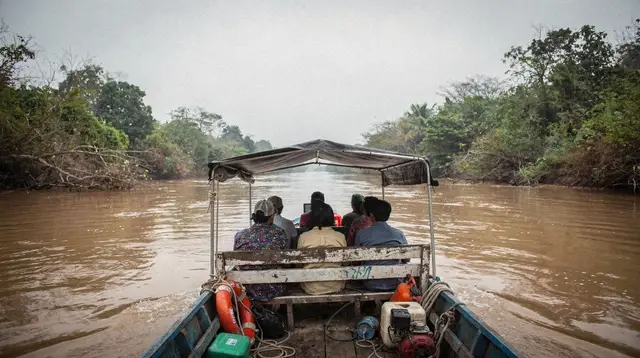
Where a boat is used, it generally forms part of the outbound or return leg rather than replacing road transport entirely. A group is usually still driven out of central Ho Chi Minh City before boarding, since the river doesn’t run in a straight line from the city centre to the tunnel district. Once on the water, the boat follows the Saigon River through a stretch of countryside quite different from the dense, motorbike-thick streets of District 1 — banks lined with nipa palm, small riverside dwellings, fishing boats, and a broader, quieter sense of the Mekong-adjacent landscape that most city-based visitors never otherwise see.
Because of where the river runs relative to the tunnel sites, boat-based itineraries are built around the site set further from the busiest access road, which corresponds to Ben Duoc rather than Ben Dinh. That has a knock-on effect worth knowing about independent of the boat question: Ben Duoc already tends to draw a thinner crowd than Ben Dinh, so a river approach and a quieter tunnel visit often come as a pair, though the calmer atmosphere is a property of the site itself, not of arriving by water. Travellers who specifically want to see Ben Dinh, the more heavily visited and more infrastructure-heavy of the two, should check that a boat-inclusive tour actually goes there before assuming boat and site are interchangeable.
What Doesn’t Change
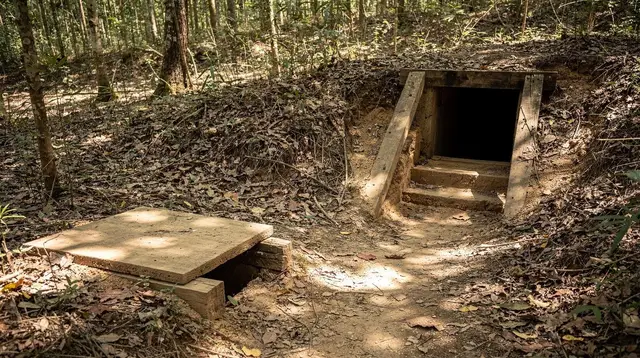
It’s worth being direct about what a boat approach does not alter, because the tunnels’ reputation rests on the site itself, not on the transport used to reach it. The exhibits, the recreated wartime workshops, the sections of tunnel opened and, in places, discreetly widened for visitors to crawl through, the firing range some tours pass near, and the guide’s explanation of how the underground network functioned — none of that changes based on how the group arrived. A traveller who takes the river route and one who takes the road spend the same amount of time, more or less, actually at the tunnels, seeing the same features, hearing broadly the same history.
a Cu Chi Tunnels tour with flexible timing that runs by road, for anyone who wants the tunnel visit without building a river segment into the dayThat’s a useful reference point precisely because it shows the baseline: a straightforward, road-based way to see the tunnels, against which any river-inclusive alternative should be judged on its own merits, not treated as an upgrade by default.
Why Choose the River Anyway
None of this is an argument against the boat option — it’s an argument against assuming it’s mandatory. Chosen deliberately, for the right reasons, it adds something the road genuinely can’t: a look at the waterway itself, at a slower pace, from a different vantage point than any car window offers. For a traveller who has already spent a day or two in the dense, fast-moving centre of Ho Chi Minh City, an hour or so on the river before or after the tunnels functions almost as a decompression, a shift in rhythm that a coach transfer doesn’t provide.
It also appeals to a particular kind of itinerary logic: travellers piecing together several river-adjacent experiences into one trip — a stretch of Saigon River time here, a Mekong Delta boat excursion there — sometimes prefer to keep the whole southern leg of their trip water-themed where possible, even if it means a marginally more complex booking. That’s a legitimate preference, not evidence that the river is the “correct” way to see Cu Chi.
a private, in-depth Cu Chi Tunnels tour for travellers who’d rather set their own pace at the site than join a large fixed-departure groupA private format like that pairs naturally with travellers who are already customising other parts of their day, including how they get there, since a private booking gives more room to build in a river segment without disrupting a group’s shared schedule.
Weighing Boat Against Road, Honestly
There’s no need to overstate the case in either direction. The road is not a compromise, and the boat is not automatically superior — they simply deliver different days. Road transport is available on effectively every Cu Chi itinerary, from the simplest half-day group tour to a fully private car, and it gets a group directly and predictably to the tunnel entrance without an extra transfer. Boat-inclusive tours are fewer in number, generally need to be sought out specifically rather than assumed to be the default option on any generic listing, and they add a segment of travel time spent on the water rather than the road — which some travellers count as the whole point, and others would rather skip in favour of getting to the tunnels sooner.
a full day tracing the history of the Cu Chi Tunnels by road from Saigon, structured around the war history and the tunnel network itself rather than the journey there, is a fair example of how most visitors actually experience the site — the transport is a means to an end, not a feature of the day.
None of this touches on which is quicker, what either costs, or what times departures run, because those details vary by operator and by group size in ways that change too often to state here reliably. What matters for planning purposes is simpler: know that the choice exists, know that it is a choice and not a rule, and pick based on what kind of day you actually want — river scenery and a change of pace, or the most direct and widely available path to the tunnels.
If the River Itself Is the Draw
For travellers who find themselves more interested in the Saigon River as an experience in its own right than in using it purely as a route to Cu Chi, it’s worth separating the two ideas entirely. The river supports its own standalone activities that have nothing to do with the tunnels — sunset and dinner cruises out of central Ho Chi Minh City chief among them.
an evening dinner cruise along the Saigon River is built purely around the river and the city skyline at night, with no tunnel visit involved at all. Booking something like that separately, rather than trying to fold every river interest into the Cu Chi day, often produces a better version of both experiences: an unhurried evening cruise when that’s the goal, and a focused tunnel visit — by whichever transport suits the schedule — on its own day.
a Cu Chi Tunnels tour focused on the wartime Iron Triangle area is worth considering for travellers who’ve decided the road suits them better and want a tour built specifically around the historical geography of the district rather than around any particular transport gimmick.
Making the Call
The practical takeaway is straightforward. Before booking, read the tour description closely enough to know for certain whether a boat segment is included, how much of the journey it actually covers, and which of the two tunnel sites the itinerary visits — since that detail affects the atmosphere at the site regardless of how you got there.
Don’t assume a listing includes a river element just because the tunnels sit near the Saigon River on a map, and don’t assume the reverse either, that a boat is being oversold as more authentic than the road. Both get travellers to the same tunnels, the same exhibits, and the same layered history of the underground network. The difference is entirely in the hour or two spent getting there, and that difference is worth choosing on purpose rather than inheriting from a rumour about how everyone supposedly does it.
For the wider question of getting around the city and its surroundings day to day, independent of this one route, see getting around Saigon and, for planning the trip as a whole, how many days to allow in southern Vietnam. Those questions about the site itself, rather than the route there, are covered in how the Cu Chi tunnel network worked and in the guide to tours led by veterans, while a single practical comparison of the two access points is in the Ben Duoc versus Ben Dinh guide.
Travellers assembling a full day around the tunnels and the surrounding area can also check the dedicated one-day Cu Chi Tunnels itinerary, and anyone drawn more to the water itself than to the tunnels should look separately at a Saigon River sunset cruise, a quieter paddle through the Saigon canals, or the gentler sampan trips through the canals further south toward the Mekong Delta, none of which require any connection to a Cu Chi day at all.
FAQ: Reaching the Cu Chi Tunnels by River Boat
Is the boat the normal way to reach the Cu Chi Tunnels?
No. The great majority of visitors reach Cu Chi by road, in a coach, a minibus or a private car. The river route exists as an alternative offered by a smaller number of tour operators, chosen for the experience of the waterway rather than because it is required or the default.
Do all Cu Chi Tunnels tours include a boat option?
No. Most listed Cu Chi tours are entirely road-based, including half-day and full-day formats and private departures. Only tours that specifically advertise a river or Saigon River element include a boat segment; it has to be chosen deliberately.
Which of the two tunnel sites do river boats reach?
Boat itineraries on the Saigon River are built around the site that sits closer to the water’s edge, which in practice means the quieter Ben Duoc site rather than the busier Ben Dinh site. A tour description should always state which site it visits.
Is the boat route faster than going by road?
Not necessarily, and this guide does not compare timings between the two, since a river crossing and a road transfer are shaped by very different factors on any given day. Choose the boat for the experience of the river, not as a shortcut.
Can the boat trip be combined with other river activities?
Yes. Because the approach follows the Saigon River, some itineraries pair the tunnel visit with a broader look at river life, or travellers separately book a river cruise on another day, since dinner and sightseeing cruises on the Saigon River run as their own standalone activity.
Does arriving by boat change what you see inside the tunnels?
No. Once on site, the tunnel visit itself — the crawl-through sections, the exhibits, the recreated jungle workshops — is the same experience regardless of how visitors arrived. The boat changes the journey there, not the tour of the tunnels.
Is the boat option suitable for everyone?
It suits travellers who want a slower, scenic approach and don’t mind a change of pace and transfer arrangements compared with a straightforward road coach. Anyone short on flexibility, or travelling with a group that has fixed road transport already arranged, is generally better served by the standard road tours.
War History: Cu Chi Tunnels and the War Remnants Museum
Verified deep-linked GetYourGuide tours. Book through these links and we earn a small commission at no cost to you.
GetYourGuide does not provide a product photo for this activity — the image shows the meeting point, photographed by us.